Solutions

Instruments

Systems

IIoT
Cost Control, ESG Implementation, Efficiency Improvement
Why is it needed?
The Importance of Electricity Management?

Cost Control

Environmental Protection

Efficient Operation

Supply Stability

Regulatory Compliance

Technological Innovation
Electricity is a significant operational cost item. By saving Electricity, businesses can reduce their Electricity bills, lower costs, and enhance competitiveness. Electricity consumption has a major impact on the environment, especially in terms of CO₂ emissions. Effective Electricity management helps reduce energy waste and lower the carbon footprint.
Managing Electricity efficiently ensures that facilities and equipment operate optimally. Optimizing Electricity usage in facilities can extend equipment lifespan, reduce failures, and lower maintenance needs.
Proper Electricity management helps ensure supply stability, preventing power outages and production interruptions. This is particularly crucial for critical facilities. Additionally, many countries and regions have Electricity efficiency and environmental regulations. Good Electricity management ensures compliance, helping businesses avoid fines and legal issues.
Modern management systems leverage advanced technologies, including instrumentation, data analytics, automation, and artificial intelligence, helping businesses remain competitive and enabling more efficient operations.
Feature Description
Improve Work Efficiency by Over 40%!
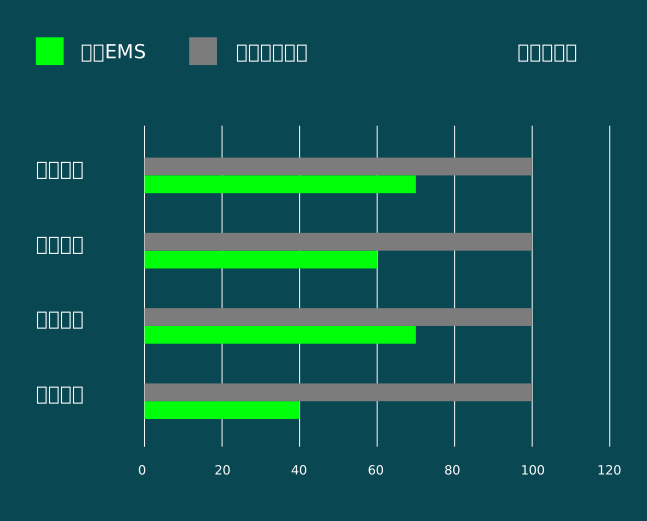
EMS Intelligent Electricity Management System provides real-time data and instant alerts, eliminating the labor cost and time required for manual inspections. By analyzing data, users can perform predictive maintenance in real-time, taking preventive measures before issues escalate, thereby reducing the risk of sudden failures.
Additionally, it helps predict equipment failures and maintenance needs, identifying potential causes of anomalies, allowing engineers to conduct targeted maintenance, minimizing downtime, and improving equipment efficiency.
• Automated meter reading eliminates manual inspections and reduces time costs.
• Alerts for abnormal conditions enable instant predictive maintenance.
• Provides detailed data to shorten repair time.
• Automatically generates reports and statistics, reducing manual calculations.
The system automatically collects data and generates statistical reports, including energy usage trends, electricity cost comparisons, and equipment performance evaluations. This reduces the need for manual data analysis, enhances data usability, and provides more accurate optimization recommendations.
Feature Description
Helps Save Over 30% of Energy!
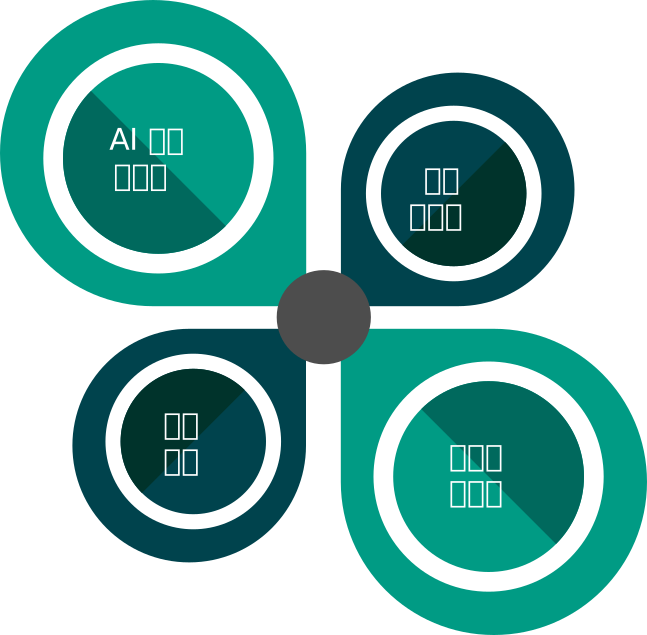
EMS Intelligent Electricity Management System generates detailed data reports, helping users understand energy consumption patterns and identify energy-saving potential. The system allows users to set energy-saving target values and customize parameter thresholds, enabling data-driven decision-making. By collecting various parameters, cross-referencing data, and leveraging AI training, the system can predict potential equipment failures in advance.
• Set energy-saving targets to identify potential savings.
• Customize parameter thresholds and receive alert notifications.
• AI predicts equipment failure points to prevent unexpected shutdowns.
• Energy-saving recommendations optimize equipment operating time.
The system provides energy-saving recommendations by optimizing equipment operating times to ensure electricity is used during the lowest-cost periods. It helps users comprehensively evaluate various factors and develop strategies to gradually reduce energy costs and improve equipment efficiency.
Feature Description
Equipment Utilization & Carbon Calculation for Sustainable Development
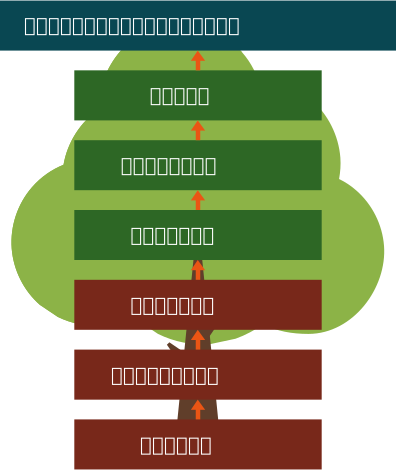
EMS Intelligent Electricity Management System manages equipment utilization to prevent unnecessary carbon emissions caused by idle, halted, or inefficiently running equipment. This helps reduce energy waste and lower carbon emissions.
By tracking and calculating carbon emissions, businesses can identify major sources of emissions and develop strategies to reduce them. This assists in minimizing the company’s carbon footprint, ensuring compliance with government regulations and environmental goals, while also avoiding legal risks and fines.
Furthermore, carbon emissions management enhances corporate social responsibility, supports long-term sustainability goals, improves supply chain transparency, and promotes green and eco-friendly practices, ultimately achieving the objective of corporate sustainable development.
Feature Description
Transforming Energy Management from Bookkeeping to Decision-Making
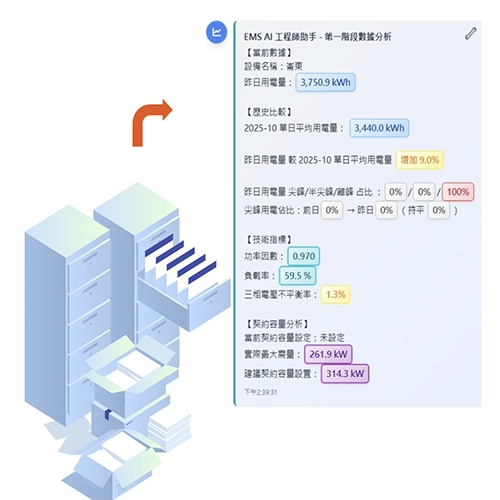
There is plenty of data, but no one has the time to truly understand it?
The EMS Intelligent Energy Management System records every real-time power usage.
Load curves for each floor and each production line are fully preserved.
The changes between peak and off-peak hours are drawn into lines that look elegant
but are often difficult to interpret. Over time, the system accumulates what becomes
a massive “mountain of power data.”
Integrating AI into EMS is not just adding a “chat window.” Instead, it attempts to
organize the knowledge that was once scattered across reports, presentations, and
engineers’ minds into live knowledge—information that can be summoned and
queried at any time.
For managers without an energy background, this interactive approach greatly lowers the barrier to entry, making “reading power data” no longer a task solely for the energy department.
Feature Description
Integrated Command Center – Monitor Anytime, Anywhere
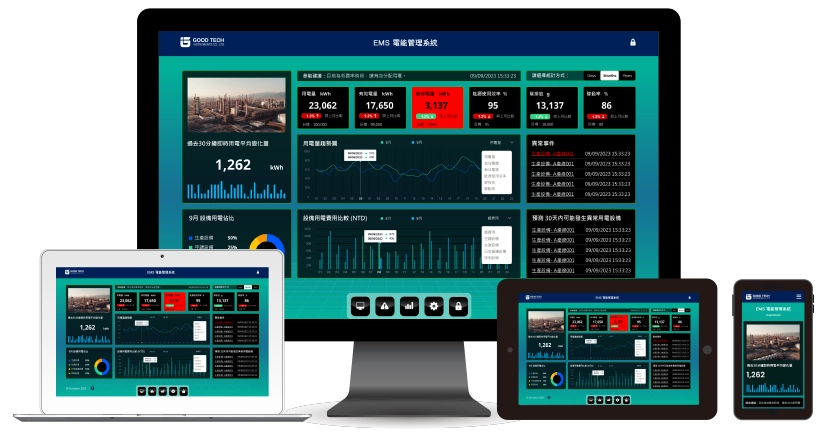
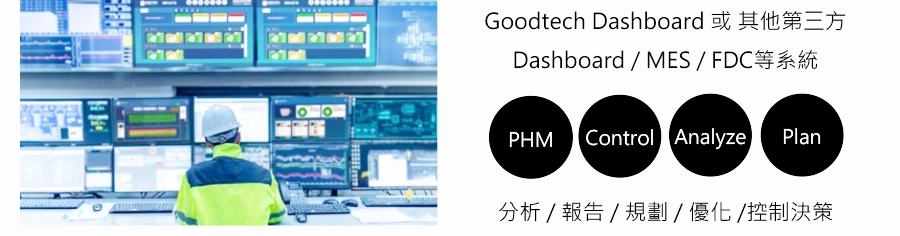
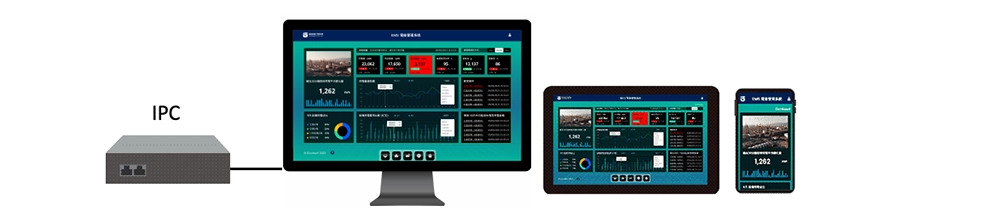
EMS Intelligent Electricity Management System allows various data to be uploaded to the cloud or integrated into an IIoT Dashboard, enabling users to manage their facilities more efficiently.
The system includes a responsive web viewing feature, accessible via the local intranet. Users can monitor data using smartphones, tablets, or laptops without login restrictions. By simply connecting to a fixed IP intranet and opening a browser, users can instantly check equipment status and energy consumption across their facilities—anytime, anywhere.
Benefits
Efficiency Improvement & Driving Net-Zero Carbon Emissions

Improve Equipment Efficiency
Monitor equipment status changes to enhance utilization rate. Understanding equipment conditions helps schedule maintenance and reduce production line downtime.

Fault Cause Analysis
Identify frequent causes of equipment anomalies and predict potential issues. Data-driven analysis prevents subjective human judgment.

Reduce Costs & Expenses
Lower labor and energy costs, shorten downtime for maintenance, and maximize energy savings through optimized calculations.

Drive Net-Zero Carbon Emissions
Support carbon emission management and reduce the carbon footprint. Through energy management, lower consumption, implement ESG initiatives, and achieve sustainable operations.
Electricity-Saving Goals
Optimization Measures
Setting reasonable energy-saving goals is key to conserving electricity. Establishing specific and achievable targets while actively implementing energy-saving measures can maximize potential savings. With the EMS Intelligent Electricity Management System, users can leverage energy-saving recommendations and optimization measures to manage energy usage more effectively and reduce energy waste.
UI Features
Integrate Diverse Data to Identify Energy-Saving Potential!
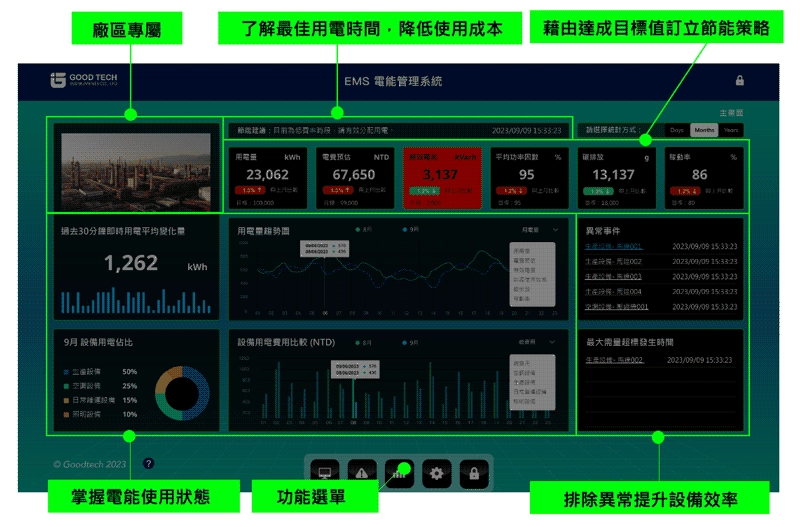
• Real-time 30-minute change monitoring
• Electricity consumption share by equipment type
• Recommended optimal electricity-use periods
• Energy-saving statistics and target values
• Electricity consumption trends for energy-saving indicators
• Equipment electricity cost comparison
• Abnormal event alert records
• Equipment with abnormal peak demand
• AI Smart Assistant
UI Features
Trend Statistics and Analysis
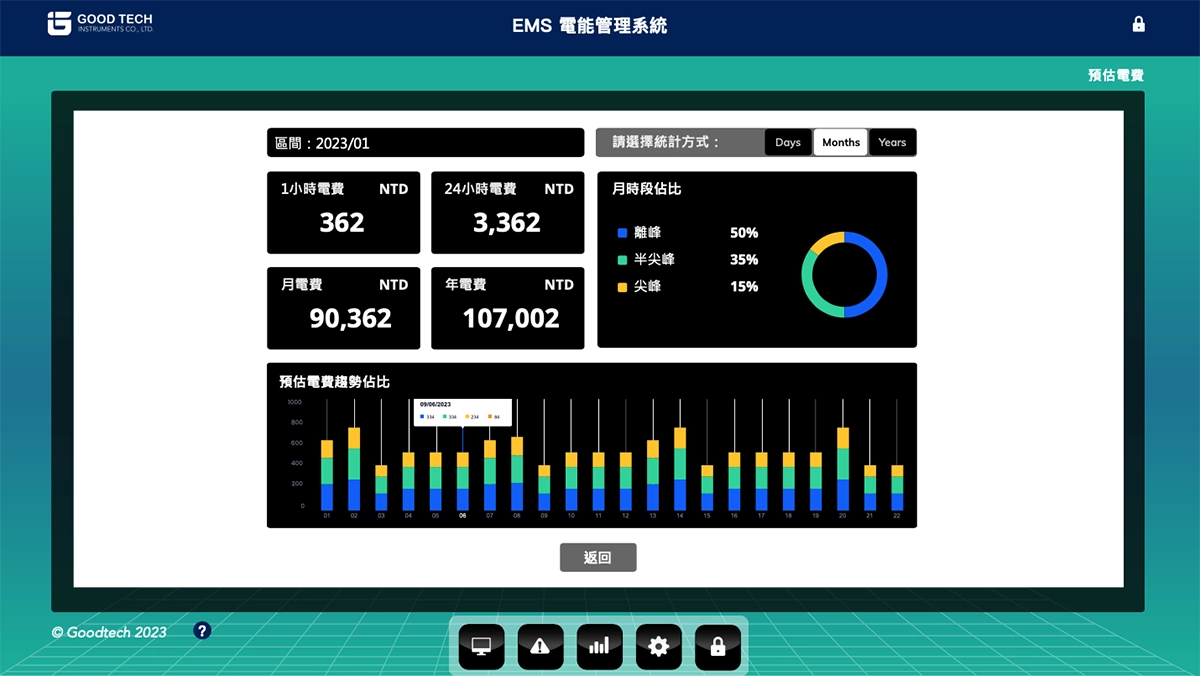
Off-Peak, Peak, and Mid-Peak Usage Share Analysis
Understand electricity usage during off-peak, peak, and mid-peak periods to help users schedule power consumption at the right times and reduce electricity costs.
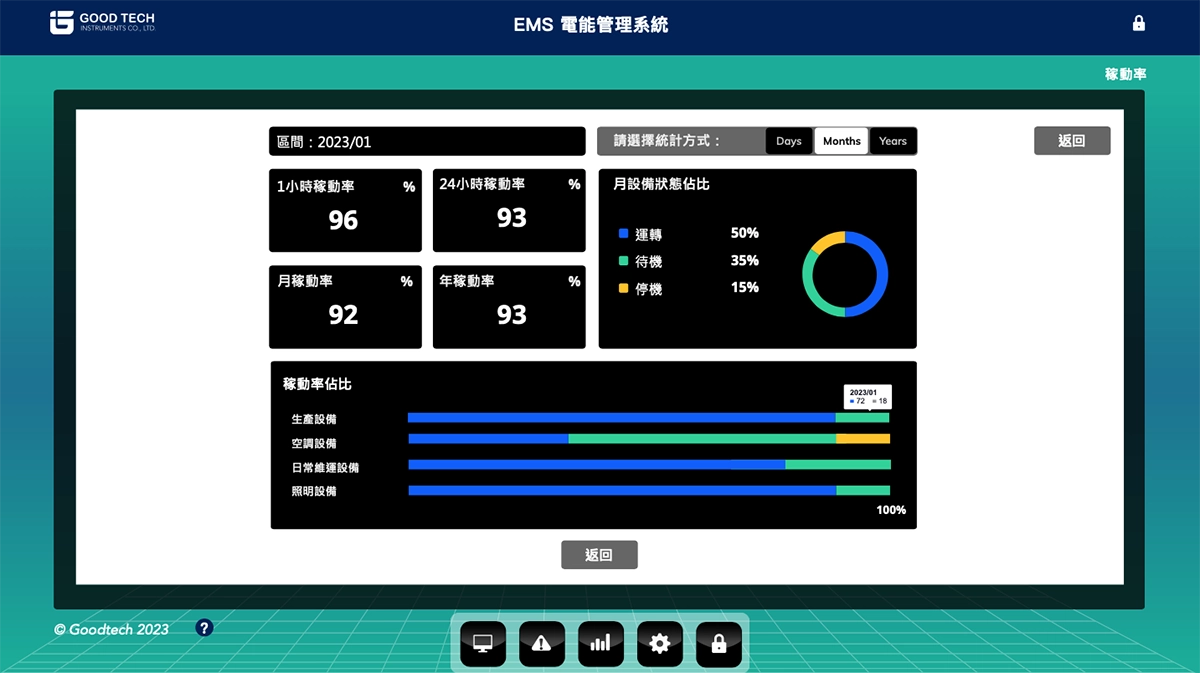
Operating, Standby, and Downtime Utilization Analysis
Monitor machine utilization to prevent energy waste caused by idle operation or prolonged downtime. Improve production line utilization and overall OEE.
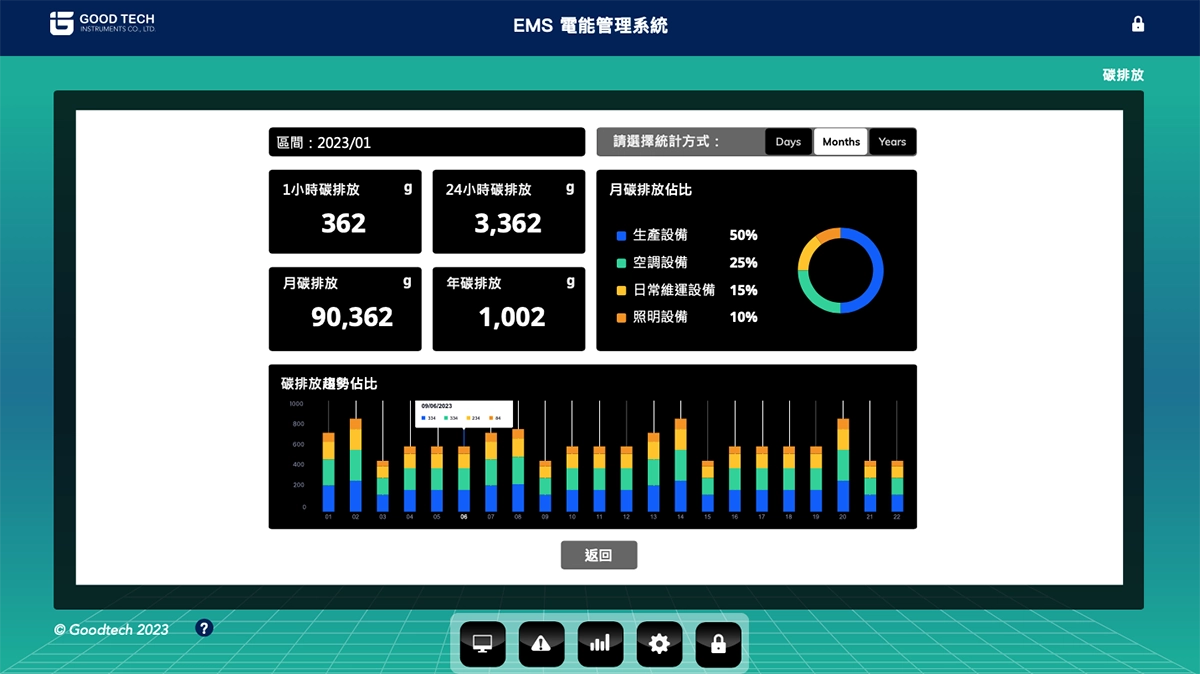
Understand Carbon Emission Shares and Support ESG Implementation
Analyze carbon emissions from different types of equipment through trend-based statistics. The data provides a foundation for equipment carbon inventories, carbon records, and ESG planning.
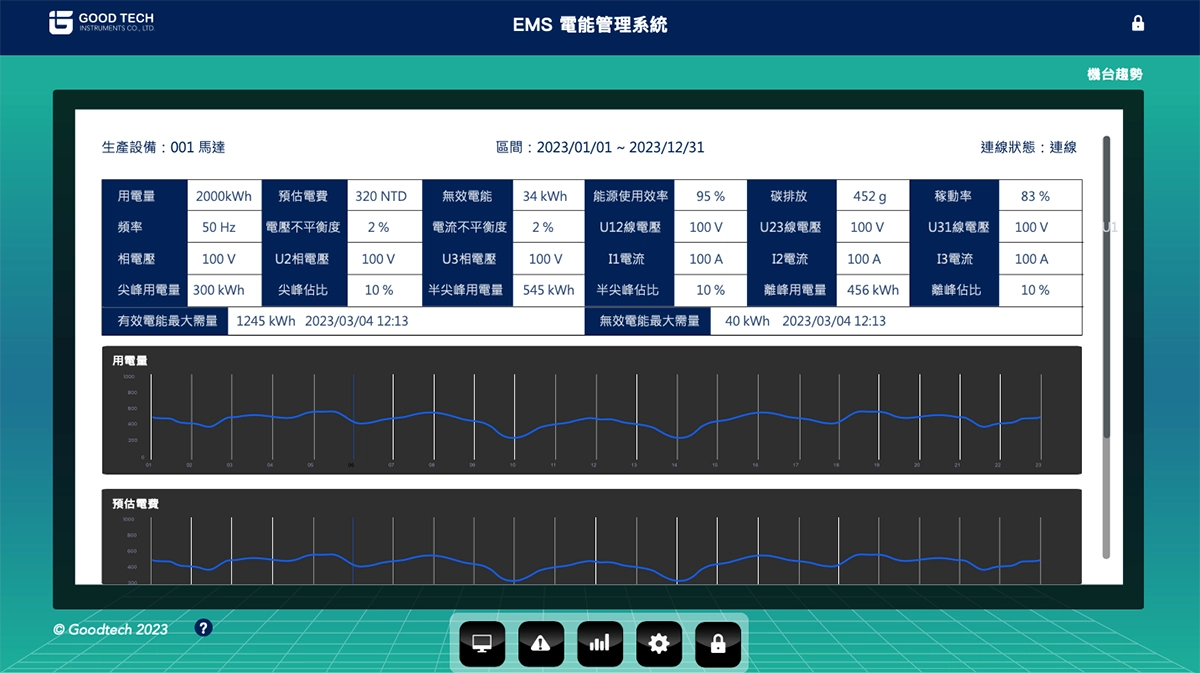
Monitor Machine Status with Detailed Data Records
All electrical parameters are recorded in detail and in real time. Users can analyze trend charts to understand abnormal conditions and identify relationships between data changes and potential causes.
UI Features
Flexible Addition of Equipment Monitoring Points
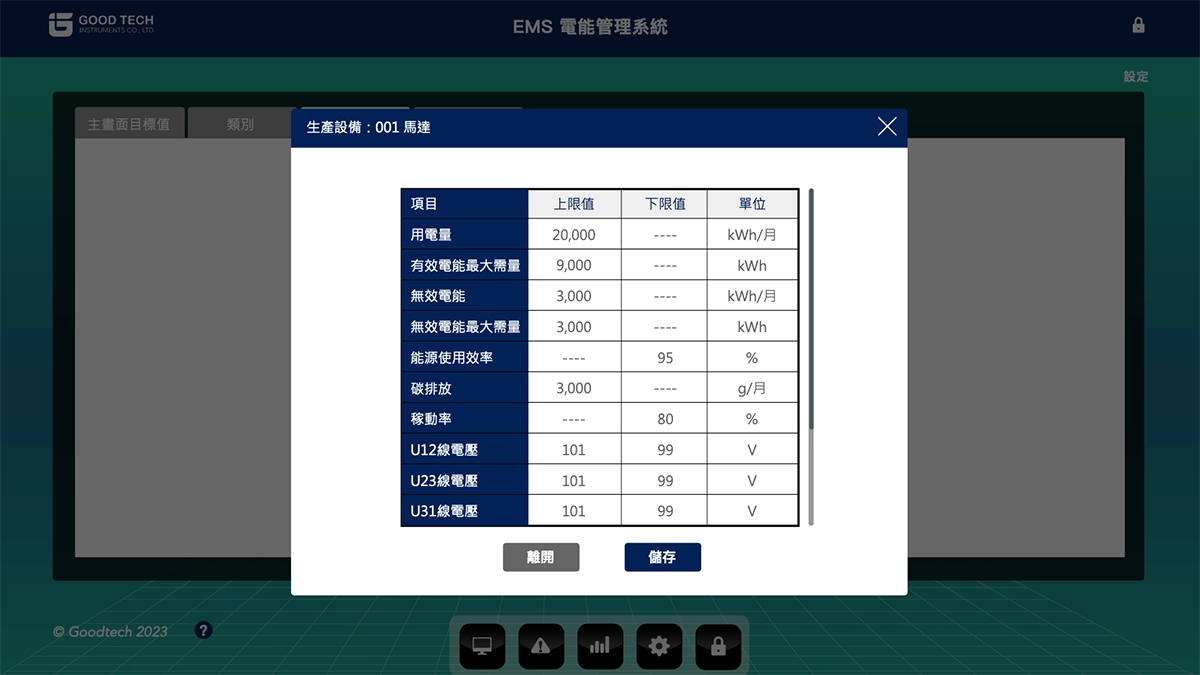
Simple Expansion Architecture for More Flexible Management
The system features a simple architecture and fast installation. It can be flexibly expanded according to on-site requirements without the need for large-scale construction.
The equipment list displays real-time information, enabling precise management of each device. With customizable categories and flexible device additions, new monitoring points can be created in just a few simple steps, allowing your plant to stay prepared for future planning and expansion.
UI Features
Abnormal Event Reports
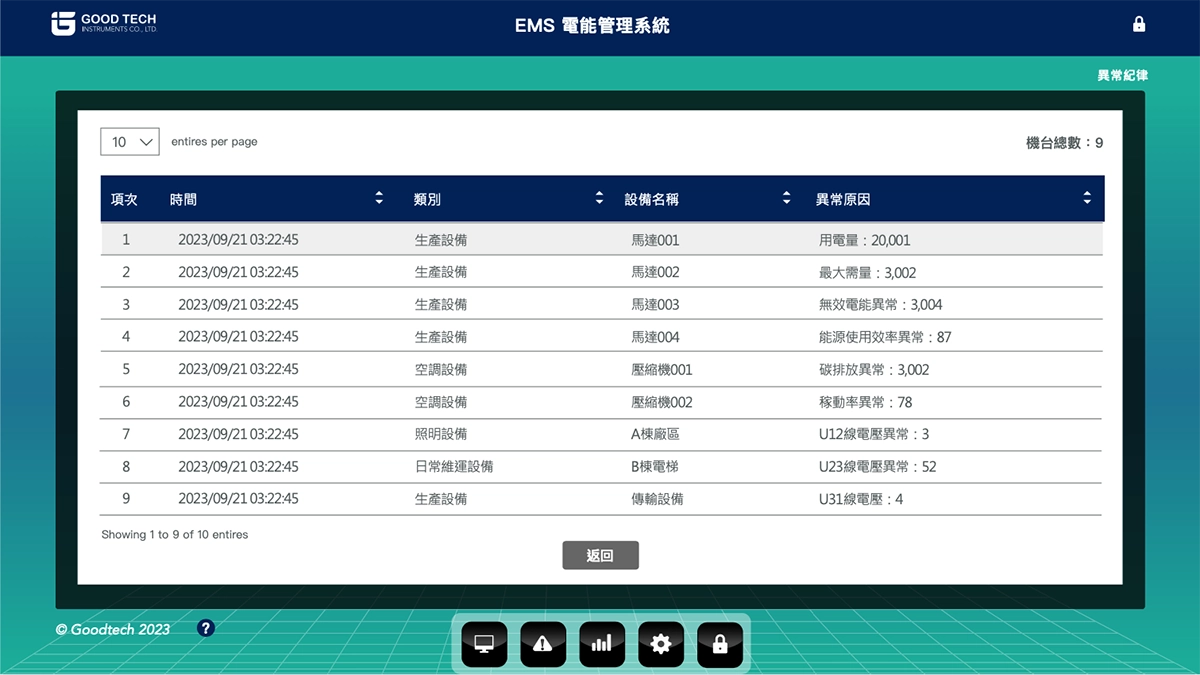
Real-Time Electricity Anomaly Alerts for Rapid Root-Cause Troubleshooting
Do you know which machines are consuming excessive electricity? Which machines are operating at unusually low power?
The system provides real-time anomaly alerts and immediately sends notifications via Email. It also records the time, location, and data associated with each abnormal event, helping users quickly analyze possible causes, prevent equipment damage or production interruptions, and minimize the operational impact of unexpected incidents.
In addition, users can add notes to each abnormal event record, making data tracking and traceability easier.
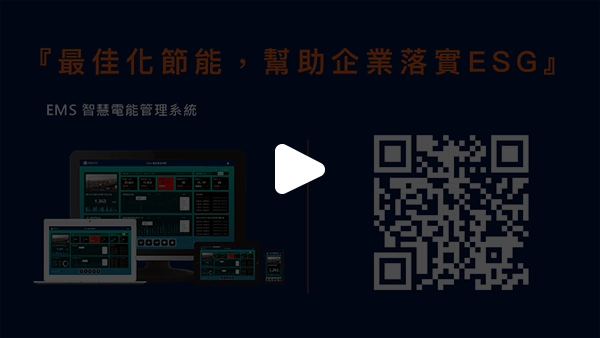
Video
Introduction
UI Features
AI Smart Assistant
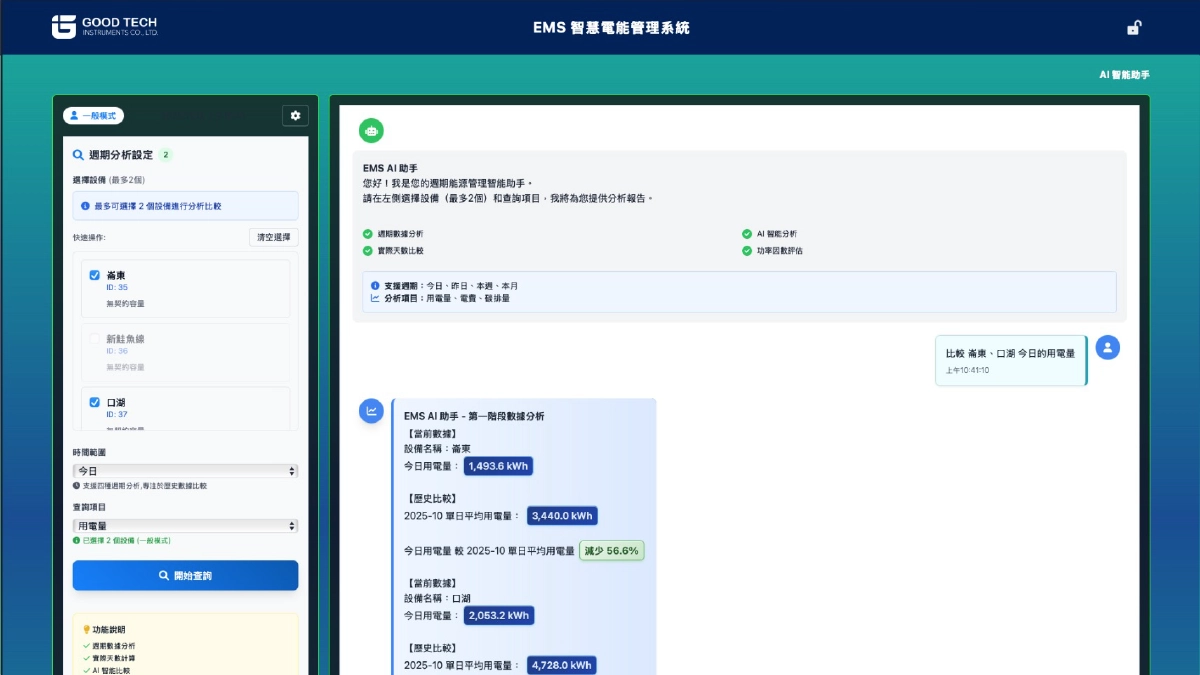
Lots of Data, but No Time to Make Sense of It?
Every real-time electricity reading is recorded, while load curves for each floor and production line are fully preserved. Over time, the system accumulates a massive amount of energy data.
The AI Assistant organizes all of this data into intuitive and easy-to-understand statistics.
Users can switch between Today and This Month views to review data. The system automatically aggregates energy information by plant, production line, or equipment. Each card displays current electricity consumption, electricity costs, and carbon emissions while comparing current values against the equipment's normal baseline. When a value exceeds the baseline, the system immediately alerts managers by displaying the percentage deviation. Managers no longer need to manually compare large numbers of reports. By filtering according to severity indicators, they can quickly identify equipment requiring priority attention, avoid wasting time inspecting equipment operating normally, and significantly improve inspection efficiency.
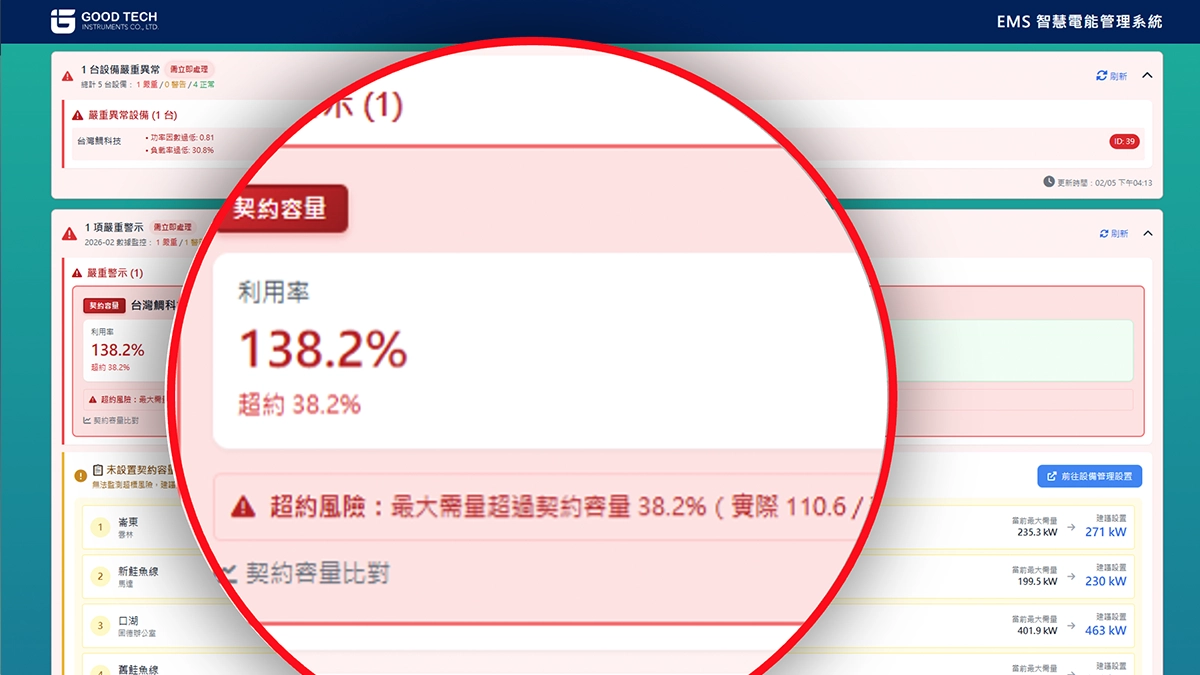
No Time to Review Every Anomaly?
In most EMS systems, anomalies are often buried across multiple pages and reports. Engineers must manually open individual screens and compare data before they can identify a problem.
The AI Assistant in the EMS Smart Energy Management System places the equipment that currently requires the most attention directly at the top of the page. Users can also filter equipment based on specific indicators. When further recommendations are needed, simply click the card and let the AI provide optimization suggestions.
The system's AI continuously scans accumulated data from equipment across the entire facility and proactively identifies devices that have clearly deviated from reasonable operating ranges. Green indicates that the equipment is within the baseline range, while red indicates a deviation from the baseline. At a glance, users can immediately identify which machine requires the most attention.
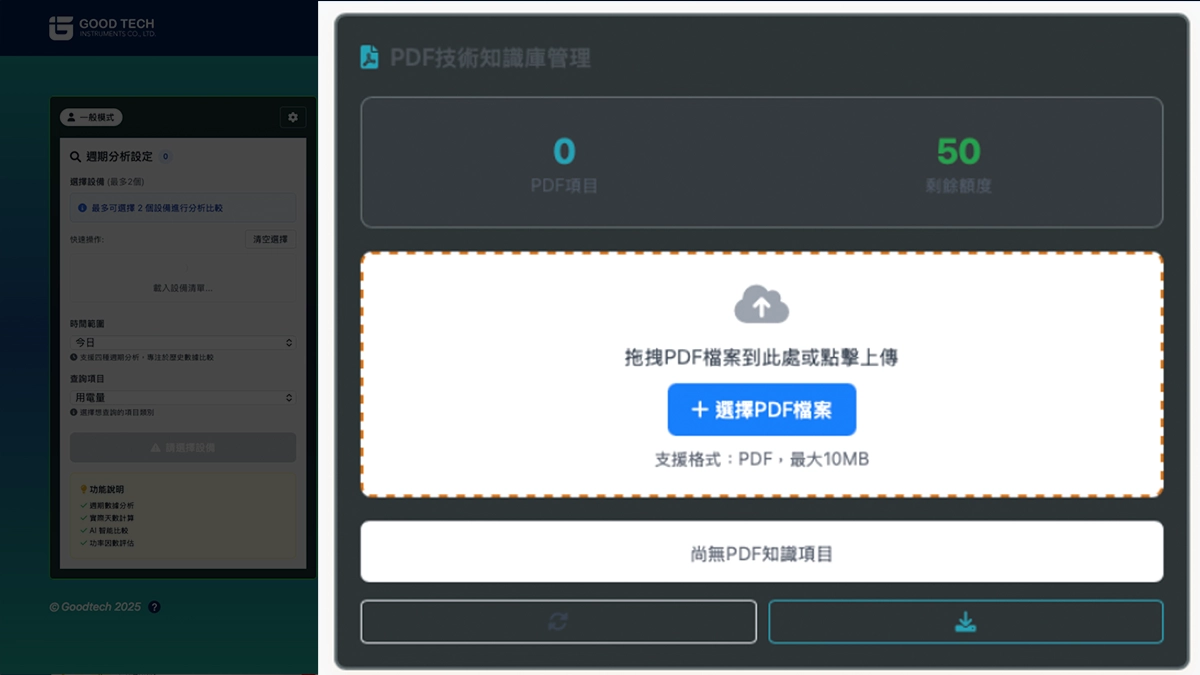
Upload Technical Knowledge for Better Alignment with Plant Operations
Beyond operational data, this "interactive advisor" can also grow with your company's technical knowledge. In Engineer Mode, the system provides an AI Knowledge Base function.
Companies can directly upload equipment manuals, operating procedures, ISO documents, energy-saving standards, or training materials to the system in PDF format. The system automatically filters and categorizes the information and creates document indexes.
The system extracts key knowledge points from these documents and gradually builds a knowledge base dedicated specifically to your factory. When users ask related questions in the future, the AI can directly reference the company's own documents and quickly provide answers that comply with internal standards.
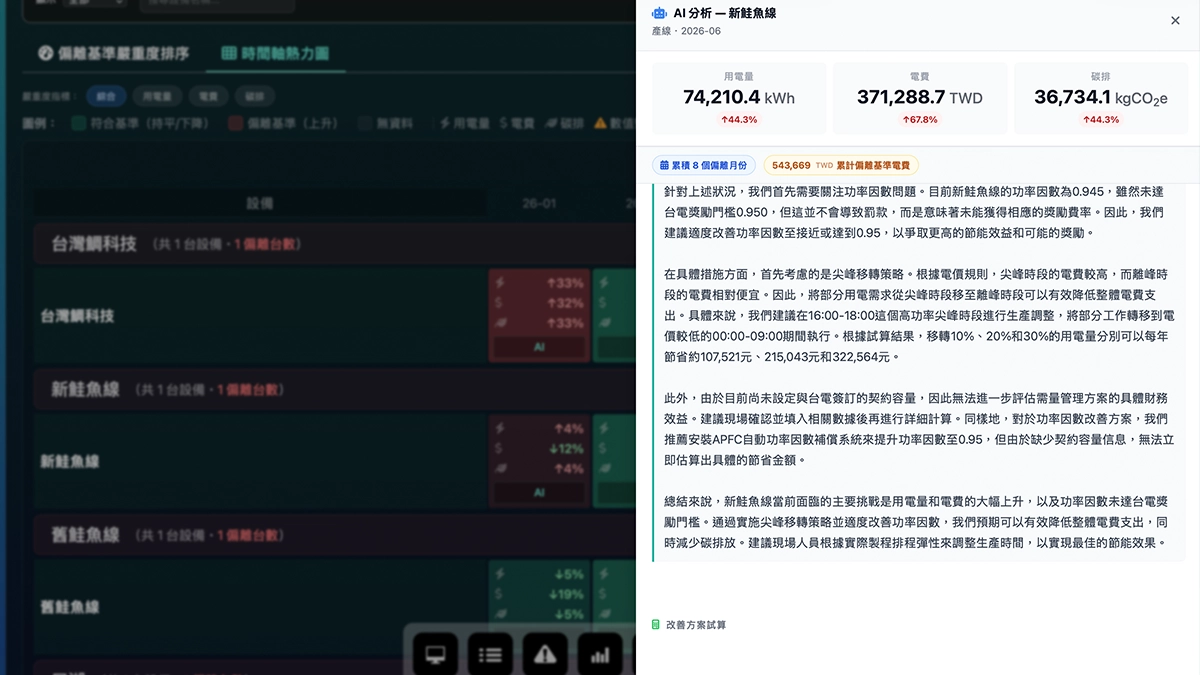
Not Sure What to Do Next?
The AI integrates all analysis results and provides specific, prioritized improvement recommendations based on current equipment conditions. For example, it may recommend improving the power factor, adjusting production schedules during peak periods, shifting part of the electricity load to off-peak periods, and simultaneously evaluating the potential energy-saving benefits of different improvement strategies.
The entire analysis report requires no manual preparation. Within just a few minutes, managers can identify problems, understand possible causes, and develop the most appropriate improvement strategy from large volumes of energy data.
This AI Assistant does not replace the existing screens and charts. Users can still manually open each page and review the information in detail. It simply provides a more intuitive path by allowing the system to give you a clear direction first.
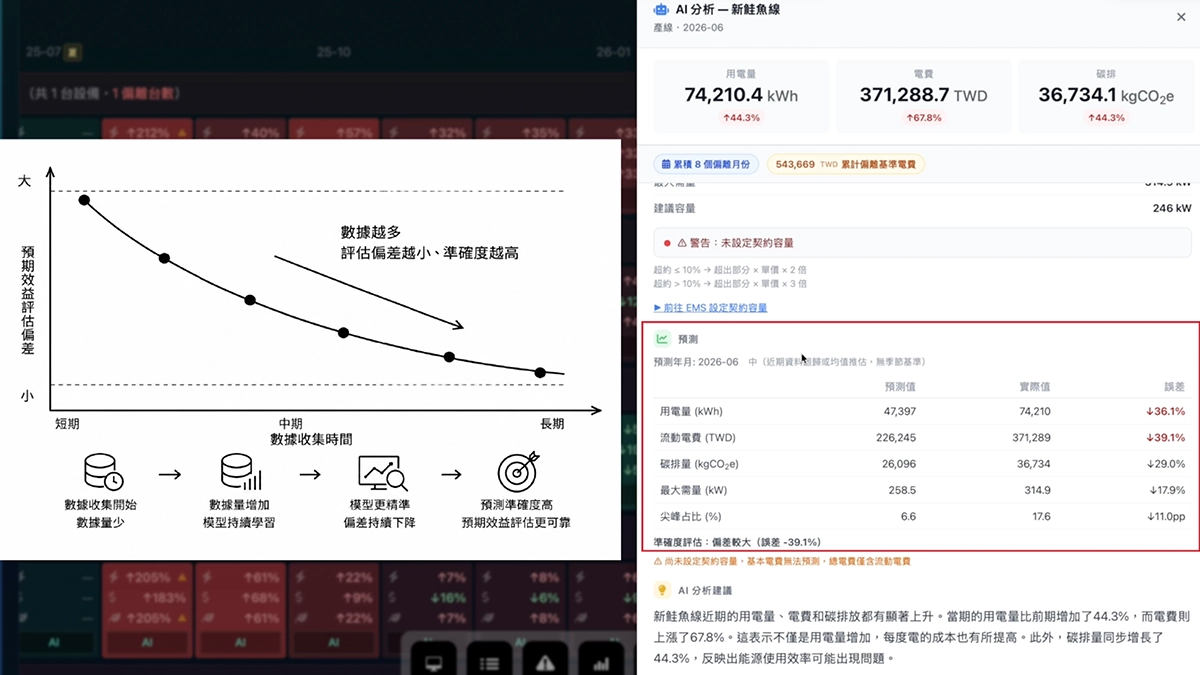
Concerned About Data Leakage?
Unlike conventional cloud-based AI services, Good-Tech's Smart Energy Management System uses an on-premises AI architecture deployed on the company's internal servers. Energy data does not need to be uploaded to an external cloud. All equipment data, energy information, and corporate knowledge documents can remain within the company's internal environment for analysis.
This not only helps comply with corporate information security policies but also prevents sensitive production data from being exposed externally, significantly improving data security.
In addition, the AI Assistant of the Smart Energy Management System is based on the ISO 50006 methodology. It can automatically establish and adjust baseline values according to actual operating conditions within the facility. Through long-term data collection, deviations in estimated energy-saving benefits can be progressively reduced while analytical accuracy continues to improve. This approach also enhances AI explainability and transparency, ensuring that every energy-saving decision becomes more precise and is supported by actual operational data.
Video
Introduction
Application Targets
Suitable for Any Energy-Consuming Facility
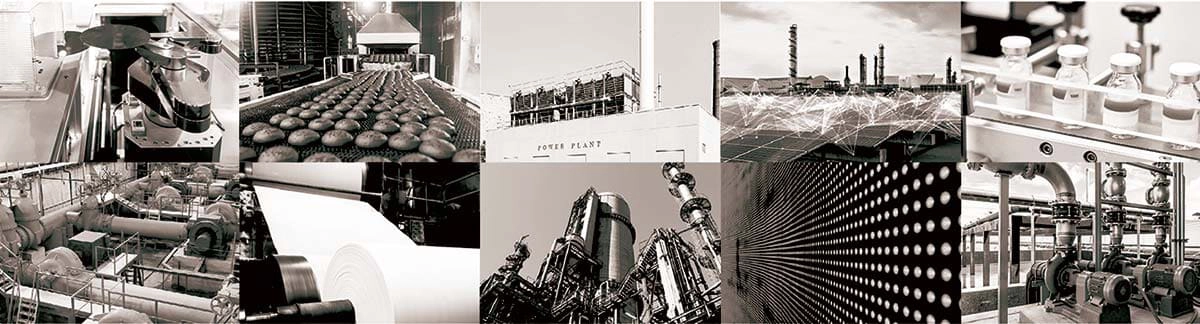
Examples: Semiconductor industry, petrochemical plants, wastewater treatment plants, power companies, infrastructure, railway transportation, residential property management, inspection and meter reading, pharmaceutical and food industries, as well as agricultural and aquaculture sectors.
Architecture Overview
Ensuring Safe Production & Enhancing Equipment Efficiency



FAQ
What is the EMS Smart Energy Management System?
The EMS (Energy Management System) instantly collects and analyzes various power consumption data, helping enterprises grasp the energy usage status of equipment, production lines, and facilities. Through real-time monitoring, anomaly alerts, automated reports, and energy analysis features, it assists enterprises in reducing energy waste, improving equipment efficiency, and enhancing energy management decisions.
How does EMS help enterprises reduce electricity costs?
EMS helps enterprises formulate energy-saving strategies by monitoring real-time power usage information, analyzing load trends, and identifying high energy-consuming equipment and abnormal power usage. The system can also provide energy-saving suggestions and alert notifications to reduce peak power consumption and energy waste, thereby decreasing electricity expenses.
How does EMS assist enterprises in promoting ESG and net-zero carbon emissions?
EMS continuously tracks energy use and carbon emission data, helping enterprises master energy efficiency, reduce energy waste, and lower their carbon footprint. At the same time, it serves as an important data foundation for ISO 50001 energy management and ESG sustainable development, helping enterprises achieve their goals of energy saving, carbon reduction, and sustainable operation.
What can the EMS AI assistant do?
The EMS AI assistant automatically compiles energy information across the facility, production lines, and equipment. It compares current power usage with normal baselines, finds equipment with significant deviations, and helps administrators prioritize handling anomalies based on severity. The system can also provide improvement suggestions regarding power factor, peak scheduling, and energy efficiency, reducing the time spent manually reviewing reports line by line.
Will the EMS AI data be uploaded to an external cloud?
Good Tech's EMS can be deployed on internal corporate servers using an on-premise AI architecture. This ensures that energy data, equipment information, and corporate knowledge documents are analyzed within the internal environment, reducing the need to upload sensitive production information to an external cloud.
Can EMS integrate with third-party Dashboards, MES, or other systems?
Yes. EMS can acquire smart meter data via methods like RS485 Modbus and can also integrate energy data into IIoT Dashboards, MES, or other third-party platforms as needed, centralizing the management of various equipment and energy information.
Support
Other ESG-Related Topics