OEE

PDM

Tracking
Equipment Utilization Management
Technology Concept|Equipment Utilization ManagementThe higher the equipment utilization rate, the less idle time the machines have, allowing them to maximize production potential. This directly enhances production efficiency and reduces the cost per unit of production.
What is OEE? Reasons for Implementation
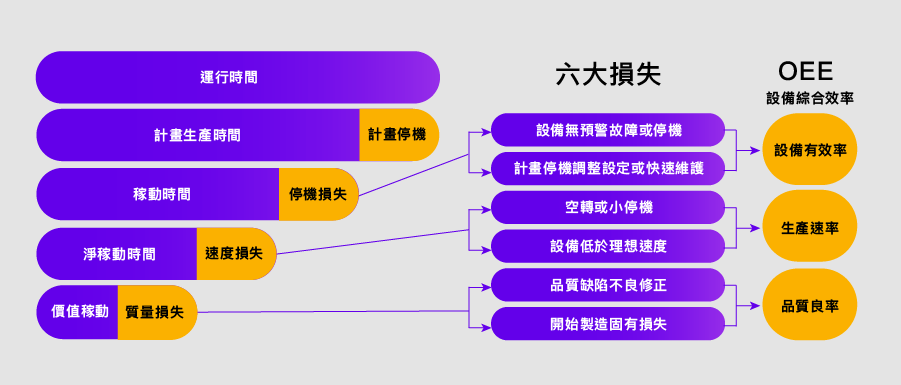
OEE stands for Overall Equipment Effectiveness. It is an index used to measure the efficiency of manufacturing equipment or production lines. The goal of OEE is to maximize equipment operation efficiency, minimize downtime, reduce production slowdowns, and decrease defective product rates, ultimately improving production efficiency and reducing costs.
With the rise of the smart manufacturing era, factories are gradually adopting automated production methods. However, when production efficiency declines or equipment failures cause downtime, every minute of delay translates to greater losses.
Implementation Method
1. Managing Utilization with Three-Color Signal Lights
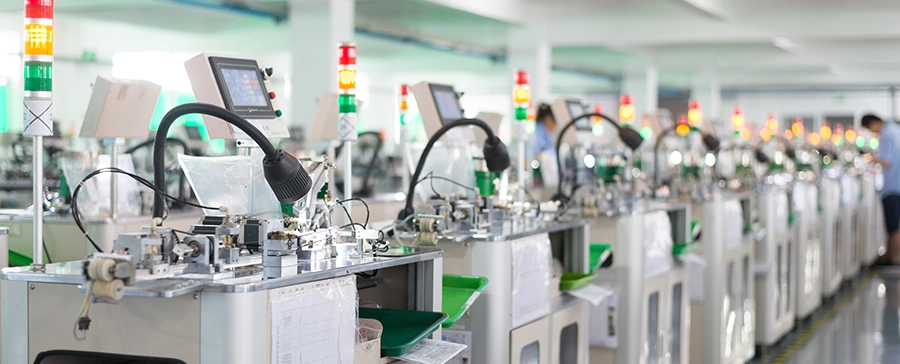
Are you able to accurately grasp the status of your production line equipment? Do you have an immediate response when an issue arises? In the industrial manufacturing sector, many production facilities are equipped with three-color signal lights as standard. These lights indicate the operational status of the equipment, such as normal operation, downtime, or failure. Utilizing these signal lights for machine utilization management is an intuitive and effective method that enables real-time monitoring of equipment operations in manufacturing or production environments, thereby improving efficiency and effectiveness.
Quick Digital Upgrade for Traditional Equipment
By installing sensors on the three-color signal lights and collecting status data to calculate the factory’s utilization rate, it becomes possible to understand the operational status of manufacturing equipment and improve production line efficiency. This system is compatible with various equipment types, has a low implementation cost, and can be quickly set up for real-time integration and statistical management of production equipment across the factory.
OEE Equipment Utilization Management System
The OEE Equipment Utilization Management System integrates all factory equipment, making utilization rates clear at a glance. System data can be integrated with third-party systems such as ERP, MES, and CRM. This accelerates the digital transformation of smart factories, automates processes to save manpower, and makes data management easier.
OEE Equipment Utilization Management System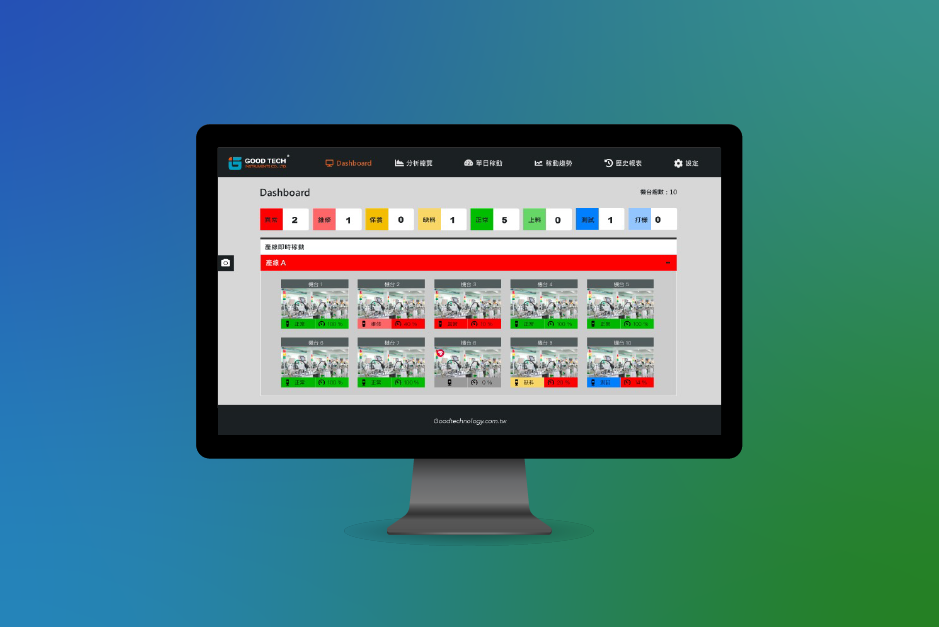
OEE Equipment Utilization Management System
Instantly integrates and displays equipment operation status, calculates utilization rates, and provides graphical data management for easy analysis.
How to Implement
2. Understand Equipment for Real-Time Predictive Maintenance
By monitoring equipment conditions and detecting anomalies in advance, you can extend equipment lifespan, maintain operational quality, and plan maintenance at the right time. This helps prevent unexpected downtime and ensures long-term stable operation of equipment.
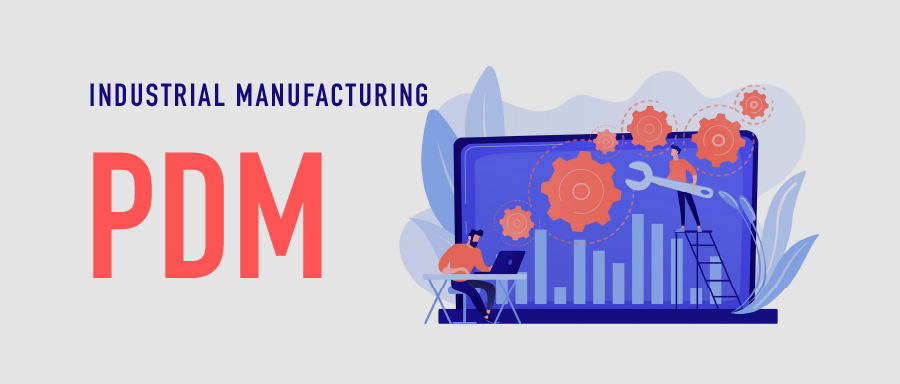
How to Monitor Equipment Conditions?
When equipment is used correctly, operates normally, and demand remains unchanged, its lifespan becomes a crucial factor affecting production efficiency. By utilizing different monitoring methods based on equipment characteristics, users can answer questions such as: "How much longer can the equipment operate?", "How should maintenance be scheduled after receiving an alert from the monitoring system?", and "What is the priority order for machine maintenance?"
Rotary Motor Equipment
Factories are filled with numerous automated machines, and most of them contain motor rotors. Monitoring the rotor condition inside the motor is a key factor in determining whether the equipment is operating normally. By measuring the vibration signals of the machinery, we can obtain meaningful insights.
Rotary Motor Equipment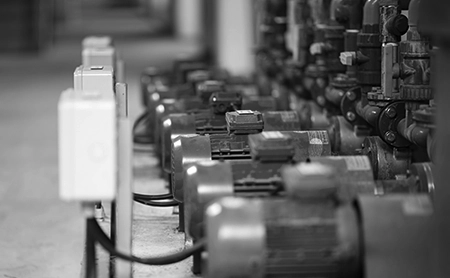
Rotary Motor Equipment PHM
Monitoring rotor motor conditions can help identify 60-70% of equipment anomalies in a factory.
Vibration Measurement Service
Abnormal vibrations are often early warning signals of potential machine hazards. Understanding the condition of your equipment is essential to prevent unexpected production line shutdowns. By using Goodtech’s professional rotor equipment inspection service, a rotor health status report is generated after each inspection, providing a reliable basis for immediate maintenance decisions.
Vibration Measurement Service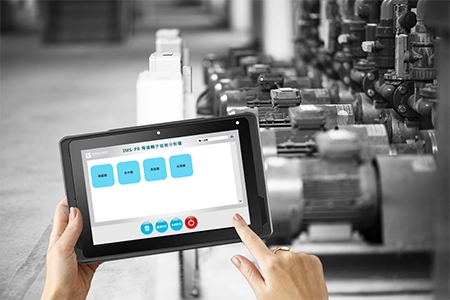
Vibration Measurement Service
Create a dedicated rotor inspection map for your factory and provide a basis for predictive maintenance.
Identify the Root Cause of Equipment Issues
Vibration data is a crucial indicator for assessing the health of machinery and equipment. Most machines, equipment, and structures experience vibration issues. When abnormal vibrations occur, they are often difficult to detect but can cause wear and tear on other components, leading to even more severe damage.
VMS-PH Equipment Dynamic Analyzer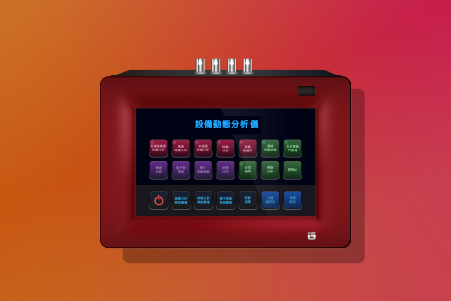
VMS-PH Equipment Dynamic Analyzer
Integrates all vibration measurement functions, including spectrum analysis, time-frequency analysis, vibration transmission rate, and dynamic analysis.
How to Execute
3. Track Work Order Progress to Avoid Production Line Downtime
Idle equipment leads to underutilized production capacity. For production lines operating at full capacity, even minor delays can have a direct impact on overall output. This could result in missed delivery deadlines, harming customer relationships and potentially leading to lost orders or contractual penalties. Effectively managing repair progress reduces risks, ensuring that production lines can resume operations quickly and maintain stable output.
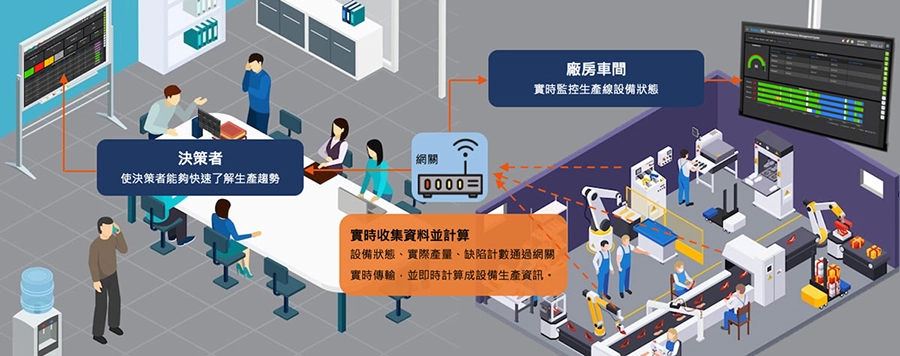
Equipment Efficiency Management Solution
Production capacity has always been a major concern for factory managers. Machines seem to be operating, yet why isn’t production efficiency improving? There are many possible reasons, including equipment failures that slow down production lines or poorly planned production schedules. A robust management tool is needed to quickly identify the root cause and help the factory restore production capacity efficiently.
Equipment Efficiency Management Solution
For every abnormal event, an event notification is created, the processing status is updated in real-time, and follow-ups are tracked. This ensures a precise management process. Users can assign contact groups for specific events and escalate their priority levels based on their importance.
Equipment Efficiency Management Solution
Equipment Efficiency Management Solution
Creates a clear production history for equipment, integrates work order information, and calculates carbon emissions and energy consumption.
FAQ
What is the OEE Equipment Availability Management System?
The OEE Equipment Availability Management System automatically calculates operation, standby, downtime, and anomaly information using equipment operational status data, digitizing conditions that previously required manual inspection and recording. Administrators can quickly grasp the availability of each equipment and production line through a graphical interface, identify the causes of downtime and efficiency loss, and use it as a basis for capacity improvement and equipment management.
Can availability management be implemented on old equipment without PLC communication?
Yes. For old equipment without a PLC communication interface or where it is inconvenient to modify the equipment program, non-intrusive data collection can be performed through stack light status. By using sensors to obtain green, yellow, and red light statuses, the operational information of traditional equipment can be digitized, lowering the threshold for intelligent transformation of existing equipment.
Why use stack lights to manage equipment availability?
Stack lights are one of the most direct signals of equipment operation status, usually corresponding to normal operation, standby, anomaly, or downtime. By automatically collecting the duration and state changes of the lights, equipment operation information can be converted into data to calculate operating time, downtime, and equipment availability rate, replacing manual inspections and meter reading. This also aligns with the implementation method introduced on this current page.
Can the OEE system manage multiple machines simultaneously?
Yes. The OEE Equipment Availability Management System can centrally manage the operational status of different equipment. A dashboard displays the status of all machines and production lines, allowing administrators to quickly compare availability performance, downtime, and anomalies across different equipment to master plant-wide operational efficiency.
Can the OEE system be integrated with ERP, MES, and other systems?
Yes. Equipment availability and operational status data can be integrated into third-party management systems, such as ERP, MES, CRM, or other dashboards, as needed. This reduces information silos caused by data being scattered across different systems and further integrates equipment, production, and management data.
Can processing progress be tracked after an equipment anomaly occurs?
Yes. In addition to mastering equipment availability status, notifications and processing records can be created for abnormal events. This allows tracking of repair requests, maintenance, and subsequent handling statuses based on event severity, preventing long-term idleness of production lines caused by delayed information transmission or processing after an anomaly occurs.
How does OEE availability management help improve production efficiency?
By collecting long-term data on equipment operation, standby, downtime, and anomalies, the main causes of equipment idling and capacity loss can be identified. Administrators can further compare the availability performance of different equipment, production lines, and time intervals to make improvements aimed at frequent downtime, excessive maintenance time, or reduced equipment efficiency, shifting equipment management from experience-based judgment to data-driven management.
Support
Other OEE-related Topics