
Case

Application

FAQ
What Are the Ways to Save Electricity?
FAQ|What Are the Ways to Save Electricity?
Has the electricity price increased again?
Fluctuations in electricity costs often impact major industrial power consumers.
How can industrial electricity consumption be reduced? Besides avoiding peak-hour usage, what other methods can help save energy?

Ways to Save Electricity?
Has the electricity price increased again? Fluctuations in electricity costs often impact major industrial power consumers.
How can industrial electricity consumption be reduced? Besides avoiding peak-hour usage, what other methods can help save energy?
1. Choosing the Right Contract Capacity
High-voltage users can select from various time-based electricity pricing plans, such as two-tier pricing, three-tier pricing, and peak-time variable pricing.
Contract capacity refers to the maximum agreed power demand between the user and the electricity provider, which is used to calculate basic electricity fees.
To promote energy-saving policies, Taiwan Power Company (Taipower) has introduced the "Batch Production Time-Based Pricing" plan to help industries like steel manufacturing, foundries, and machine tool production reduce electricity costs. Currently, approximately 17,000 companies have adopted this plan.
2. Improving Equipment Efficiency
To improve energy efficiency, regular equipment maintenance is essential.
Older machinery tends to consume more electricity due to energy inefficiencies, leading to increased energy waste.
Using data analytics and predictive maintenance technology to analyze operational data allows for early failure detection, reducing downtime and maintenance costs while improving efficiency and reliability.
3. Improving Power Factor
When reactive power occurs at the load end, apparent power increases, reducing overall efficiency.
By implementing power factor correction equipment in the transmission system, grid stability is improved, and unnecessary power losses are minimized.
Enhancing the power factor can lower power wastage, reduce apparent power demand, and optimize electricity transmission efficiency.
4. Implementing an Energy Management System
By monitoring and analyzing equipment energy usage, companies can identify consumption patterns and develop appropriate energy-saving strategies.
Leveraging IoT and AI-powered smart monitoring systems allows real-time alerts for anomalies, enabling maintenance teams to take prompt action to prevent energy waste.
5. Using Alternative Energy Sources
If site conditions allow, companies can install self-generation systems to reduce dependence on public electricity grids.
Excess power can be sold, generating additional revenue. Solar panels installed on rooftops or open spaces can convert sunlight into renewable, clean energy for self-sufficiency or partial grid independence.
Managing Energy Saving and Carbon Reduction Together?
EMS Smart Energy Management System
As companies are increasingly required to incorporate carbon neutrality or emission reduction goals into their production processes, effective energy management has become a crucial element in achieving sustainable production objectives.
Smart Energy Management System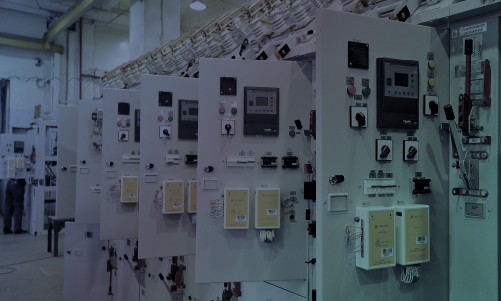
Smart Energy Management System
#Digital Transformation #IoT #ESGFAQ
What are common power-saving methods in factories?
Common power-saving methods include adjusting contract capacity, reducing peak demand, improving equipment energy efficiency, improving the power factor, reducing equipment standby and idling, implementing an energy management system (EMS), and evaluating alternative energies like solar or energy storage based on plant conditions. Before execution, main energy-consuming sources should be identified via power data to determine improvement priorities.
Can adjusting contract capacity reduce electricity bills?
Yes, but it needs to be evaluated based on actual maximum demand and power usage patterns. A contract capacity that is too high increases the basic electricity fee, while one that is too low may result in over-contract penalty fees. Enterprises should analyze long-term maximum demand, peak/off-peak usage, and production schedules before selecting the appropriate contract capacity and Time-of-Use pricing scheme.
Can improving the power factor save electricity?
Improving the power factor mainly reduces reactive power and line current, minimizing distribution losses and enhancing power system efficiency. It may also reduce extra electricity cost penalties caused by a low power factor. Whether it directly reduces the active power consumption of the equipment itself depends on the equipment and load conditions.
Why might old equipment consume more electricity?
Equipment aging may be accompanied by mechanical wear, insufficient lubrication, reduced transmission efficiency, lower motor efficiency, or outdated control methods, requiring more energy for the same output. Long-term monitoring of vibration, current, temperature, and power data can help identify gradually declining equipment efficiency, serving as a basis for maintenance or replacement.
Why does reducing peak demand save electricity bills?
For large power consumers, electricity bills are not only related to total consumption; maximum demand can also affect the bill. By using production scheduling, staggered equipment startups, or energy storage to reduce situations where many devices use power simultaneously, there is an opportunity to lower peak demand and the associated electricity costs.
How does an EMS (Energy Management System) assist factories in saving power?
An EMS continuously collects power data from equipment, production lines, and facilities. It analyzes power consumption, demand, power factor, and trends to help identify abnormal energy consumption, peak usage, and inefficient equipment. By comparing data before and after improvements, power saving shifts from experience-based judgments to continuous energy management.
What is the relationship between factory power saving and carbon reduction?
Electricity used by enterprises usually corresponds to indirect greenhouse gas emissions. Therefore, reducing unnecessary power consumption and improving energy efficiency not only lowers electricity bills but also helps reduce power-related carbon emissions. When combined with applicable electricity emission factors, the carbon reduction results brought by power-saving measures can be further tracked.