
Case

Application

FAQ
How to Monitor the Motion of a Photoresist Coating Machine Robot Arm to Ensure Equipment Stability?
Case | How to Monitor the Motion of a Photoresist Coating Machine Robot Arm to Ensure Equipment Stability?The robotic arm used for wafer handling in photoresist coating machines must maintain high precision and stability to minimize mechanical vibrations that may impact the wafer surface. How can we ensure the stability of the robotic arm?
Photoresist Coating Machine Robot Arm
Specialized Robotic Arm for Wafer Handling in Photoresist Coating Machines
Many factors influence wafer quality during the photoresist coating process, including the precision, stability,
speed, and mechanical vibrations of the robotic arm. The robotic arm must exhibit high precision and stability
to ensure uniform photoresist coating across the entire wafer surface. If the arm experiences instability or precision issues,
it may lead to uneven coating layers, affecting subsequent processing steps.
Vibrations from the robotic arm may transfer to the wafer, impacting the uniformity of the photoresist layer.
Therefore, minimizing mechanical vibrations affecting the wafer surface is crucial.
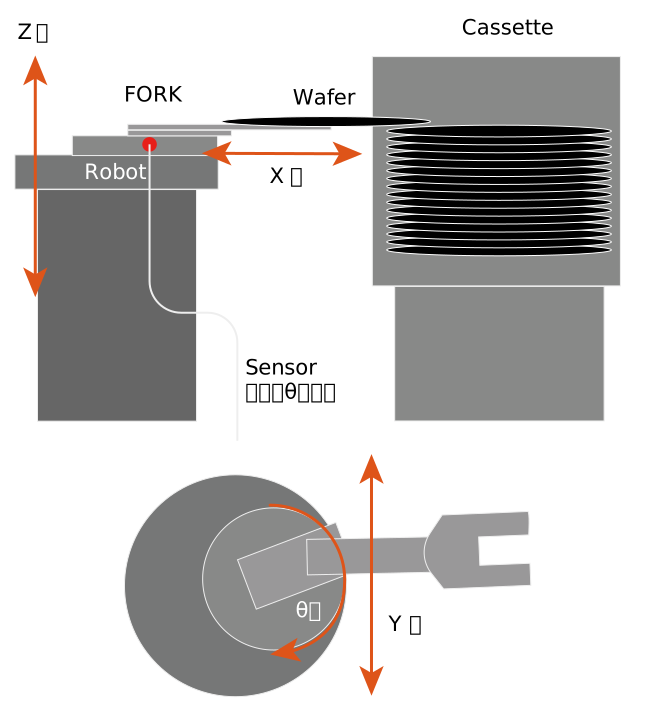
Monitoring Explanation
VMS-ML Machine Learning Intelligent Monitoring System
Using the VMS-ML machine learning intelligent monitoring system, we analyze the robotic arm’s movement in wafer
pickup, placement, and transfer processes across the X-axis, Y-axis, Z-axis, and θ-axis. The system learns
the dynamic vibration signals under optimal conditions, enabling pattern recognition and real-time comparison.
The monitoring system detects whether the Z-axis, Y-axis, θ-axis, and X-axis operate in a stable state.
If instability is detected, corrective measures are taken in advance, achieving robotic motion quality detection
and preventive maintenance.
Measurement Status
Action: Robot transfer from main arm to cassette
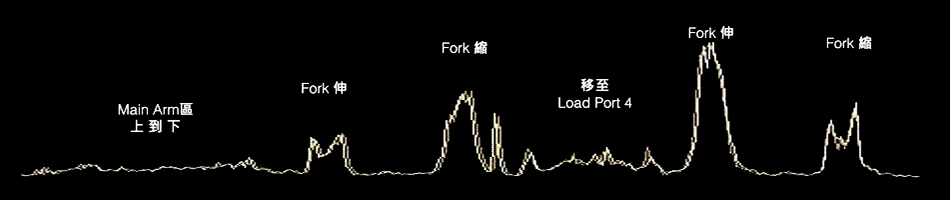
Detection Objectives: 1. Monitoring the quality of Z-axis movement. 2. Monitoring the quality of X-axis (wafer pickup and placement) movement.
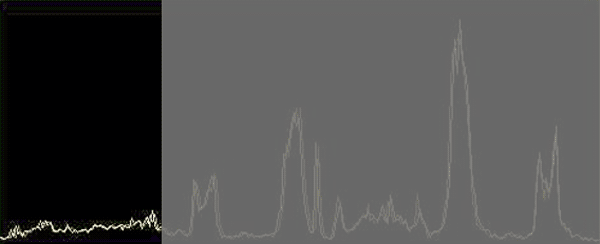
Marker 1: Z-axis only detection
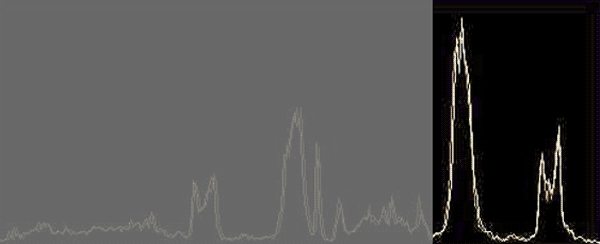
Marker 2: X-axis only detection (Slot 1 placement)
Detection Objectives: 1. Monitoring the quality of Y-axis movement (including θ-axis). 2. Monitoring the quality of X-axis (wafer pickup and placement) movement.
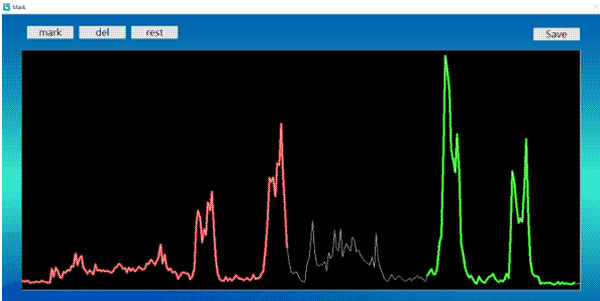
Marker 1: Y-axis and θ-axis only detection
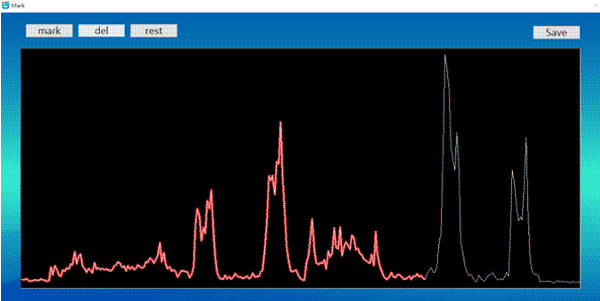
Marker 2: X-axis only detection
Measurement Conclusion
Using the VMS-ML machine learning intelligent monitoring system, the correct motion behaviors are learned and used as benchmarks for monitoring and diagnosis. The system detects anomalies or instability in the robotic arm’s movements in real-time, enabling predictive maintenance and preventing unexpected failures.
Benefits of using VMS-ML for robotic arm health monitoring: Preventing wafer damage due to abnormal arm movements, monitoring the wafer transfer process, and detecting issues such as wafer scratching and misalignment.
VMS-ML Machine Learning Intelligent Monitoring System
FAQ
Why does the transfer arm of a photoresist coating machine need monitoring?
The wafer transfer arm in the photoresist coating machine is responsible for accurately transferring the wafer to the coating position. Its movement precision and stability directly affect the uniformity of the photoresist and the quality of the process. If the arm generates abnormal vibration, positioning deviation, or unstable movement, it may cause uneven photoresist thickness, wafer scratches, collisions, or a drop in process yield. Therefore, real-time monitoring is required to grasp the health status of the equipment.
How does mechanical vibration affect photoresist coating quality?
The photoresist coating process requires extremely high flatness and uniformity. If the transfer arm vibrates, the vibration energy may be transmitted to the wafer surface, causing uneven photoresist distribution, thickness deviation, and subsequent exposure process anomalies, thereby affecting product yield and process stability.
How does VMS-ML monitor the health status of the wafer transfer arm?
The VMS-ML machine learning intelligent monitoring system can learn the movement signals of the arm in its normal state and establish standard models for the X, Y, Z, and θ axes. When the system finds that the dynamic signal deviates significantly from the standard model, it can determine that the arm may be in an abnormal or unstable state and issue an early warning.
Which arm movements can be monitored?
The system can monitor repetitive actions such as wafer picking and placing, transferring, positioning, rotating, and moving along each axis. Through action signal recognition and similarity analysis, it grasps the operational quality and stability of each axis.
What are the benefits of implementing an arm monitoring system?
Implementing an arm monitoring system can help discover abnormal vibrations, positioning deviations, and mechanism wear early on, reducing the risks of wafer scratches, collisions, and process interruptions. At the same time, a long-term trend analysis can be used to establish an equipment health management mechanism, improving equipment reliability and overall production line utilization.
Is the photoresist coating machine arm suitable for predictive maintenance?
Yes, it is. Because the transfer arm has a large number of repetitive action characteristics, it is highly suitable for building a normal behavior model using machine learning. When the action signal gradually deviates from the normal range, maintenance work can be scheduled in advance to avoid unexpected downtime and yield loss.
Further Reading
The impact of environmental micro-vibration on Coater equipment?
Abnormal vacuum suction during loader operation?
Abnormality caused by insufficient air pressure in the dispenser?
The impact of environmental micro-vibration on Laser Grooving machines?
VMS-ML Machine Learning Intelligent Monitoring System
What is equipment remaining useful life (RUL) prediction?
Maintenance speed increased by 7 times, saving annual maintenance budget