
Case

Application

FAQ
Coater Machine and Environmental Micro-Vibration Effects?
Case|Coater Machine and Environmental Micro-Vibration Effects?The effects of environmental micro-vibrations are not immediately apparent, making them difficult to detect. However, they profoundly affect the relationship between equipment, processes, and product quality. How can we prevent “human-induced vibration interference” or “environmental impact” from compromising product quality?
Coater Machines in Semiconductor Environments
In semiconductor fabs, the photoresist coating section has always been a key stage in production yield. Every drop of photoresist and each spin acceleration must be stable and precise to form a uniform and smooth thin film. The wafer is held by vacuum suction on the rotating chuck, but if the floor or platform experiences micro-vibrations, even slight displacement of the suction position may cause eccentric rotation. In high-precision processes, such micro-vibrations can lead to instability during subsequent exposure and development.

Environmental Micro-Vibrations That Cannot Be Ignored
Let’s shift the focus to an often-overlooked factor — environmental micro-vibrations.
“Environmental micro-vibration” refers to low-frequency vibrations (typically in the range of 0.1 Hz to 100 Hz) with extremely small amplitudes, usually from nanometers to micrometers. This range includes major interference sources such as human activity, machinery operation, and building structure resonance — all critical to precision process stability. Typical sources include:
• External disturbances: vehicle traffic, elevator start-up, air conditioning vibrations;
• Internal disturbances: nearby equipment operation (pumps, robot arms), air duct flow fluctuations;
• Human activities: walking, pushing carts, or minor floor deformation.
The impact of micro-vibrations is not immediate but manifests over time as “statistical deviations,” which can significantly affect product quality in the long run.
| Impact Aspect | Observed Phenomenon | Subsequent Result |
|---|---|---|
| Non-uniform Film Thickness | Vibration affects the spin chuck, causing asymmetric photoresist distribution | Exposure energy distribution shifts, leading to linewidth error |
| Edge Ripples | Periodic liquid surface disturbance creates ripples | Forms photoresist edge beading or flow marks |
| Microbubbles and Particle Clustering | Micro-vibrations cause unstable photoresist flow | Increases defect density |
| Reduced Repeatability | Greater variation between coating batches | Process Cpk decreases |
| Post-Development Defects | Thickness variation affects exposure and development stages | Causes pattern distortion or peeling |
Although these vibrations typically have accelerations of only 0.001–0.05 g, in nanometer-scale thin film processes, such tiny movements can destabilize coating uniformity.
Superimposed Effect of Human Movement and Floor Micro-Vibrations
In actual fab environments, even the movement of cleanroom personnel can induce low-frequency micro-vibrations (2–5 Hz). Although the vibration energy is small, if the floor rigidity is insufficient or the platform’s natural frequency is too low, the vibration can propagate through the steel frame to the equipment base.
Experimental studies show that when personnel walk past the Coater area, the acceleration on the spin chuck can momentarily rise from 0.01 g to 0.02 g, causing slight thickness fluctuation at the photoresist edge. This “human-induced vibration interference” is especially noticeable in high-throughput continuous processes and is often mistaken for equipment accuracy issues.
Monitoring Description
VMS-EM Environmental Micro-Vibration Analyzer
Measurements were performed using the VMS-EM Environmental Micro-Vibration Analyzer. Three triaxial acceleration sensors were placed beneath the Coater platform and on the floor, and continuous recordings were made under various scenarios for comparison and analysis between Areas A and B.
Measurement Condition
Scenario 1: Coater at Rest
Area A

Area B

In Area A, vibration levels above 50 Hz were higher, reaching VC-B standards, with the Y-axis even approaching Op-Theatre criteria.
Scenario 2: Environment at Rest
Area A

Area B

In the stationary environment, Area A shows higher vibration values along the X-axis.
Scenario 3: Walking Environment
Area A

Area B

During walking conditions, Area B exhibits higher low-frequency vibration values than Area A, while Area A shows higher high-frequency vibration values compared to Area B.
Scenario 4: Cart Movement in the Environment
Area A

Area B

When a cart passes by, both Area A and Area B experience vibration effects, but the impact is noticeably greater in Area A.
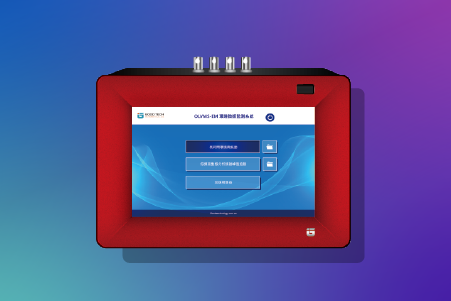
VMS-EM Environmental Micro-Vibration Analyzer
The environment, equipment, and product quality are closely interconnected.
By verifying the suitability of the installation environment before setup,
installation time and subsequent vibration troubleshooting can be greatly reduced.
The VMS-EM Environmental Micro-Vibration Analyzer is designed to assess micro-vibrations within factory environments,
helping users effectively identify optimal installation locations.
Measurement Conclusion
The measurement results show that both areas exhibited more significant vibration impact along the Y-axis,
while the Z-axis displayed a noticeable increase in low-frequency response when carts passed by.
During equipment operation in Areas A and B, vibration analysis revealed that Area A had slightly higher maximum vibration values than Area B,
accompanied by a faint abnormal sound during rotation.
Environmental micro-vibrations act as a subtle yet influential disturbance factor in Coater operations.
They can disrupt rotational balance and coating uniformity, and resonance or human activity may further cause periodic anomalies.
To reduce the impact of environmental micro-vibrations on Coater machines, the industry commonly adopts the following measures:
Mechanical Isolation Design: Install passive or active vibration isolation platforms (air mount / active damping) beneath the machine to reduce vibration transmission from the floor.
Structural Reinforcement and Resonance Avoidance: Adjust the machine’s natural frequency to avoid common external vibration ranges (such as 30–50 Hz).
Environmental Monitoring System: Deploy multiple vibration sensors combined with FFT and time–frequency analysis to continuously monitor floor and machine vibrations.
Personnel and Pathway Management: Design walking paths to avoid high-sensitivity zones and use vibration-damping flooring materials to reduce low-frequency interference.
AIoT Early Warning System: Build a normal vibration behavior model based on long-term data; trigger alerts automatically when spectral deviations exceed preset thresholds.
This case is not merely a story of yield improvement — it is an insight into how “invisible vibrations”
affect the interaction between machine behavior and product quality. It reminds us that
stability is not only a mechanical goal but also a harmony between environment and human dynamics.
In modern manufacturing, every seemingly minor disturbance, once understood and controlled, can become an opportunity for yield enhancement and process optimization.
FAQ
Does environmental micro-vibration affect the process quality of Coater equipment?
Yes. Coater equipment is highly sensitive to vibration during photoresist coating. If micro-vibration interference is present in the environment, it may cause uneven film thickness, decreased coating quality, and reduced process stability, which ultimately affects product yield.
What is environmental micro-vibration?
Environmental micro-vibration refers to low-amplitude, continuous vibration sources present in a factory environment, such as air conditioning systems, machine operations, personnel walking, cart movement, and building structure resonance.
Do personnel walking or cart movement affect Coater equipment?
Yes. Actual measurement results show that personnel walking and cart movements can generate low-frequency vibrations, which are transmitted to the equipment through the floor and structural elements.
How can we measure micro-vibrations around Coater equipment?
It can be measured using high-sensitivity triaxial vibration sensors paired with a vibration analyzer, and evaluated using spectrum analysis and VC Curves.
What is the purpose of the VC Curve in micro-vibration analysis?
The VC Curve is a commonly used international standard for evaluating environmental vibration. It determines whether the environmental vibration meets the operational requirements of precision equipment.
How can we reduce the impact of environmental micro-vibration on Coater equipment?
Interference can be reduced through vibration isolation design for the equipment, improving floor structures, optimizing equipment layout, and establishing a real-time vibration monitoring system.
Further Reading
Abnormal transfer arm inside the vacuum chamber?
Abnormality caused by insufficient air pressure in the dispenser?
Abnormal vacuum suction during loader operation?
The impact of environmental micro-vibration on Laser Grooving machines?
VMS-EM Environmental Micro-vibration Analyzer
What is environmental micro-vibration?
Maintenance speed increased by 7 times, saving annual maintenance budget