
Case

Application

FAQ
Wafer Grinding Unevenness?
Case|Wafer Grinding Unevenness?During the grinding process, equipment abnormalities can lead to poor wafer flatness, rough surface finish, chamfering defects, and edge polishing defects. How can we prevent these issues?
Grinding / Polishing Processing
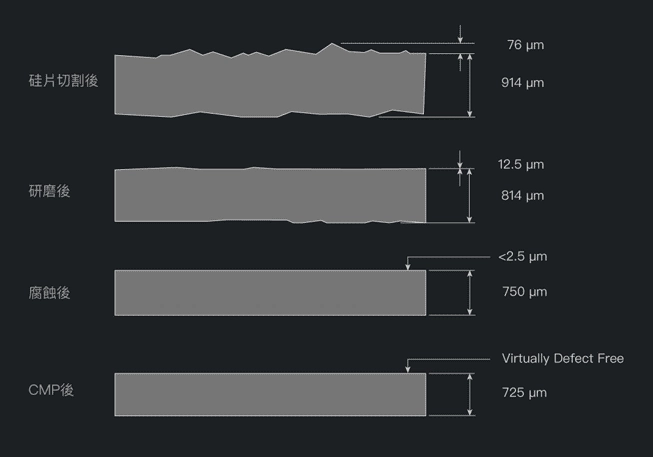
Before wafer grinding, a special protective film is applied to the backside of the wafer to ensure that the front IC is not damaged before proceeding with the grinding phase. Wafer grinding (Back Grinding) mainly involves grinding the wafer from the backside to control the thickness within an acceptable range. The purpose of polishing is to improve micro-defects left by previous processes, enhance wafer flatness, and prevent particle adhesion.
During the grinding process, the wafer thickness will also affect the final IC completion. For example, if the wafer is too thick, it can cause poor heat dissipation, while being too thin may lead to breakage. With the increasing demand for 12-inch wafers, the difficulty of grinding processes has also increased.
Solutions
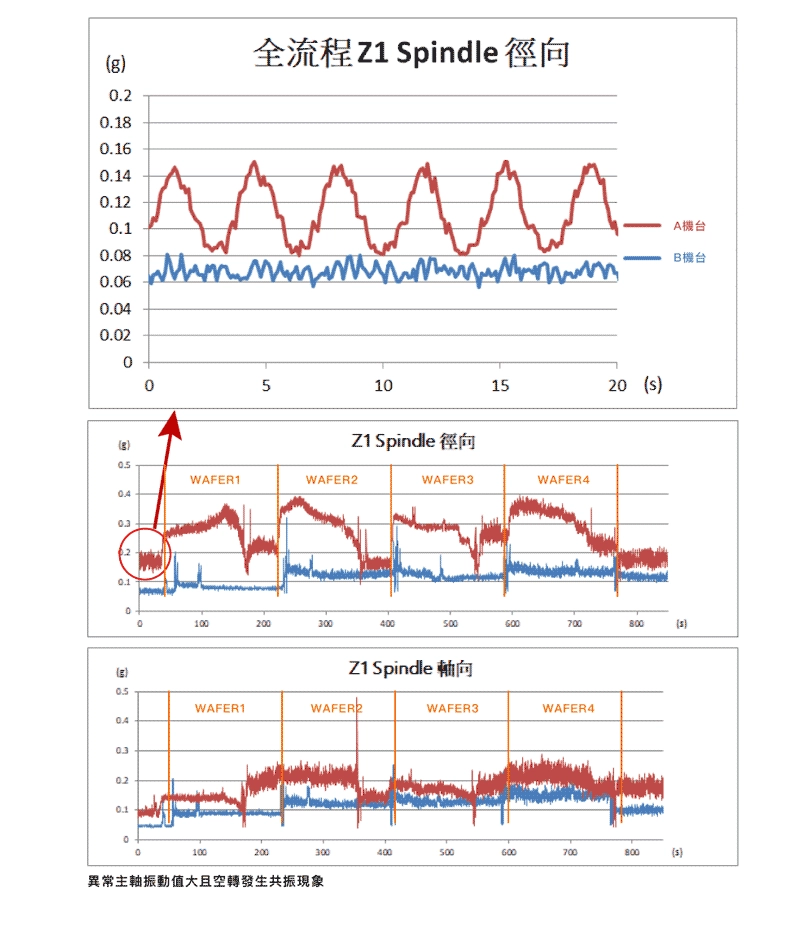
Grinding/Polishing machine quality monitoring helps determine the final wafer thickness and surface roughness. Excessive vibration signals during the process can lead to poor wafer flatness, rough surface finish, chamfering defects, and edge polishing issues. Through machine monitoring, mechanical issues can be detected early. If product anomalies are found, measurement data can be traced back to identify the root cause.
Measurement Conditions
As shown in the figure below, by measuring the dynamic vibration changes perpendicular to the wafer surface during grinding, it can be confirmed whether the wafer stress changes are influenced by equipment vibrations. When the rotary spindle malfunctions, excessive vibration values and resonance during idle operation can significantly increase wafer breakage rates.
Measurement Conclusions
The purpose of using wafer grinding/polishing machines is to remove micro-defects from previous processes, improve wafer flatness, and prevent particle adhesion. The wafer undergoes processes such as sawing, grinding, mechanical polishing, and chemical polishing.
Due to the high precision requirements of the equipment, during the grinding process, wafer breakage and scratches are common issues. Therefore, users need a comprehensive monitoring plan for the entire process to avoid losses caused by machine abnormalities.

VMS-ML
Monitoring and diagnosing individual actions
FAQ
Is uneven wafer grinding flatness possibly related to equipment vibration?
Yes. The wafer grinding and polishing processes require highly stable operation of the spindle and rotary table. If the equipment generates excessive dynamic vibration during the grinding process, it may cause uneven stress on the wafer, leading to issues such as poor flatness, increased surface roughness, abnormal chamfering, or abnormal edge polishing.
Why is it necessary to monitor spindle vibration in the Back Grinding process?
Back Grinding mainly controls the wafer thickness by grinding the back of the wafer. If the spindle vibrates abnormally or resonates during idling, it may cause unstable grinding force, poor thickness control, and even increase the risk of wafer breakage and scratches. Therefore, monitoring spindle vibration can help detect mechanical anomalies in advance and reduce process losses.
What problems can occur if a wafer is too thick or too thin?
Wafer thickness affects the final product quality of the IC. A wafer that is too thick may result in poor heat dissipation, while a wafer that is too thin increases the risk of breakage. With the increasing demand for 12-inch wafers, the difficulty of the grinding process also increases. Therefore, stable equipment monitoring is needed to ensure thickness control and processing quality.
How to determine if a wafer grinding anomaly is caused by the machine's condition?
You can measure dynamic vibration changes perpendicular to the wafer surface to observe whether the force on the wafer is affected by equipment vibration. If product anomalies are found, monitoring data can also be traced back to check for spindle vibration, idling resonance, or other changes in equipment conditions to help clarify the source of the anomaly.
What impact does spindle idling resonance have on wafer grinding?
When the rotary table spindle is abnormal, excessive vibration values and resonance during idling can cause the wafer to bear unstable forces during the grinding process, increasing the risks of breakage, scratches, and uneven grinding. If not monitored in real time, it can easily lead to a drop in yield and an increase in equipment maintenance costs.
What are the benefits of implementing wafer grinding/polishing machine monitoring?
After implementing machine monitoring, spindle vibration, rotary table anomalies, resonance, and mechanical status changes can be detected in advance, helping users grasp the complete equipment operation process. When product issues such as flatness, surface roughness, or breakage occur, historical measurement data can be used to trace the causes of abnormalities, supporting predictive maintenance and process quality improvement.
Further Reading
The impact of environmental micro-vibration on Coater equipment?
Abnormal vacuum suction during loader operation?
Abnormality caused by insufficient air pressure in the dispenser?
The impact of environmental micro-vibration on Laser Grooving machines?
VMS-ML Machine Learning Intelligent Monitoring System
What is equipment remaining useful life (RUL) prediction?
Maintenance speed increased by 7 times, saving annual maintenance budget