
Case

Application

FAQ
How to Prevent Wafer Scratching During Transport?
Case | How to Prevent Wafer Scratching During Transport?The wafer handling robotic arm (Wafer Robot) may cause wafer scratching or collisions if abnormal vibrations occur during transport. How can we proactively prevent and avoid wafer damage and scrapping?
Robotic Arm for Wafer Handling
Wafer handling robotic arms are widely used in the front-end semiconductor manufacturing process, replacing manual labor in wafer transportation.
Given the high cost of wafers, users place great importance on the stability of robotic arms during transportation.
Most wafer handling arms are designed with multi-axis joints, allowing precise and stable movement in confined spaces.
If abnormal vibrations occur during wafer transport, they can significantly impact wafer quality, leading to scratching or collisions.
Since wafer handling arms operate in multiple axes and directions, how can their movements be effectively monitored?
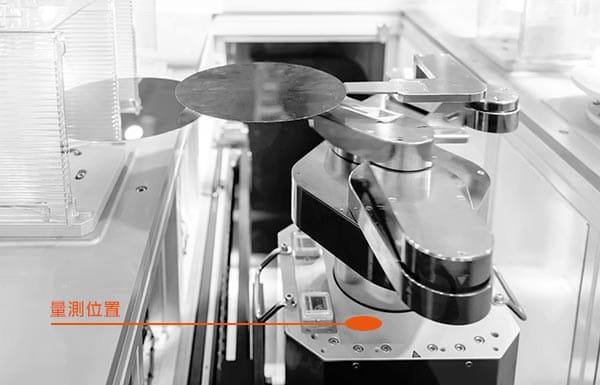
Solution and Monitoring Explanation
VMS-ML Machine Learning Intelligent Monitoring System
Using the VMS-ML machine learning intelligent monitoring system, we analyze the dynamic signals of wafer transport.
This system does not require integration with the equipment’s control system—only a single sensor installation is needed to begin learning movement signals.
Through real-time measurements, it detects variations across different movement phases.
Measurement Status
Wafer Robot Arm Motion Visualization and Monitoring
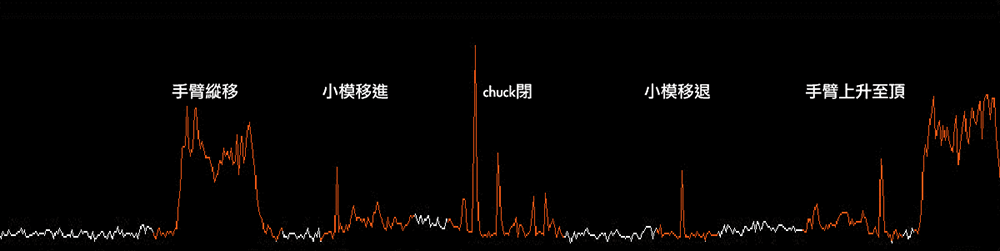
Machine Learning Monitoring Measurement Display
Monitoring Status: Normal Pass
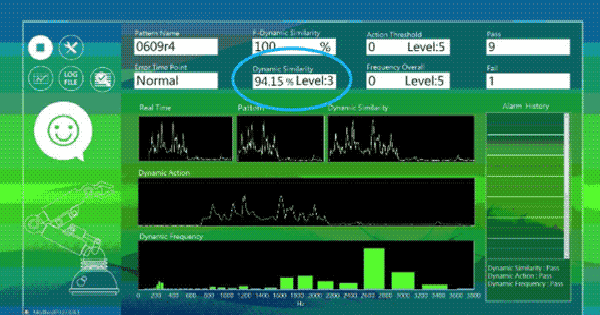
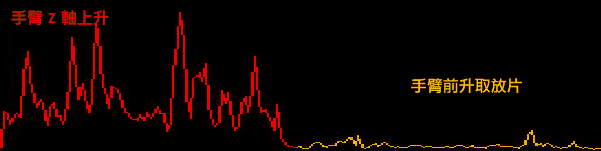
Arm motion is stable, with monitored movements closely matching expected behavior.
Similarity Score: 94%
Monitoring Status: Abnormal Alarm Fail
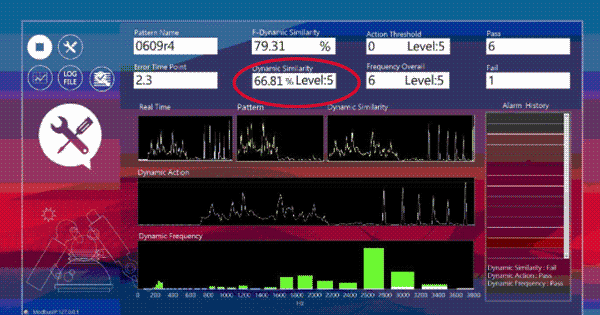
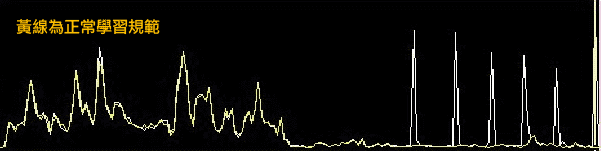
Simulated abnormal scenario - slight knock on the fork. Dynamic signal and frequency domain changes cause a decrease in similarity score.
Similarity Score: 66%
Measurement Conclusion
Using the VMS-ML Machine Learning Intelligent Monitoring System, the correct motion behaviors are learned as benchmarks for monitoring and diagnosis. The system detects anomalies or instability in the robotic arm’s movements in real-time, enabling predictive maintenance and preventing unexpected failures.
Benefits of using VMS-ML for robotic arm health monitoring: Preventing wafer damage due to abnormal arm movements, monitoring the wafer transfer process, and detecting issues such as wafer scratching and misalignment. By collecting historical health trends, it serves as a data-driven reference for maintenance planning. It can also be used for stability testing before and after repairs to ensure maintenance quality and effectiveness.
VMS-ML Machine Learning Intelligent Monitoring System
VMS-ML
Monitor the wafer transfer status of robotic arms
FAQ
Why does the Wafer Robot's wafer transfer arm need to be monitored?
The Wafer Robot is responsible for transporting high-value wafers in semiconductor manufacturing processes. If abnormal vibration, unstable movement, or positioning deviation occurs during the transport process, it may cause wafer scratching, collision, or even scrapping. Therefore, a monitoring system is needed to grasp the arm's transport status, detect anomalies in advance, and reduce the risk of wafer damage.
What problems can abnormal vibration of the wafer transfer arm cause?
If the wafer transfer arm generates abnormal vibration during transmission, it may cause the wafer to contact the mechanism, Fork, or carrier, leading to scratching, collision, position deviation, transfer failure, and process interruption. For semiconductor fabs, such anomalies can result in high-value wafer losses and equipment downtime risks.
How does VMS-ML monitor the Wafer Robot transfer status?
The VMS-ML Machine Learning Intelligent Monitoring System can learn the dynamic signals of the Wafer Robot during normal wafer transfer without needing to integrate with the equipment's system; it only requires installing one sensor to start learning. The system converts arm movements into visual images and uses similarity comparisons to determine if each transfer action is stable.
What does the Wafer Robot action similarity score represent?
The action similarity score represents how close the currently monitored dynamic signal of the arm is to the normal action standard. When the arm transfer action is normal, the monitoring graph will closely match the standard graph, and the similarity score can reach 94%. If an abnormal situation is simulated, such as tapping the Fork, the dynamic signal and frequency domain will change, causing the similarity score to drop to 66% and triggering an anomaly alarm.
Can Wafer Robot monitoring determine which action is abnormal?
Yes. VMS-ML learns the correct action behavior as a standard and conducts monitoring and diagnosis for individual actions. When a specific section of the transfer action becomes unstable or abnormal, the system can assist engineers in understanding which action section the anomaly occurred in, facilitating subsequent repair and maintenance judgments.
What are the benefits of implementing Wafer Robot health monitoring?
After implementing Wafer Robot health monitoring, wafer damage and scrapping caused by arm anomalies can be prevented, and real-time alarms for transfer risks like scratching or collisions can be issued. By collecting long-term health history trends, it can also serve as a reference for data-driven maintenance plans, and stability tests can be performed before and after maintenance to confirm repair quality and maintenance effectiveness.
Further Reading
Uneven wafer grinding flatness?
How to ensure the action position of the Scrubber cleaning process?
How to ensure the stability of the Die bonder process?
How does the Mask Aligner perform measurements?
VMS-ML Machine Learning Intelligent Monitoring System
What is equipment remaining useful life (RUL) prediction?
Maintenance speed increased by 7 times, saving annual maintenance budget