
Case

Application

FAQ
How to Ensure the Positioning Accuracy of the Scrubber Cleaning Process?
Case|How to Ensure the Positioning Accuracy of the Scrubber Cleaning Process?In wafer cleaning, Scrubber machines commonly use solutions to remove particles from the wafer surface. Although the cleaning process appears simple, the effectiveness of the Scrubber directly impacts wafer quality. How can operational stability be ensured?
Wafer Cleaning
In wafer cleaning, Scrubber machines typically use solutions to remove particles from the wafer surface,
effectively eliminating various surface contaminants while preventing surface defects or scratches.
The spray nozzle's spraying angle and flow rate directly influence the impact force and pressure positioning,
which are crucial factors affecting wafer quality.
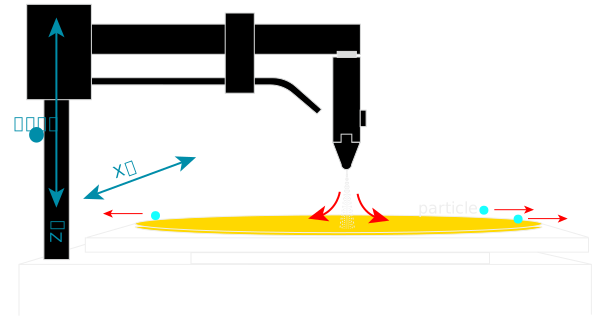
Principle of Spray Nozzle
The spray nozzle is an atomizing device that utilizes internal nitrogen pressure to drive liquid at high speeds,
creating atomized droplets through impact. These atomized droplets are sprayed onto the wafer surface,
effectively removing microscopic particles. By ensuring that the spray nozzle reaches the designated position,
it is also possible to track the movement trends of related components for better process management.
Monitoring Explanation
VMS-ML Machine Learning Intelligent Monitoring System
The system converts dynamic sensor signals into visual representations,
allowing hidden process insights to be uncovered and used as a basis for future online monitoring.
In addition, servo motors drive various components, and by utilizing the intelligent monitoring system,
the consistency of each servo motor operation and the accuracy of the Spray Nozzle's positioning can be ensured.
Measurement Conditions
Scrubber Cleaning Process:
1. Z-axis lifting
2. X-axis horizontal movement
3. X-axis horizontal movement + first cleaning
4. X-axis horizontal movement + second cleaning
Single Wafer Cleaning Process
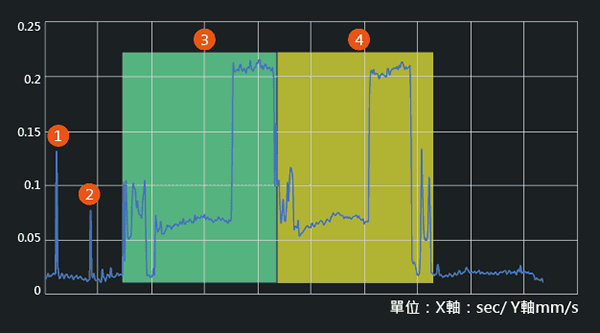
Simulated VMS-ML Machine Learning Monitoring System Measurement
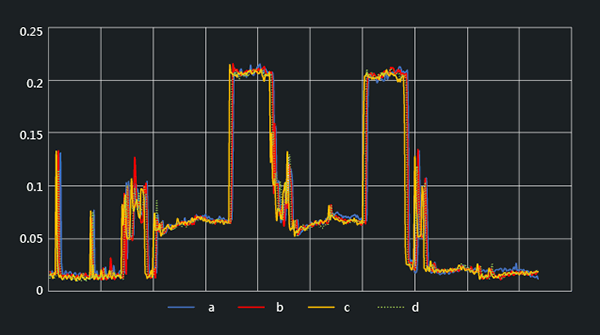
Comparison of Four Wafer Cleaning Conditions
Dynamic Similarity
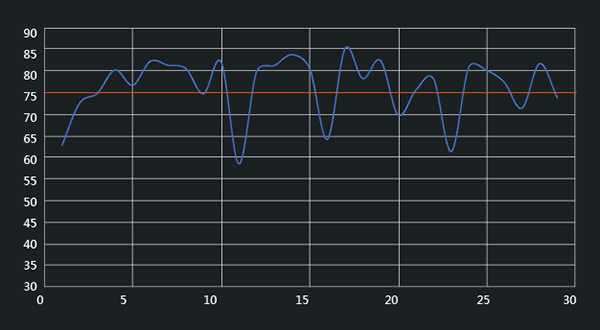
The system quickly learns and identifies repeated or partially repeated behaviors during the process, with VMS-ML scoring the movement similarity and conducting trend analysis management.
Measurement Conclusion
Benefits of VMS-ML Machine Learning
Equipment Integration: No need to integrate with equipment systems, start monitoring after sensor installation.
Time/Frequency Domain: Simultaneous management of time and frequency domain relationships with VMS-ML.
Edge Computing: No need for large storage space for raw data.
Visual Management: Graphical visualization of equipment operating status.
Focused Management: Visual analysis to pinpoint abnormal axial issues for maintenance.
Pre/Post Maintenance: Assess whether maintenance is needed and verify machine quality after servicing.
AI Trend Analysis: Fine-tuned thresholds and predictive maintenance standards.

VMS-ML
Instantly intercept defective products.
FAQ
Why does the Scrubber cleaning process need to monitor action positions?
During the wafer cleaning process, the Scrubber sprays cleaning fluid onto the wafer surface through a spray nozzle to remove particles and contaminants. If the nozzle position, movement path, spray angle, or flow rate is unstable, it may cause uneven cleaning, residual contamination on the wafer surface, scratches, or a drop in yield. Therefore, it is necessary to monitor whether each cleaning action reaches the designated position.
Will the angle and flow rate of the spray nozzle affect wafer quality?
Yes. The spray angle and flow rate of the spray nozzle affect the impact force and pressure location of the cleaning fluid on the wafer surface. If the angle shifts or the flow rate is abnormal, it may lead to insufficient local cleaning, excessive fluid impact, or surface defects, thereby affecting wafer cleaning quality and subsequent process stability.
What actions does the Scrubber cleaning process usually include?
In this case, the Scrubber cleaning process includes Z-axis ascent, X-axis traverse, X-axis traverse plus the first cleaning, and X-axis traverse plus the second cleaning. These actions are repetitive, making them suitable for establishing a normal action model through machine learning for subsequent similarity judgment and trend management.
How does VMS-ML monitor Scrubber cleaning actions?
The VMS-ML machine learning intelligent monitoring system captures dynamic signals during Scrubber operation via sensors and converts them into visual images. The system learns the repetitive or partially repetitive behaviors in the normal cleaning process, then performs similarity judgment and scoring for each subsequent action. This helps confirm the consistency of servo motor actions and whether the spray nozzle moves to the designated position.
What is the purpose of Dynamic Similarity in Scrubber monitoring?
Dynamic Similarity is used to compare the similarity between each cleaning action and the normal model. If a Z-axis or X-axis action, nozzle movement path, or cleaning process differs significantly from the normal state, the system can indicate the anomaly risk through similarity scores and trend changes, helping engineers inspect the equipment status in advance.
What are the benefits of implementing Scrubber cleaning action monitoring?
After implementing Scrubber cleaning action monitoring, equipment operating conditions can be grasped through edge computing, time/frequency domain analysis, and visual management without the need to store large amounts of RAW DATA. The system helps confirm whether the equipment needs maintenance, checks the restoration quality after maintenance, and refines thresholds through AI trend analysis to establish predictive maintenance management specifications.
Further Reading
The impact of environmental micro-vibration on Coater equipment?
Abnormal vacuum suction during loader operation?
Abnormality caused by insufficient air pressure in the dispenser?
The impact of environmental micro-vibration on Laser Grooving machines?
VMS-ML Machine Learning Intelligent Monitoring System
What is equipment remaining useful life (RUL) prediction?
Maintenance speed increased by 7 times, saving annual maintenance budget