
Case

Application

FAQ
Does the Vibration Quality of the Reflow Oven Blower Motor Affect Temperature?
Case|Does the Vibration Quality of the Reflow Oven Blower Motor Affect Temperature?Reflow soldering gradually melts the solder and slowly heats the connection interface to prevent damage to electronic components caused by rapid heating. Therefore, the quality of the blower motor is closely related to temperature control.
Reflow Soldering
Reflow soldering is a common surface mount technology (SMT) used to solder surface-mounted components (SMT components) onto printed circuit boards (PCBs).
This soldering process typically uses solder paste and is carried out using a device called a reflow oven.
Solder paste is applied or printed onto the PCB using templates that align with the soldering positions, and the SMT components are placed at the designated solder joints.
General Process of Reflow Soldering:
Preheat Zone: The PCB enters the preheat zone of the reflow oven. The temperature gradually rises to preheat the solder paste to its melting point without causing soldering yet.
Reflow Zone: The PCB enters the reflow zone, where the temperature is high enough to melt the solder paste. The melted solder connects the SMT components to the PCB, forming solder joints.
Cooling Zone: The soldered PCB enters the cooling zone, where the solder joints solidify. Proper cooling ensures uniform joint formation and strength.
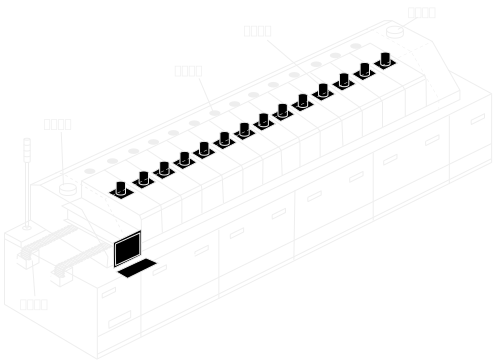
Reflow Oven
The reflow oven is a crucial piece of equipment in PCB manufacturing. Its primary function is to gradually melt the solder and slowly heat the connection interface,
followed by cooling to achieve proper electronic component soldering while preventing thermal damage due to rapid heating.
Reflow Oven Air Circulation System
The hot air motor and fan work together to distribute hot air evenly within the oven chamber.
This ensures that the solder paste on the PCB pads melts uniformly, allowing the components to bond with the board effectively.
After passing through the cooling stage, solid solder joints are formed.
Therefore, the performance of the reflow oven blower motor significantly impacts soldering quality,
and monitoring the motor's condition is essential to ensuring product quality.
Monitoring Explanation
SMS-RC Rotating Machinery Vibration Detection Analyzer
The SMS-RC system is used to measure motor quality by directly selecting corresponding rotor ISO standards.
It provides immediate verification of the hot air system's motor performance, preventing motor failures or abnormalities that could lead to temperature control issues
and product defects, ensuring the normal operation of the reflow soldering process.
Measurement Conditions
Measurement points are shown in the diagram below, with a total of 14 measurement points.

Measurement Results
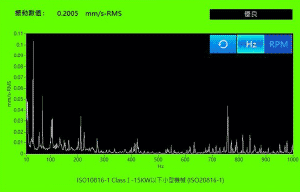
Motor 1
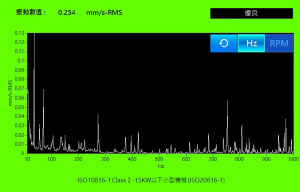
Motor 2
Motor 3

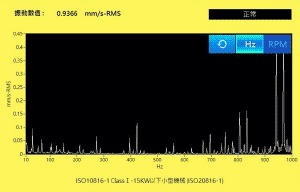
Motor 4
Motor 5
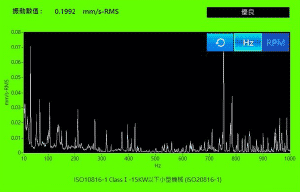
Motor 6
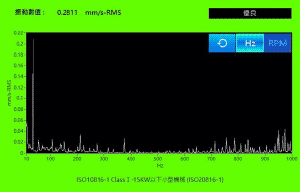
Motor 7
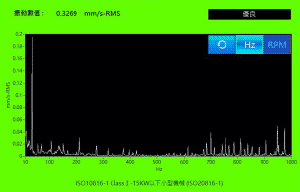
Motor 8

Result Explanation

Measurement Conclusion
The SMS-RC Rotating Machinery Vibration Detection Analyzer enables rapid assessment of motor quality. Based on the results, it can be observed that all blower motors are in excellent condition except for Motor 4 and Motor 13, which are in normal condition. Future monitoring can be conducted using RM-IoT-NET for long-term online management, enabling timely maintenance actions when warning signals are detected to prevent unexpected shutdowns that may cause abnormal temperatures inside the reflow oven, ultimately ensuring product quality.
SMS-RC Rotating Machinery Vibration Detection Analyzer
SMS-RC
Simple and quick to implement.
FAQ
Will the vibration quality of the reflow oven blower motor affect temperature control?
Yes. The reflow oven uses hot air motors and fans to evenly distribute the hot air inside the oven chamber, allowing the solder paste to remelt and complete the soldering of SMT components and the PCB. If the blower motor's vibration quality is poor or a failure occurs, it may cause uneven hot air distribution, abnormal chamber temperature, and unstable soldering quality.
Why does reflow soldering require a stable hot air system?
Reflow soldering needs to go through preheating, soldering, and cooling zones, allowing the solder paste to gradually heat up, melt, and cool to solidify. If the hot air system is unstable, it may cause uneven heating, poor solder joint formation, or damage to electronic components. Therefore, the status of the blower motor directly affects the quality of the reflow process.
How does SMS-RC inspect the quality of the reflow oven blower motor?
The SMS-RC Rotating Machinery Vibration Analyzer can measure the vibration quality of each blower motor in the reflow oven's hot air system and directly select the corresponding rotor ISO standard for judgment. By quickly inspecting the motor rotor status, poor temperature control caused by motor abnormalities can be avoided.
Which positions of the reflow oven blower motor usually need to be measured?
Multiple measurement points can be planned according to the equipment configuration to conduct vibration detection on each group of blower motors in the reflow oven's hot air system. In this case, a total of 14 measurement points were planned to respectively confirm the rotor quality of each motor, serving as a baseline for subsequent maintenance and online monitoring.
What product problems can abnormal blower motor vibration cause?
If the blower motor experiences abnormal vibration due to poor rotor quality, wear, or failure, it may lead to uneven hot air distribution inside the reflow oven chamber, inaccurate temperature control, poor solder joint quality, SMT component soldering failure, or reduced product yield.
What are the benefits of implementing RM-IoT-NET online monitoring?
After implementing RM-IoT-NET, long-term online monitoring and management can be conducted for the reflow oven blower motors. When a motor status warning appears, maintenance can be scheduled immediately, avoiding unexpected downtime that causes abnormal temperatures inside the reflow oven chamber, and reducing the risk of product soldering failure and production line downtime.
Further Reading
Uneven wafer grinding flatness?
How to ensure the action position of the Scrubber cleaning process?
How to ensure the stability of the Die Bonder process?
How does the Mask Aligner perform measurements?
SMS-RC Rotating Machinery Vibration Analyzer
What standards are available for rotor equipment reference?
Maintenance speed increased by 7 times, saving annual maintenance budget