
Case

Application

FAQ
How to Prevent PCB Cutting Defects from Damaging Products?
Case|How to Prevent PCB Cutting Defects from Damaging Products?PCB cutting machines are used in the electronics manufacturing process to cut PCB boards. If the cutting path extends beyond the intended area and reaches the copper layer, it can negatively impact the quality and performance of the PCB. How can this be prevented?
PCB Cutting Machines
PCB (Printed Circuit Board) cutting machines are used in the electronics manufacturing process to cut PCB panels.
PCBs are the core components of modern electronic products, filled with electronic components and connecting circuits, enabling the proper functioning of electronic devices.
The main function of a cutting machine is to cut large PCB panels into the required sizes for further processing and assembly.
The relationship between the cutting process and current consumption is influenced by a combination of complex factors.
To ensure cutting stability and quality, operators must select appropriate settings based on different PCB materials, cutting parameters, and machine models to keep current consumption within a reasonable range.
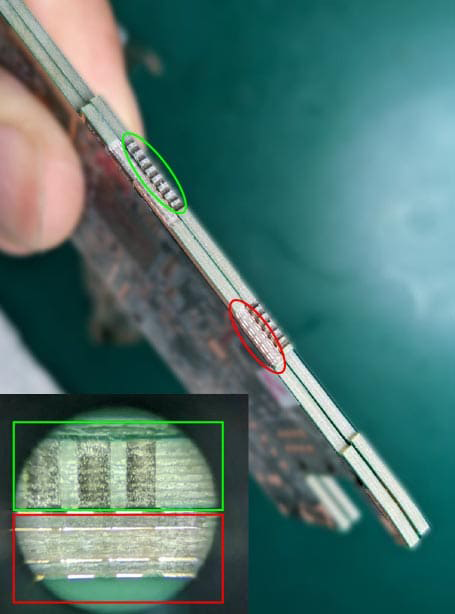
If the cutting path extends beyond the intended area and reaches the copper layer, it may negatively impact the PCB’s quality and performance.
For example, it can create an electrical connection between copper layers, leading to short circuits.
This could result in circuit board failure, product malfunction, and potential damage to other electronic components.
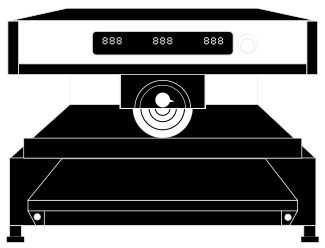
Key Monitoring Points:
1. Cutting precision is crucial for product quality.
It is essential to monitor the cutting accuracy to ensure precise dimensions and prevent assembly issues in subsequent processes.
2. Cutting pressure and speed must be adjusted according to different PCB materials and designs.
Excessive pressure or high speed can lead to uneven cuts or board damage.
3. The cutting tools of the machine require regular inspection and maintenance.
Ensuring blade sharpness and stability helps avoid poor cutting quality or blade breakage issues.
Solutions and Monitoring
VMS-ML Machine Learning Intelligent Monitoring System
The VMS-ML machine learning intelligent monitoring system is used to learn and establish monitoring standards based on the cutting program sequences of good (acceptable) products.
Any deviations beyond the established standards are identified as defects.
Current sensors are selected to monitor the current signals generated during spindle operation, providing real-time insights and early detection of anomalies.
Measurement Conditions
Measurement Condition 1: Perfect Edge Cutting
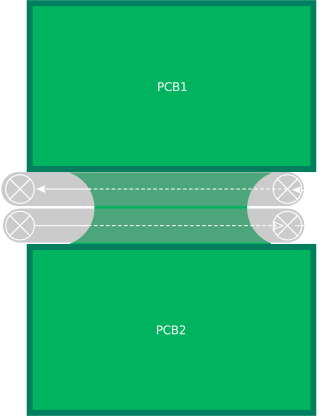
Result: Current recognition successful, evaluation score: 95.4.
Status: PASS
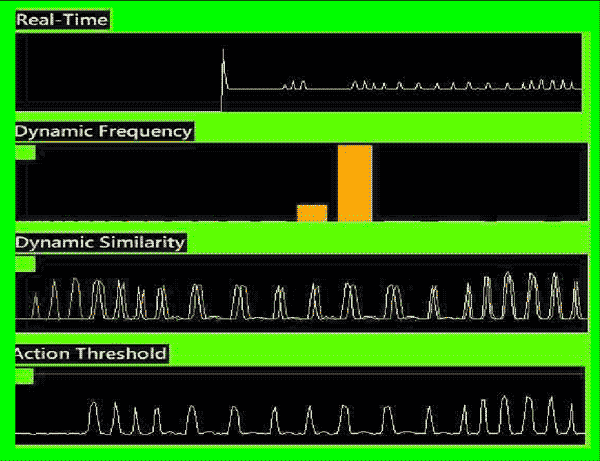
Monitoring Status: Normal Pass
Measurement Condition 2: Cutting Path Extended to Copper Layer
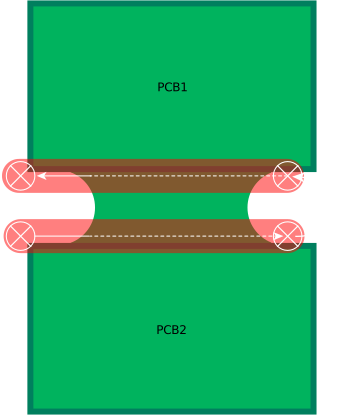
Result: Current recognition successful, evaluation score: 74.3.
Status: FAIL
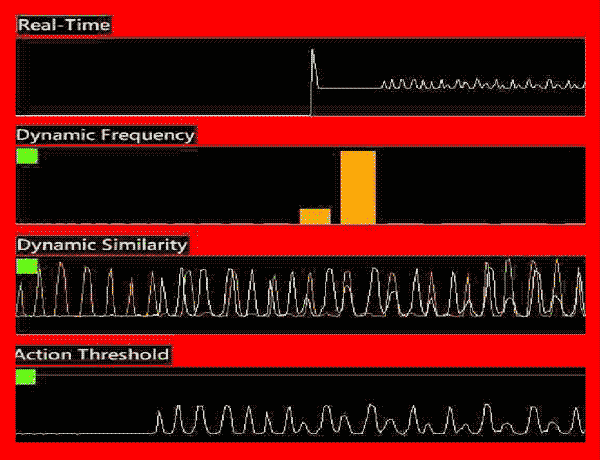
Monitoring Status: Abnormal FAIL
Detailed Waveform Signal Comparison
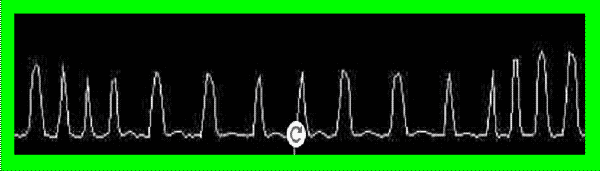
Normal Current Signal
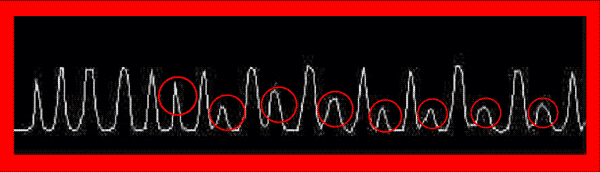
Abnormal Current Signal
# The current signal shows a significant difference when cutting into the copper layer, which can be used as an anomaly feature.
Measurement Conclusion
Using the VMS-ML Machine Learning Intelligent Monitoring System to learn the correct cutting actions as a standard,
combined with process experience to establish current monitoring specifications for process management.
1. The quality monitoring results of the PCB cutting machine spindle current show that VMS-ML can successfully detect abnormal spindle current variations.
2. Since each machine spindle condition varies, monitoring standards can be established based on equipment and product process part numbers in the future.

VMS-ML
Real-time defect interception
FAQ
Why is it necessary to monitor the spindle current of PCB depaneling machines?
When a PCB depaneling machine cuts boards, the spindle current changes with the cutting load, tool condition, board material, and cutting path. By monitoring the spindle current, the stability of the cutting process can be evaluated, and risks can be detected early in the event of cutting anomalies, tool wear, or path deviation, preventing the PCB quality and product functionality from being affected.
What problems are caused when the cutting path deviates outward and cuts into the copper layer?
When the cutting path expands outward and cuts into the PCB copper layer, it may cause exposed copper, damaged circuits, conduction or short circuits between copper layers, which in turn leads to circuit board failure, the product failing to work normally, and even damage to other electronic components. Therefore, such anomalies need to be detected in real time.
How does VMS-ML determine whether PCB depaneling is abnormal?
The VMS-ML machine learning intelligent monitoring system can learn the depaneling program sequences and spindle current signals of an entire normal, good-quality product to establish monitoring specifications. During subsequent cutting, the system will compare the differences between the spindle current waveform and the normal model. When the signal exceeds standard specifications, it can be determined that a cutting anomaly may exist.
Will there be a difference in the current signal when cutting into the copper layer?
Yes. In the case study, the judgment score for normal board edge cutting was 95.4, resulting in a PASS; when the path deviated outward and cut into the copper layer, the score dropped to 74.3, resulting in a FAIL. This indicates that a significant difference appears in the spindle current signal when cutting into the copper layer, which can be used as an anomaly characteristic.
What issues need to be monitored for PCB depaneling machines?
PCB depaneling machines need to monitor cutting accuracy, cutting pressure, cutting speed, and tool condition. Inaccurate cutting dimensions will affect subsequent assembly; excessive pressure or speed may lead to uneven cutting or board damage; if the blade becomes blunt or unstable, it may cause unclean cuts or blade breakage.
What are the benefits of implementing current monitoring for PCB depaneling machines?
After implementing current monitoring for PCB depaneling machines, spindle current variations can be instantly identified, assisting in the interception of cutting anomalies and defective products. The system can also establish monitoring specifications based on different equipment, product part numbers, and process conditions, making process quality management more stable and reducing the risk of product damage caused by poor depaneling.
Further Reading
The impact of environmental micro-vibration on Laser Grooving machines?
Operating status of the Bond Head arm on the die bonder?
How to perform measurements on a wafer grinding spindle?
How to ensure the stability of the photoresist coating machine's arm?
VMS-ML Machine Learning Intelligent Monitoring System
What is equipment remaining useful life (RUL) prediction?
Maintenance speed increased by 7 times, saving annual maintenance budget