
Case

Application

FAQ
Turbo Pump Experiencing Imbalance Issues?
Case | Turbo Pump Experiencing Imbalance Issues?The most critical aspect of a Turbo Pump’s magnetic levitation bearings is dynamic balance. High rotational frequency fluctuations indicate poor balance. How can this be measured effectively?
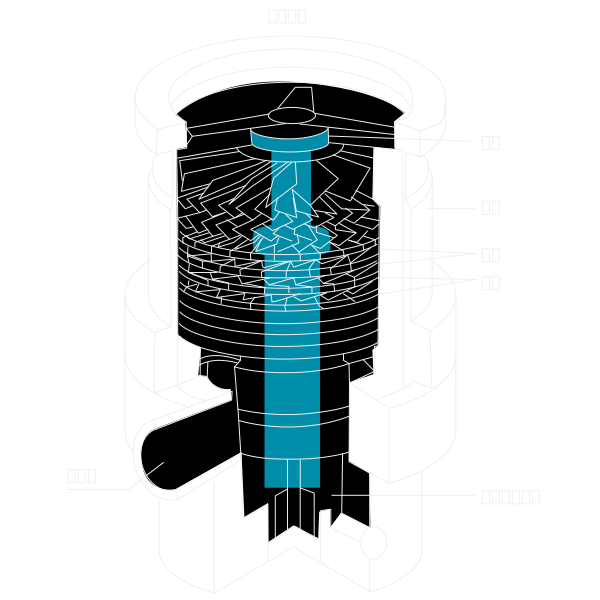
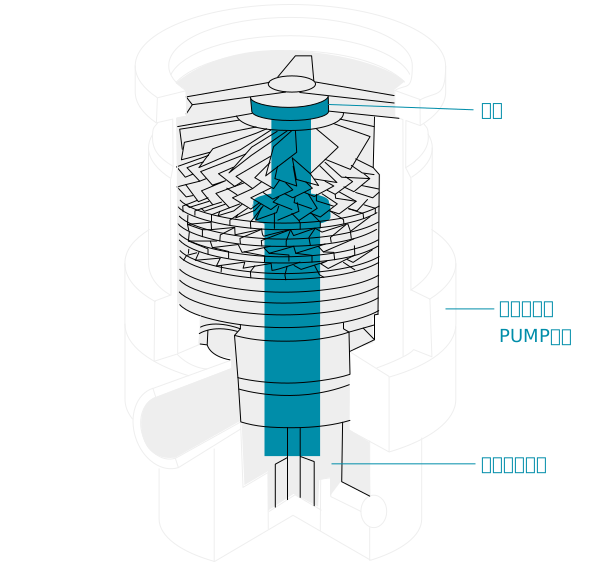
Operating Principle of Turbo Pumps
A turbo pump operates by transferring kinetic energy to gas molecules through high-speed rotating blades, creating directional flow for vacuum pumping.
Alternating rotor and stator blades are arranged in opposite inclined directions, forming multiple blade stages.
Turbo pumps are generally classified into two main types based on structure: vertical type and horizontal type.
The vertical type is more compact than the horizontal type but is more susceptible to damage if foreign objects enter the pump,
making repairs more challenging. It also has lower stability and is more prone to vibrations.
However, it offers advantages such as replacing diffusion pumps and vacuum gauges,
greater flexibility in vacuum system integration, and lower cost compared to horizontal pumps.
Additionally, turbo pumps with magnetic levitation bearings are less affected by oil contamination.
Solution and Monitoring Explanation
IMS-TP Turbo Pump Inspection and Analysis System
Turbo pumps with magnetic levitation bearings exhibit lower vibration levels, requiring spectral analysis for accurate evaluation.
One of the core issues with magnetic levitation bearings is dynamic balance—higher rotational frequency fluctuations indicate poor balance.
We utilize a portable inspection and analysis system to ensure pump quality and implement predictive maintenance, preventing unexpected shutdowns.
Measurement Status
Measurement Method: Using Rotor Spectrum Analysis for Evaluation
Comparison of Operating Frequency at 223Hz for Equipment A / B
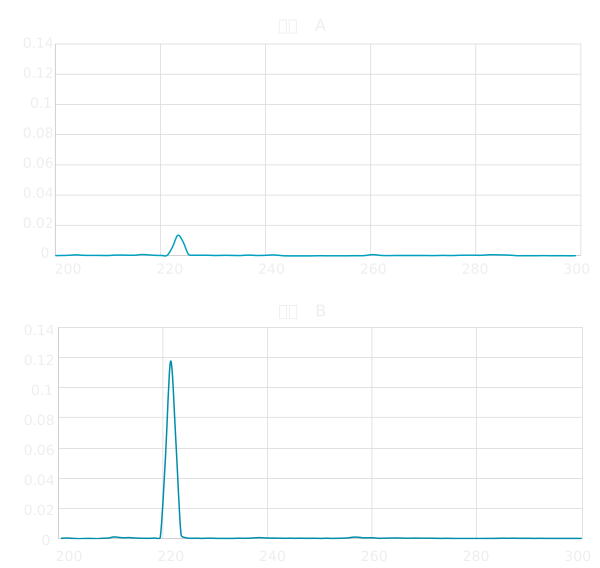
Equipment B exhibits significant imbalance!
Equipment A

Equipment B

Measurement Conclusion
・Turbo Pump vibrations are minimal and require spectrum analysis for comparison.
・The most critical factor in Turbo Pump magnetic levitation bearings is dynamic balance.
High rotational frequency fluctuations indicate poor balance.
・Equipment B exhibits significant imbalance at 223 RPM, with vibration levels 8.6 times higher than Equipment A.
・Both radial (adhesive, manual pressure) and axial detection confirm significant imbalance in Equipment B,
suggesting further diagnostics.
The IMS-TP Turbo Pump Inspection and Analysis System allows classification based on factory and equipment attributes, enabling the creation of customized measurement maps. It establishes multiple measurement points per device, providing real-time equipment status visualization through a map interface. The system enables users to assess quality status via indicator lights and supports timely maintenance and scheduling.
IMS-TP Turbo Pump Inspection and Analysis System
IMS-TP
Suitable for quality detection of various turbo pumps
FAQ
Why do Vacuum Dry Pumps need online monitoring?
Vacuum Dry Pumps are essential equipment for maintaining a vacuum environment in semiconductor processes. If a pump suddenly fails and shuts down, it may lead to insufficient vacuum, atmospheric backflow, excessive particles, wafer quality anomalies, or even scrap. Through online monitoring of the vacuum pump rotor status, the equipment's degradation trend can be grasped in advance, reducing the risk of unexpected downtime.
What impact do Dry Pump anomalies have on semiconductor processes?
Dry Pump anomalies may cause problems such as reduced pumping efficiency, insufficient vacuum, unstable process gas exhaust, atmospheric backflow, and excessive particles. These anomalies affect wafer quality and process stability, and in severe cases, can lead to product scrap and production line downtime.
How to quickly troubleshoot the causes of Vacuum Dry Pump anomalies?
The vacuum pump rotor's vibration status can be monitored long-term using a Dry Pump online monitoring system, and the source of the anomaly can be determined using SOA total spectrum and vibration spectrum feature analysis. When the system displays a warning light, further checks for misalignment, mechanical looseness, bearing anomalies, or changes in rotor status can be performed, shortening the troubleshooting and repair time.
What do the Dry Pump rotor quality indicator lights represent?
Rotor quality can be divided into Zone A, Zone B, Zone C, and Zone D based on vibration values. Zone A represents new machinery or excellent vibration quality; Zone B represents acceptable quality for long-term use; Zone C indicates it cannot be used for a long time and requires maintenance and repair; Zone D indicates abnormal vibration values, and immediate repair is recommended. An orange light usually represents a warning, indicating that the equipment is not suitable for long-term operation and requires planned maintenance and repair.
What does it mean when 1x, 2x, or 3x rotational speed frequencies appear in a Vacuum Dry Pump?
If the vibration frequency mainly appears at 1x, 2x, or 3x the rotational speed, it may be related to misalignment. Since most misalignments are a mix of angular and parallel misalignments, the vibration direction may appear in both radial and axial directions simultaneously. Therefore, spectrum analysis is needed to determine the actual type of anomaly.
What are the benefits of implementing the VMS-DP vacuum pump monitoring system?
After implementing the VMS-DP vacuum pump monitoring system, the vacuum pump rotor status and equipment degradation trends can be grasped through long-term trend charts, allowing for predictive maintenance planning in advance. The system can also use spectrum features to quickly troubleshoot the causes of anomalies, helping to shorten repair time and improve the stability of the semiconductor process.
Further Reading
Uneven wafer grinding flatness?
How to ensure the action position of the Scrubber cleaning process?
How to ensure the stability of the Die bonder process?
How does the Mask Aligner perform measurements?
VMS-DP Vacuum Pump Monitoring System
What standards are available for rotor equipment reference?
Maintenance speed increased by 7 times, saving annual maintenance budget