
Case

Application

FAQ
Understanding the Operational Quality of Multi-Axis Robotic Arms Through Current Analysis?
Case|Understanding the Operational Quality of Multi-Axis Robotic Arms Through Current Analysis?Multi-axis robotic arms, with their multiple joints, require higher torque, which demands greater motor current to achieve movement.
Multi-Axis Robotic Arms
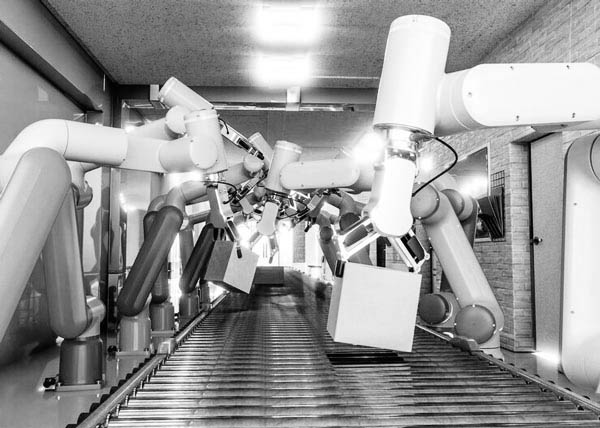
Multi-axis robotic arms are like dancers in the industrial world, capable of moving flexibly in three-dimensional space. Each joint functions like a dance step, powered by motors or servo motors, akin to a dancer's muscles. These motors work in conjunction with reducers to provide greater torque and precise motion control. By controlling the rotation of these motors, movement across different joints of the robotic arm is achieved.
There is a close relationship between the motor drive and current in multi-axis robotic arms because motors are driven by electrical current. When the robotic arm moves, each joint’s motor consumes energy to generate torque. Thus, motor current fluctuates according to the robotic arm's motion.
Specifically, when the robotic arm needs to generate greater torque, the motor requires higher current. This usually occurs when the robotic arm handles increased loads or overcomes resistance, such as lifting heavy objects or countering external forces. Conversely, when the robotic arm operates under lighter loads or remains stationary, the required motor current is lower.
Backlash
Backlash refers to a small dead zone in mechanical systems, similar to a tiny gap between gear teeth. You can think of it as a delay phenomenon—when you start turning a gear, there might be a slight delay before it fully engages, due to the presence of backlash. In applications requiring precise control, backlash can be undesirable, but in some cases, a certain degree of backlash is necessary to ensure flexibility and prevent jamming.
The presence of backlash can result from several factors, including lubrication, manufacturing tolerances, elasticity under load, and thermal expansion caused by temperature changes. In mechanical systems, backlash may be necessary, acceptable, or something that needs to be minimized as much as possible.
Monitoring Description
VMS-ML Machine Learning Intelligent Monitoring System
The VMS-ML Machine Learning Intelligent Monitoring System is capable of learning correct operational standards and comparing them to assess operational quality. In this measurement project, we used CT sensors inside the electrical control cabinet to monitor current. Since the current changes in a multi-axis robotic arm result from the sum of all axes, the signals are blended together. Therefore, for current-based monitoring, we use single-axis or small-axis combinations as the measurement targets, and by analyzing the monitoring results, we can determine the stability of the robotic arm's operation.
Measurement Status
Standard Establishment

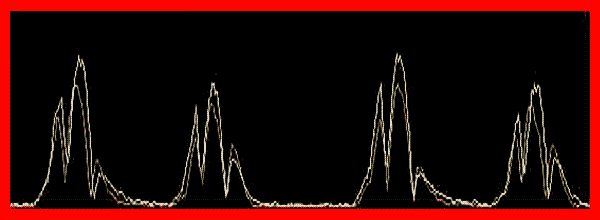
Abnormal Noise Part Comparison
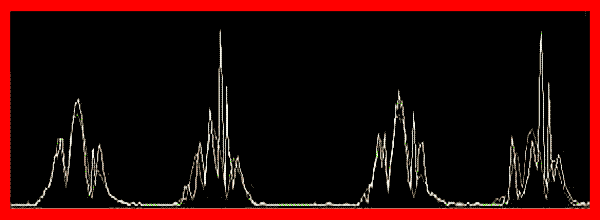
Vibration Part Comparison
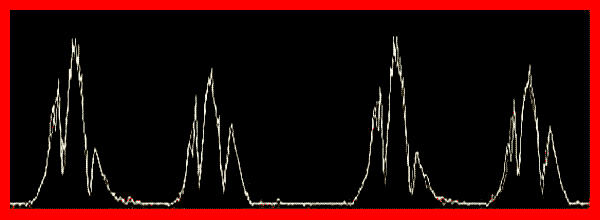
Backlash Part Comparison

Normal (Slight Noise) Part Comparison
Measurement Conclusion
According to feedback from the sensors, system signal comparisons allow us to determine that the motor's current state significantly impacts the robotic arm's operational quality. A stable motor current ensures precise motion control, allowing the robotic arm to operate steadily under various working conditions while minimizing energy consumption and motor wear.
VMS-ML Intelligent Monitoring System
VMS-ML Machine Learning Intelligent Monitoring System
Timely Detection of Defective Products
FAQ
Why does automated welding need quality monitoring?
Although automated welding can improve production efficiency, reduce labor costs, and increase product consistency, welding quality can still be affected by equipment status, material feed stability, current output, and process conditions. Lack of real-time monitoring can lead to welding defects, missed welds, quality fluctuations, and increased rework costs.
Why is manual inspection of welding quality prone to inconsistency?
Manual inspection usually relies on the operator's experience and visual judgment, which is easily affected by fatigue, concentration, subjective standards, and the working environment. Especially during mass production, manual inspection is not only time-consuming but also prone to inconsistent results, thereby affecting production efficiency and product quality stability.
How does VMS-ML monitor automated welding quality?
The VMS-ML machine learning intelligent monitoring system can collect signals during the welding process externally using vibration and current sensors, without needing to communicate with the machine's internal system. The system can build a model of normal welding behavior and determine whether spot welding processing behavior is normal or abnormal through similarity comparison and trend thresholds.
Can current sensors detect missed welds?
Yes. The current signal during the welding process can reflect the welding energy and process status. When a missed weld or welding anomaly occurs, the current waveform will differ from the normal production state. Therefore, real-time identification and interception of defective products can be achieved using current sensors and machine learning models.
What production problems can automated welding monitoring reduce?
Automated welding monitoring can reduce problems such as inconsistent manual inspection, delayed discovery of welding defects, outflow of missed welds, increased rework costs, and prolonged production cycles. Through real-time monitoring and standardized judgment, the consistency of welding quality and production line management efficiency can be improved.
What are the benefits of implementing intelligent monitoring for automated welding?
After implementing intelligent monitoring, the operating status, equipment dynamics, and wear status of welding equipment can be grasped in real time, and machine learning is used to compare normal and abnormal processing behaviors. This helps improve product yield, standardize quality, reduce factory operating costs, and can be extended to establish a plant-wide situation room management system.
Further Reading
Abnormal automated stud welding causing poor object joints?
Using current to understand the operational quality of multi-axis robot arms?
Abnormal automotive sheet metal welding causing poor joints?
Equipment operating under long-term high load, key equipment motor malfunction?
VMS-ML Machine Learning Intelligent Monitoring System
Manufacturing Equipment Monitoring
Maintenance speed increased by 7 times, saving annual maintenance budget