Solutions

Instruments

Systems

IIoT
Even the slightest fluctuation can lead to product defects
Why Is It Needed?
Why Is Particle Monitoring Necessary for Die Bonding Equipment?
Excessive particle concentration inside die bonding equipment may cause a variety of problems, including reduced product quality, equipment malfunction, electrostatic issues, and environmental safety risks.
Particles adhering to the surface of workpieces or materials may cause defects such as scratches, foreign particle spots, or uneven coating, which can affect product performance. They may also enter sensitive machine components, such as optical elements or sensors, leading to measurement errors or equipment damage. In addition, electrostatic effects may accelerate particle accumulation, creating a vicious cycle and potentially causing electrostatic discharge that damages electronic components.
Why Is It Needed?
Excessive Particle Concentration Inside Equipment Can Cause Process Defects!
In the CoWoS packaging process, particles adhering to chips may interfere with the operation of electronic components, reduce thermal conductivity, and significantly affect product quality.
Rapid temperature changes may cause uneven thermal expansion within the equipment, which can affect dimensional stability or even cause components to loosen or detach.
High humidity may also cause moisture condensation on the wafer surface, leading to changes in the oxide layer on the die and affecting chip performance.
Particles-IoT is primarily used to monitor and manage particle concentration inside die bonding equipment, helping prevent excessive particle levels from causing product defects or equipment abnormalities.
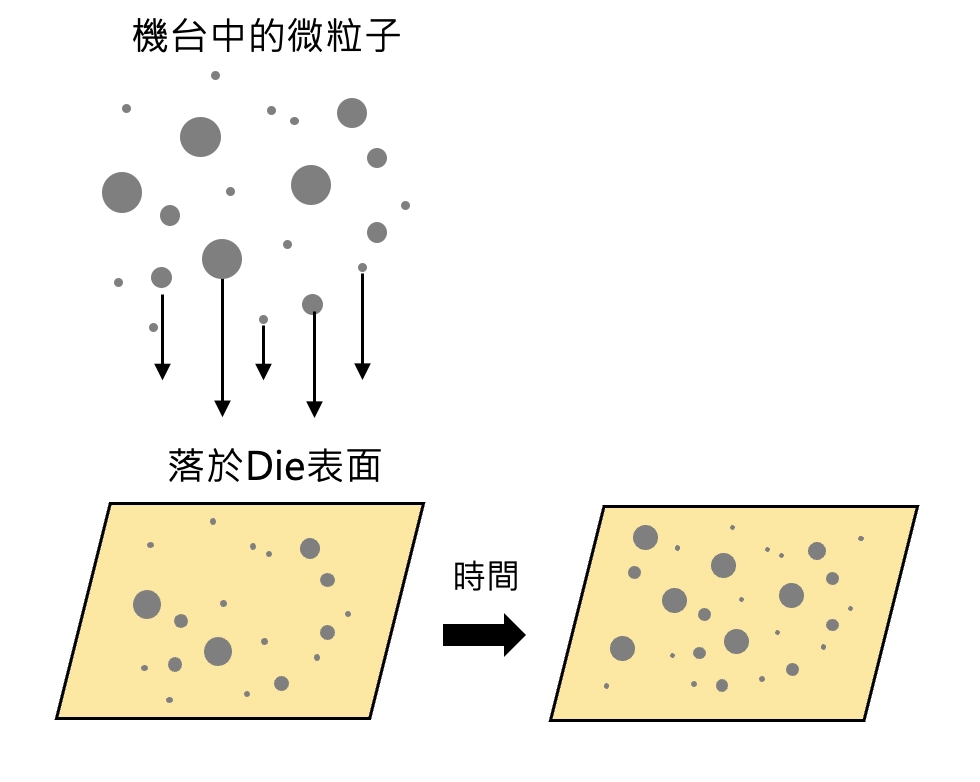
Particle counts continue to accumulate over time.
Why Is It Needed?
Prevent Product Quality Defects and Ensure Consistent Quality!
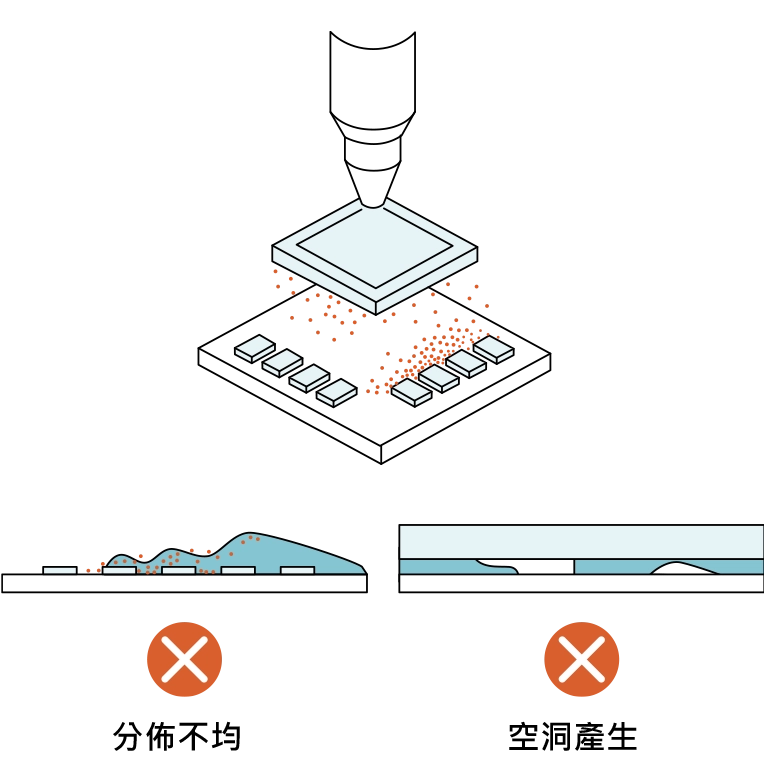
In the CoWoS packaging process, if particles (orange dots) inside a Die Bonder fall onto the Die Backside or Bond Pad, they may prevent the adhesive material from spreading evenly. Air pockets (voids) may form around the particles, potentially interrupting the heat dissipation path and resulting in reduced thermal performance.
By monitoring particle concentration through the Particle Monitoring IoT system, manufacturers can help prevent needle clogging, abnormal adhesive spreading, and void formation, thereby ensuring stable thermal conductivity and electrical connections.
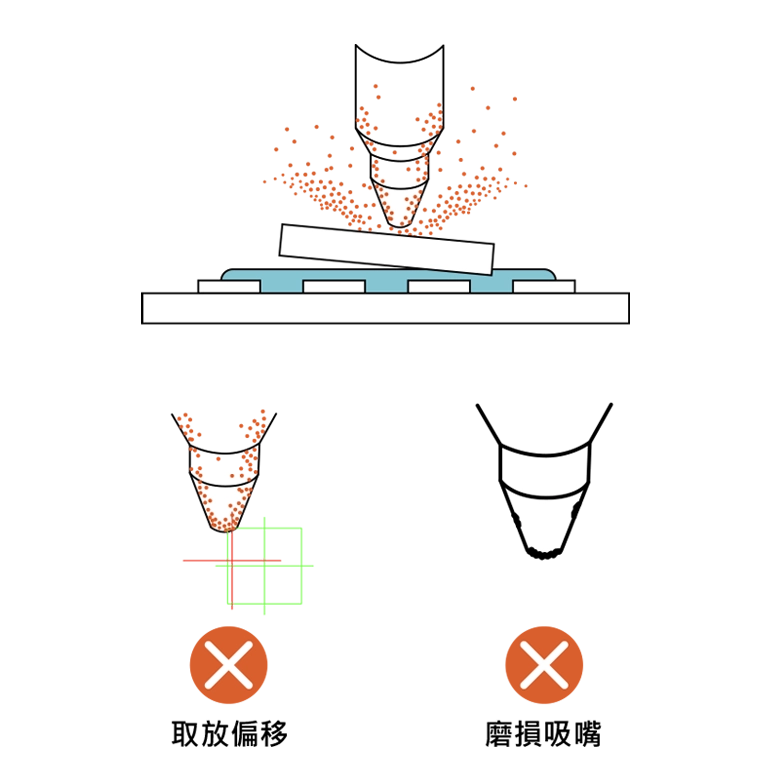
When the precision nozzle of a Die Bonder performs die Pick & Place operations, particles can act like abrasive material. Excessive particles may accelerate nozzle wear and deform the nozzle tip profile. As a result, the nozzle may fail to accurately pick up the center of the die, causing die tilt or placement deviation. Particles trapped between the nozzle and die during pick-and-place operations may also cause scratches and wafer surface chipping.
The Particle Monitoring IoT system helps prevent nozzle wear and die scratches caused by excessive particle contamination.
Why Is It Needed?
Improve Flip Chip Process Yield and Reliability!
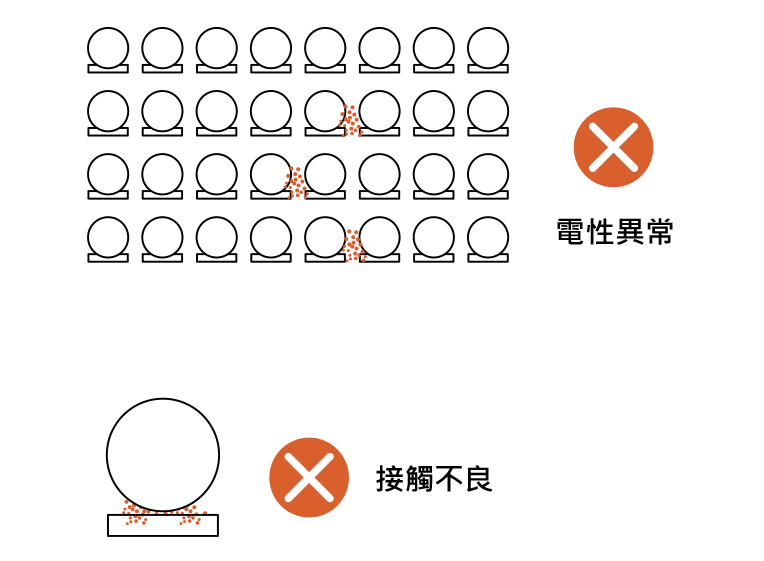
In the CoWoS packaging process, during high-precision die alignment and bonding in a Flip Chip Bonder, excessive particles in the environment can easily adhere to the surface of the die or substrate.
During the bonding process, these particles may become trapped between the bump and substrate, resulting in incomplete contact and causing open circuits or poor electrical contact. This may further affect the overall electrical performance of high-density packaging.
The Particle Monitoring IoT system helps track contamination trends, prevents particles from entering critical bonding interfaces, reduces the risk of electrical failure, and improves Flip Chip process yield and reliability.
Feature Description
Designed specifically for monitoring environmental factors inside packaging machines
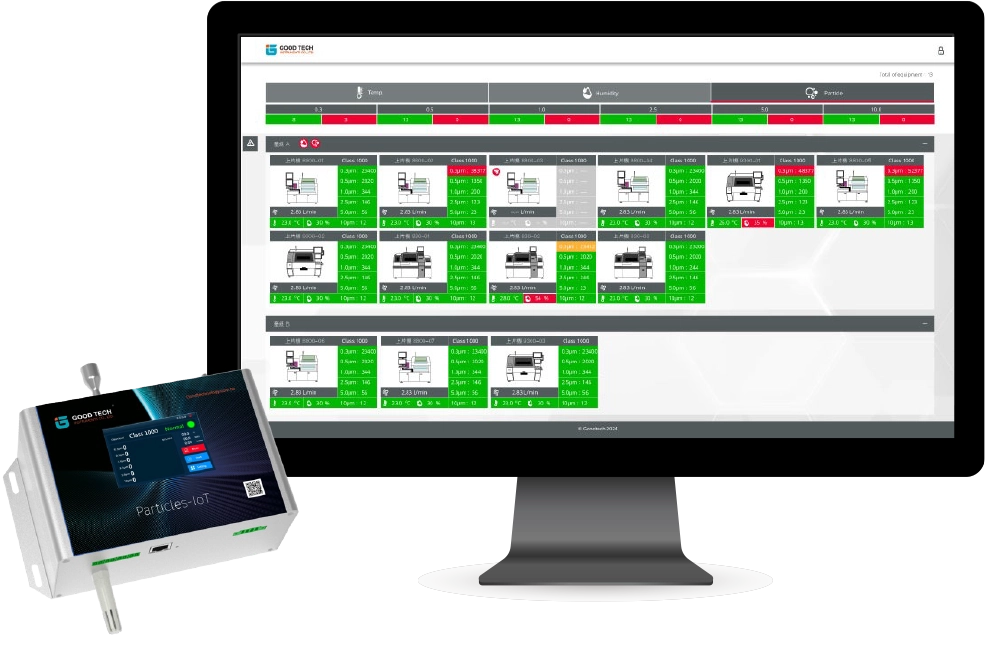
Particles-IoT Particle Monitoring IoT Key Features:
1. Smart particle algorithm for accurate measurement under different atmospheric conditions.
2. PID sampling control to maintain a constant sampling flow rate.
3. Continuous operation design with dual protection against disconnection.
4. Disconnection and warning alerts.
5. Flexible expansion of monitoring points.
6. Supports standard source coefficient calibration.
7. Industrial-grade laser light source for high reliability.
8. Real-time display of particle size distribution and classification levels.
Feature Description
Real-time monitoring for instant status visibility
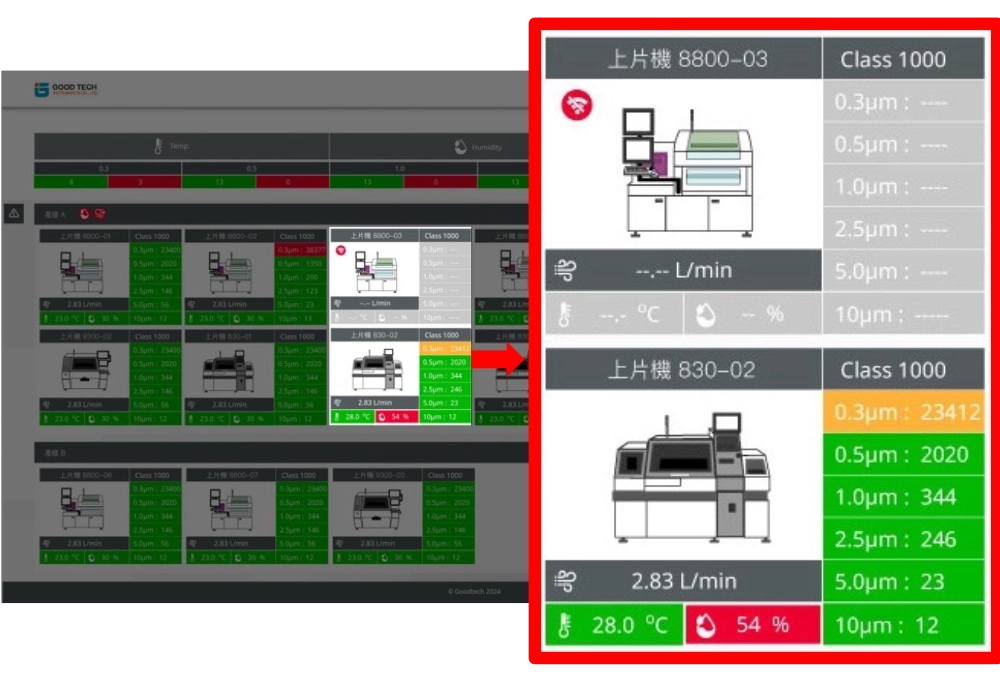
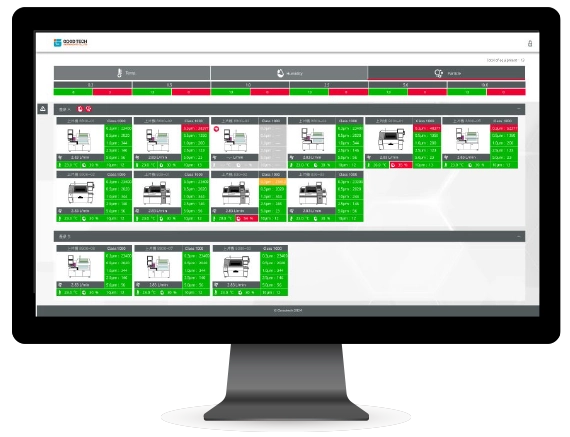
Particles-IoT Particle Monitoring IoT provides long-term monitoring of temperature, humidity, and particle concentration inside wafer loading machines. The system categorizes all data using indicator lights and displays them on the main screen in a unified manner. Green indicates "Normal," Orange indicates "Warning (first threshold)," Red indicates "Abnormal (second threshold)," and Gray indicates "Monitoring not executed." Users can switch tabs to quickly check the current status and quality.
Normal All values are within the normal range.
Warning Recommended to schedule an inspection or cleaning.
Abnormal Abnormal values may lead to process defects.
Offline Device or sensor is in a disconnected state.
Feature Description
Up to Two Years of Data Storage
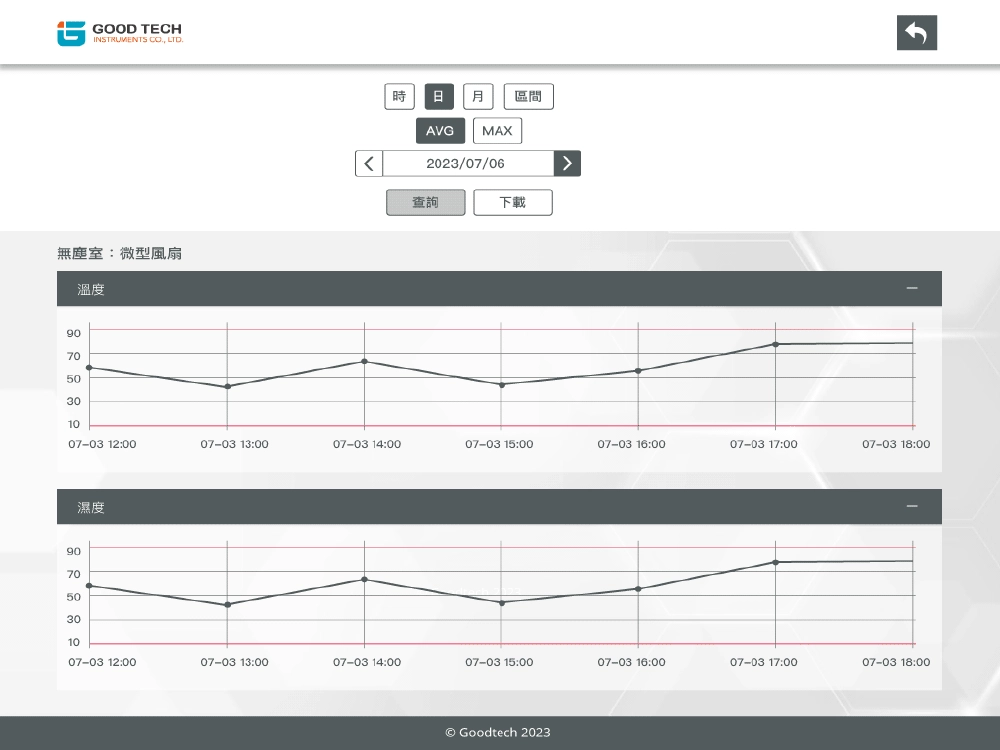
Are you wasting time compiling data reports?
Various environmental factors require long-term data collection to observe trends, as well as detailed records and reports for tracking and auditing.
However, compiling this data no longer needs to be time-consuming. Particles-IoT Particle Monitoring IoT supports long-term data storage,
with built-in memory capable of storing up to two years of data. It can automatically generate daily, weekly, and monthly trend charts,
making quality management and statistical analysis more efficient.
Feature Description
Dual Customizable Thresholds for Each Parameter
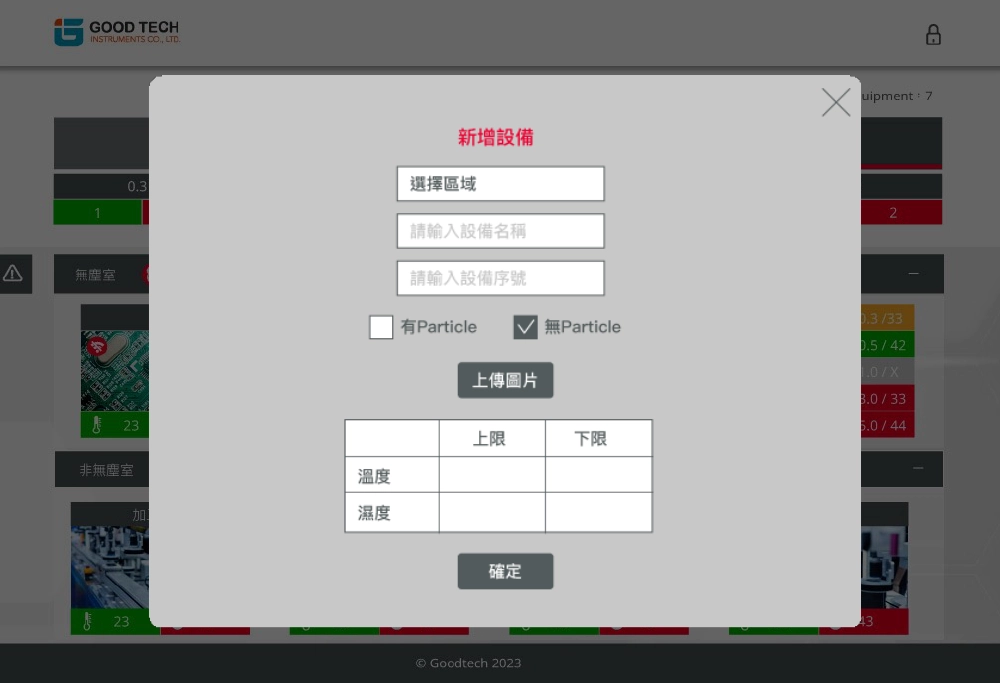
Users can freely set upper and lower threshold values for temperature and humidity conditions.
If environmental parameters exceed the preset range, the system will instantly send an alert notification via email,
ensuring a quick response.
Additionally, Particles-IoT Particle Monitoring IoT features a dual-threshold function.
When the first threshold is triggered, the system issues a warning, allowing users to start planning or conduct early inspections,
thereby preventing the occurrence of a red light (critical alert).
Working Principle
Stable Flow Air Pump
Simultaneous Output of Six-Channel Particle Count
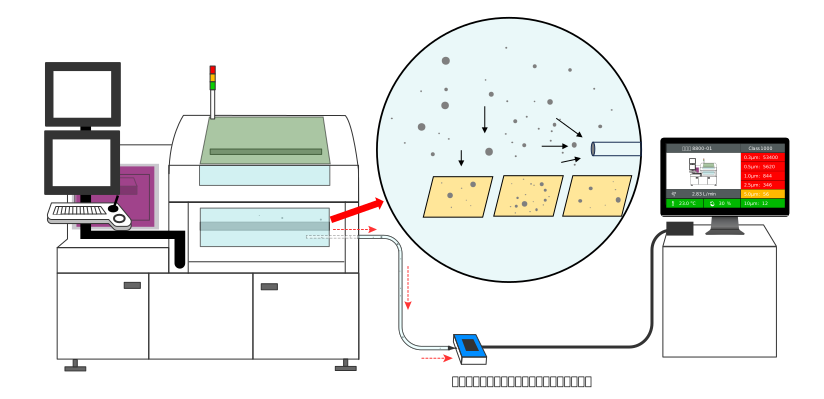
Working Principle
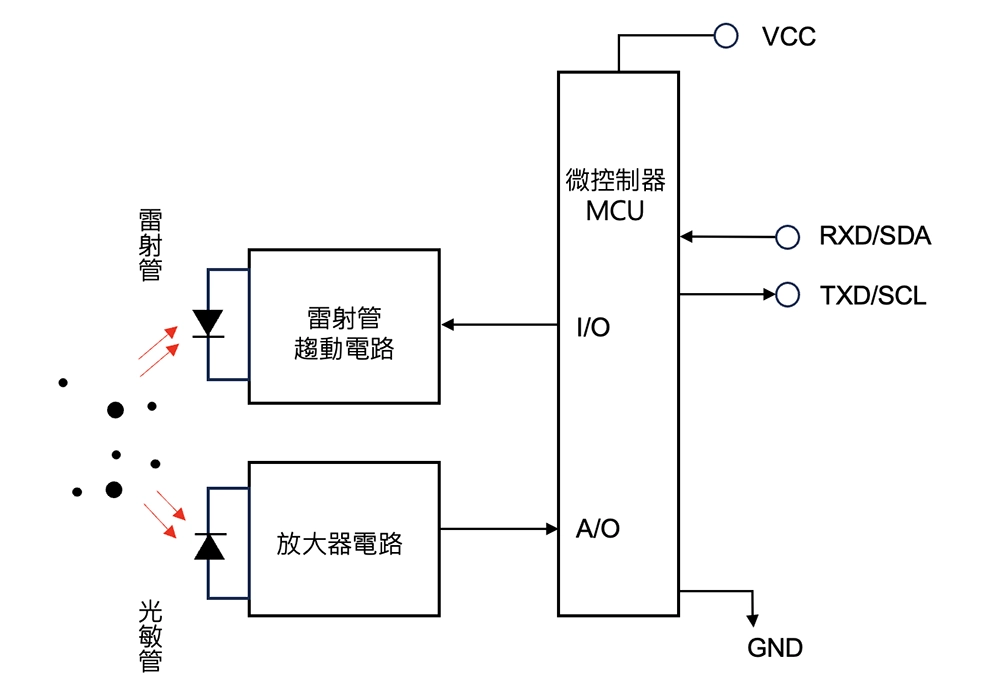
High-Reliability Industrial Laser for Precise Measurement
Utilizing a Semiconductor Laser Source for High-Precision Measurement
Air is sampled using a pump, and when airborne particles pass through the laser beam, light scattering occurs.
The scattered light is then converted into an electrical signal (pulse) by a photoelectric converter.
Larger particles produce larger peak values in the pulse signal. By analyzing these peak values and the number of pulses,
the system determines the number of particles of different sizes.
Application Scope
Suitable for Precision Product Manufacturing Processes

Applicable Fields Examples: Semiconductor industry, power battery manufacturing, biotechnology industry, laboratories, pharmaceuticals, food industry, LCD displays, precision machinery manufacturing, etc.
When particle concentration is too high, for example, in power battery production, if particles enter the active material layer of the battery, they may cause micro-short circuits, reducing battery capacity, or in extreme cases, lead to thermal runaway (such as fire or explosion).
Precision Requirements: High precision is required, as even the smallest fluctuations may result in product defects.
Regulatory Compliance: Must meet regulatory requirements to ensure that the manufacturing process takes place in a controlled environment.
Contamination Control: Prevents temperature, humidity, and particles from directly affecting quality and safety.
Product Quality: Impacts processing accuracy and surface quality, increasing defect rates.
Architecture
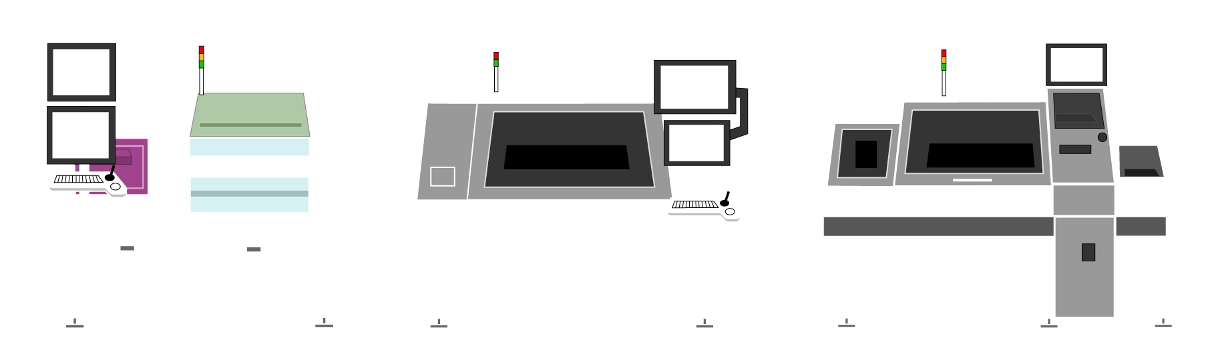
Standalone Monitoring, Real-time Alerts
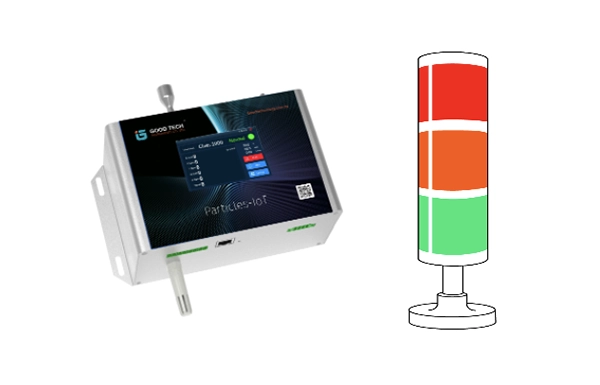
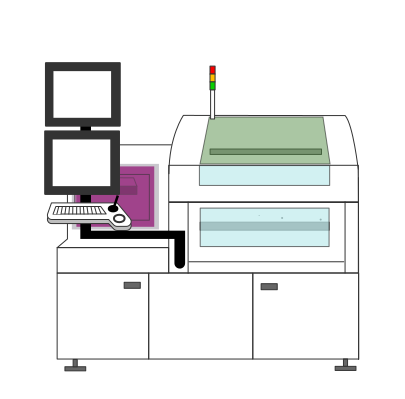
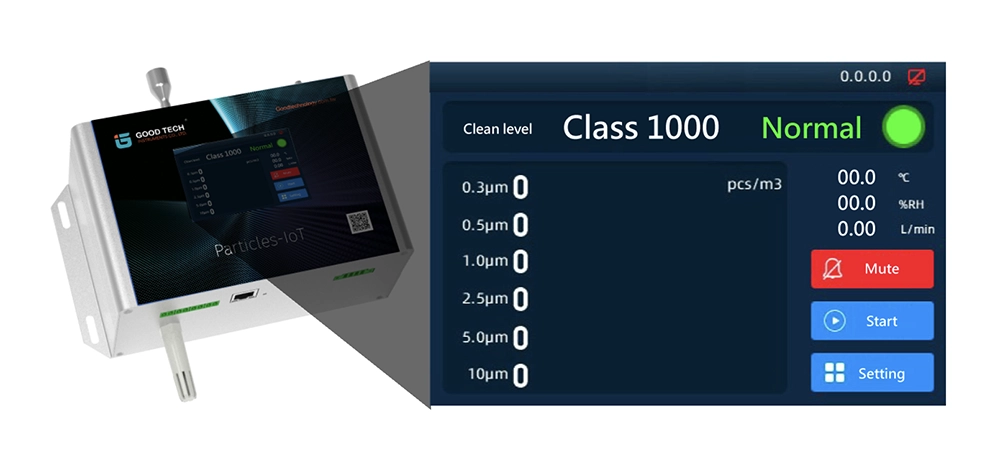
Standalone Module:
Easy and quick installation, disconnection/warning (can be directly connected to an alarm system).
3.5-inch color display screen, real-time data display.
Can be directly connected to a buzzer alarm.
Architecture
Standalone Connection, Suitable for Inspection & Short-term Trend Analysis
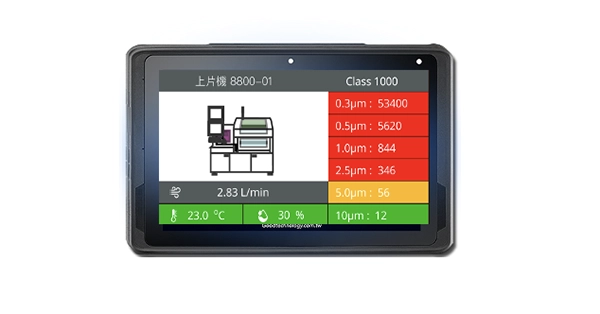
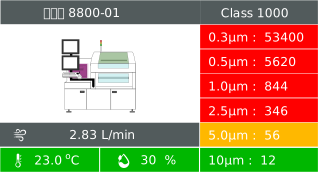
Standalone Inspection:
By combining with a network cable and an industrial tablet, short-term data can be collected, allowing users to analyze trends through accumulated data.
The system retains the characteristics of an inspection tool, making it portable and usable on different machines.
Additionally, users can set dual threshold levels for more precise monitoring.
Architecture
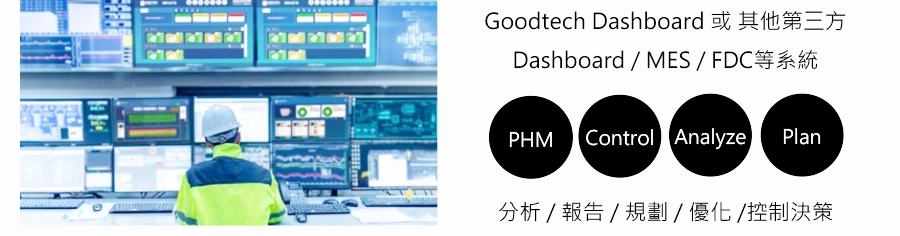
Unified IoT Monitoring & Display for the Entire Factory


FAQ
What is the Particles IoT Micro-particle Monitoring IoT?
Particles IoT is an environmental monitoring system used to monitor the concentration of micro-particles, temperature, and humidity inside machines. It helps enterprises control the environmental quality of their processes, avoiding product defects, equipment anomalies, or a decline in process stability caused by excessive micro-particle concentration.
Why is it necessary to monitor micro-particle concentration inside machines?
When the micro-particle concentration inside a machine is too high, particles may adhere to the surfaces of chips, workpieces, or materials, causing issues such as scratches, foreign object spots, uneven coatings, alignment deviations, or component contamination, which in turn affect product yield and equipment stability.
What industries is Particles IoT suitable for?
Particles IoT is suitable for semiconductor packaging, precision manufacturing, power batteries, biotechnology, pharmaceuticals, food, LCD panels, laboratories, and other high-cleanliness process environments that require the control of micro-particles, temperature, and humidity.
Support
Other IoT-Related Topics