
Case

Application

FAQ
How to Ensure the Stability of PVD and CVD Machine Arms?
Case|How to Ensure the Stability of PVD and CVD Machine Arms?The purpose of thin film deposition is to enhance the conductivity of wafers. How can abnormal PVD and CVD machine arm operations impact the process? How can their operational stability be ensured?
The Importance of PVD and CVD Machine Arms in the Process
Monitoring Machine Conditions to Ensure High Reliability and Stability
PVD and CVD machines typically consist of multiple components, with the robotic arm being a crucial part.
The arm is mainly responsible for moving wafers to different positions to perform various steps of the thin film deposition process.
When a PVD machine arm malfunctions, it can impact the process in several ways.
For instance, the process may need to stop or pause, leading to reduced production efficiency.
The longer the downtime, the greater the losses.
The arm plays a vital role in ensuring uniform thin film deposition across wafers by accurately positioning them.
Any malfunction can result in process inconsistencies, leading to variations in wafer quality.
Moreover, machine arm issues can affect process safety, posing potential risks to both operators and equipment.
Therefore, it is essential for users to monitor the machine's condition to ensure high reliability and stability for smooth process operation.
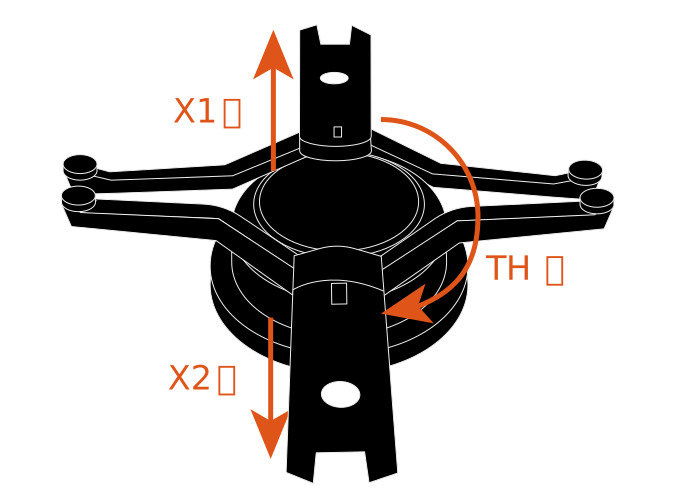
VHP-PVD-NSK
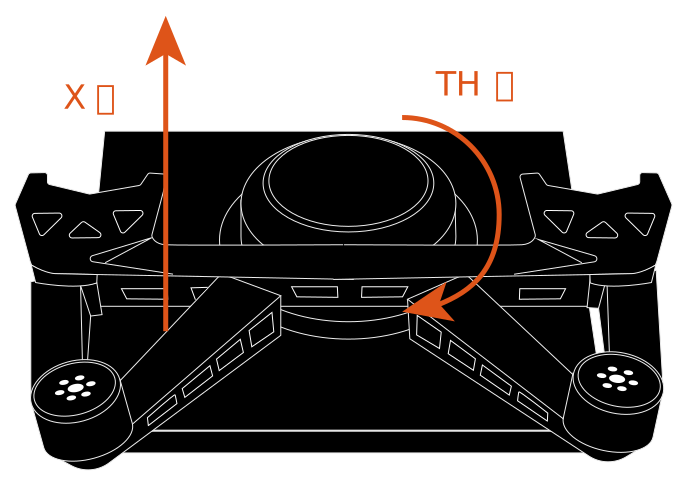
VHP-Producer-NSK
Monitoring Explanation
VMS-ML Machine Learning Intelligent Monitoring System
The VMS-ML system visualizes dynamic signals from CVD and PVD machines, integrating machine learning to analyze operational movements.
By learning from machine operations and measuring stability differences, the system provides insights into process stability.
The data trends not only define the machine's stability standards but also serve as a validation tool to confirm performance before deployment after maintenance.
Measurement Conditions
1. Sensor Installation: VMS-ML external sensor does not require integration with equipment signals!
Start establishing learning standards for the equipment immediately and monitor its condition.
Visualization of Machine Dynamic Signals and Machine Learning Actions:
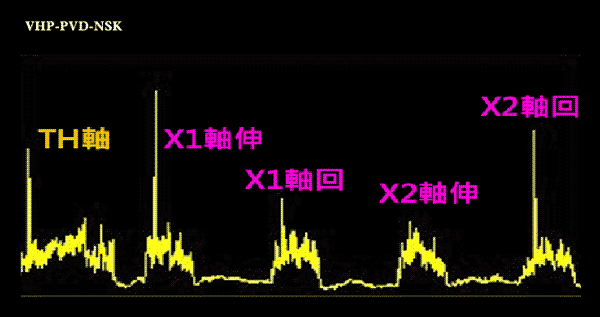
Model 1: VHP-PVD-NSK
Operation Description: TH axis rotates, X1 extends forward, returns to its original position, then X2 operates.
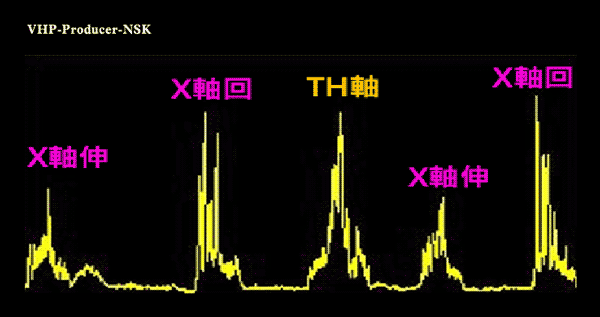
Model 2: VHP-Producer-NSK
Operation Description: X axis extends forward, returns, TH axis rotates to the opposite side, and the X axis extends again.
2. The system automatically tracks characteristic signals, detecting predefined target signals in real-time.
From simple to complex movements, automatic tracking and recognition are possible.
Abnormal Simulation and Visualization for VHP-PVD-NSK Machine:
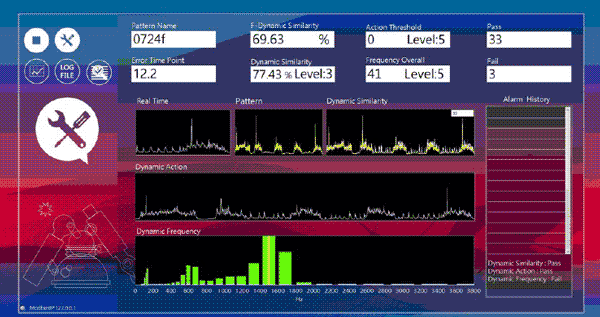
Result: Vibration in X1 and X2 axes.
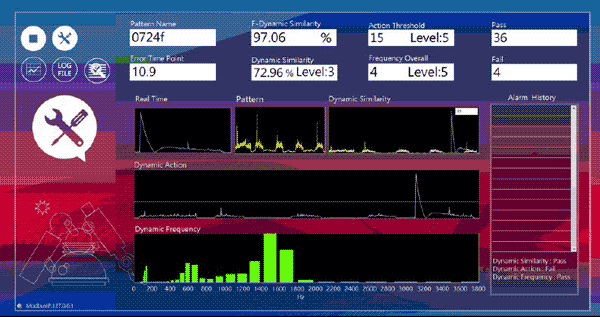
Result: Abnormal surge in X2 axis movement.
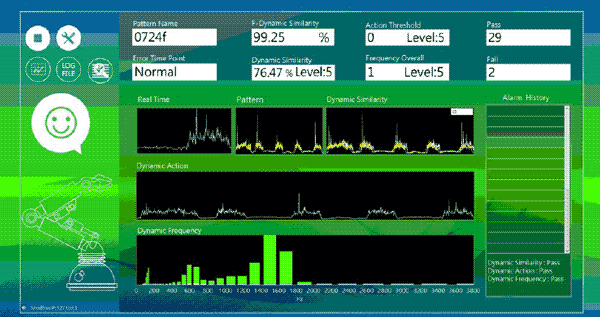
Result: Machine vibration.
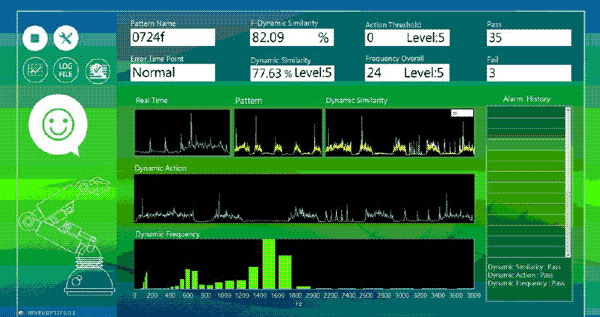
Result: X2 axis vibration.
Abnormal Simulation and Visualization for VHP-Producer-NSK Machine:
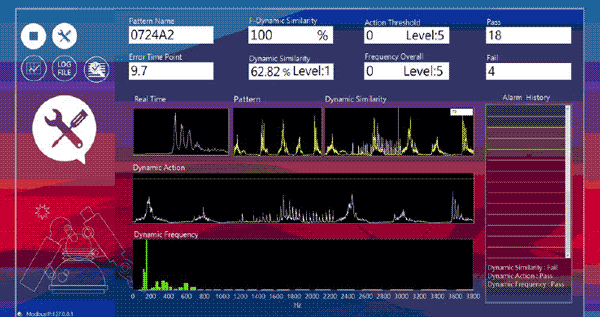
Result: X axis wear after extending and retracting.
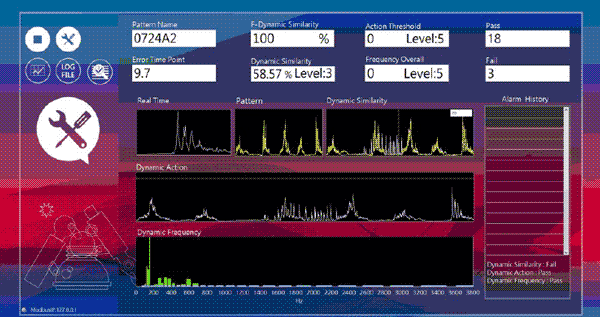
Result: X axis extension stop anomaly.
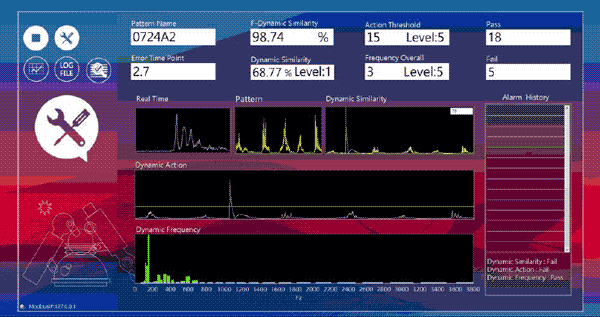
Result: Machine vibration.
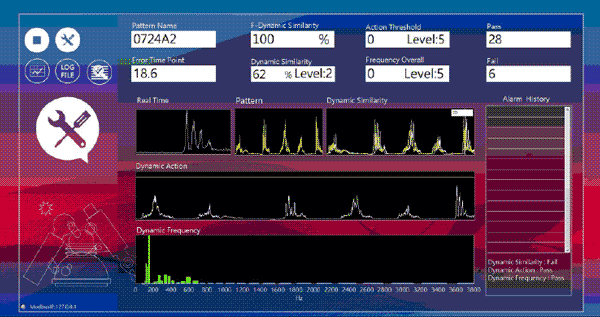
Result: TH axis start anomaly.
Measurement Conclusion
VMS-ML enables standardized machine arm motion procedures, identifying anomalies to prevent defects and improve product yield. By analyzing data trends, the system helps predict potential failures and serves as a reference before and after machine maintenance.
VMS-ML Machine Learning Monitoring System
FAQ
Why is it necessary to monitor the operational stability of PVD and CVD machine arms?
PVD and CVD machine arms are responsible for moving wafers to different positions to complete the thin-film deposition process. If the arm's operation is unstable, chatters, or has positioning anomalies, it may cause process interruptions, uneven film deposition, inconsistent wafer processing results, and even affect equipment and personnel safety. Therefore, real-time monitoring of the arm's operating status is required.
What process impacts can abnormal PVD and CVD machine arms cause?
Arm anomalies may lead to process suspension, decreased production capacity, unstable wafer transport, uneven film deposition, reduced yield, and subsequent defective products. If the anomaly is not discovered in time, it may also cause equipment damage or process safety risks.
How does VMS-ML monitor PVD and CVD machine arms?
The VMS-ML machine learning intelligent monitoring system can use external sensors to learn the dynamic signals of the machine arm during normal operation without needing to interface with the equipment's internal signals. The system visualizes mechanical actions and automatically tracks feature signals to determine whether the arm's operation deviates from the normal model.
Which actions of PVD and CVD arms can be monitored?
The system can monitor TH-axis rotation, X1-axis extension and retraction, X2-axis operation, X-axis extension and retraction, as well as complex continuous actions in different machine models. From simple to complex mechanical actions, feature tracking and anomaly identification can be performed through the learning model.
What PVD and CVD arm anomalies can VMS-ML identify?
VMS-ML can be used to identify operating chatter in the X1 and X2 axes, abnormal surge during X2 axis start/retract, machine chatter, wear during X-axis extension and retraction, abnormal X-axis extension stops, and abnormal TH-axis startups, helping engineers quickly grasp the location and type of anomalies.
What are the benefits of implementing PVD and CVD arm monitoring?
After implementing arm monitoring, standardized specifications can be established for the machine arm's operational process, catching anomalies early to avoid subsequent defective products and yield reduction caused by arm anomalies. Through data trend management, it can also predict the timing of equipment anomalies and serve as a basis for before-and-after maintenance comparison and factory verification.
Further Reading
The impact of environmental micro-vibration on Laser Grooving machines?
Operating status of the Bond Head arm on the die bonder?
How to perform measurements on a wafer grinding spindle?
How to ensure the stability of the photoresist coating machine's arm?
VMS-ML Machine Learning Intelligent Monitoring System
Unsure about your equipment problem?
Maintenance speed increased by 7 times, saving annual maintenance budget