
Case

Application

FAQ
Die Bonder Screw Abnormalities Causing Poor Product Quality?
Case|Die Bonder Screw Abnormalities Causing Poor Product Quality?If the screw quality in the Die Bonder is poor, it may cause the chip to be inaccurately positioned or bonded to the substrate, leading to misalignment or weak adhesion.
The Relationship Between Die Bonder Screws and Product Quality
In semiconductor manufacturing, the die bonder plays a role similar to decorating a cake. When making a cake, you first bake the cake base (chip), then place it on a cake plate (substrate). The die bonder acts as a tool that accurately places the chip onto the substrate. Next, layers are connected, just like adding cream and fruit to ensure a tight bond. In simple terms, the die bonder places the chip in the correct position and ensures a solid connection between the chip and the substrate, creating a complete semiconductor device.
The screws in the die bonder are used to control the movement of the robotic arm and adjust the positions of other components. They control the movement of the robotic arm in three-dimensional space to precisely position the chip from storage to bonding. These screws manage horizontal, vertical, and rotational movements with high-precision positioning systems. If the screw quality is poor, it may lead to misalignment or weak bonding. This is similar to sticking a postage stamp incorrectly due to shaky hands, resulting in an unstable product or failure.
Additionally, damaged or faulty screws may interrupt or halt the production process, significantly affecting production schedules.

Causes of Screw Damage
Possible reasons for screw damage or abnormalities include:
Wear and Tear: Long-term or improper use can lead to surface wear, especially under high loads or speeds. This can cause dimensional changes or deformation, affecting movement accuracy.
Overloading: If screws endure excessive pressure beyond their design limit, deformation or breakage may occur. This could be due to operational errors, incorrect process settings, or unexpected incidents.
Environmental Factors: Humidity, corrosive gases, extreme temperatures, etc., may lead to material degradation or surface corrosion, impacting motion characteristics and durability.
Improper Use: Mishandling or inadequate maintenance, such as incorrect parameter adjustments, excessive force application, and infrequent cleaning, can also damage screws.
Monitoring Overview
VMS-ML Machine Learning Intelligent Monitoring System
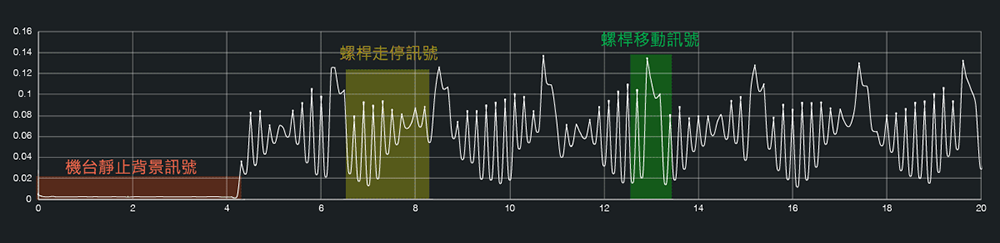
To ensure the stability of screws, the ML intelligent monitoring system can monitor precision and stability by tracking screw positioning and movements to enhance process reliability and efficiency.
Measurement Status
Screw Motion Vibration Signal Description
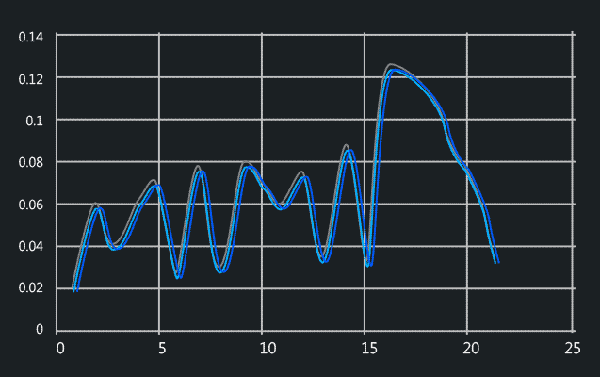
Screw Operation Before Maintenance
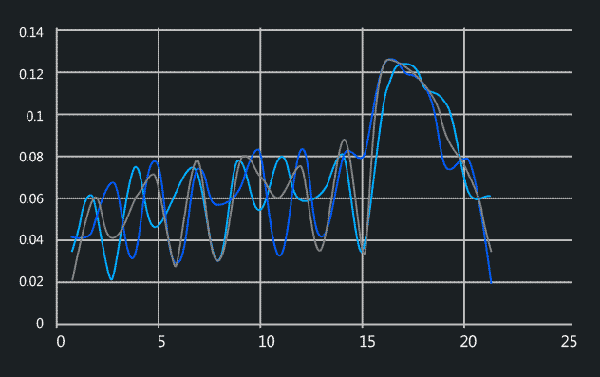
Screw Operation After Maintenance
Measurement Conclusions
The VMS-ML system can learn the correct process dynamic signals in real time, provide assessments, and compare results to evaluate equipment performance. Trend analysis helps identify potential equipment failures and predict maintenance needs, ensuring stable operations and reducing defective products.
VMS-ML Machine Learning Intelligent Monitoring System
VMS-ML
Real-time Defect Detection
FAQ
What problems can be caused by abnormal Die Bonder screws?
The Die Bonder screw is responsible for controlling the movement and positioning of the robotic arm. If the screw quality is poor or an abnormality occurs, it may cause the chip to fail to be positioned accurately or bonded firmly to the substrate, which in turn leads to unstable product performance, process interruptions, or poor product quality.
Why does the Die Bonder screw affect chip positioning accuracy?
The Die Bonder screw controls the movement of the robotic arm in horizontal, vertical, and rotational directions, working with a high-precision positioning system to align the chip and the substrate. If the screw is worn, deformed, or moves unstably, it may cause chip position deviation, weak bonding, or decreased packaging quality.
What are the common causes of Die Bonder screw damage?
Common causes include wear from long-term use, dimensional changes caused by high loads or high-speed operation, deformation or breakage from bearing loads exceeding design limits for an extended period, environmental factors such as moisture, corrosive gases, high or low temperatures, and damage caused by improper operation or maintenance.
How does VMS-ML monitor the status of Die Bonder screws?
The VMS-ML machine learning intelligent monitoring system can learn dynamic signals during the correct Die Bonder process and monitor the screw's positioning and movement. Through real-time scoring, dynamic signal comparison, and trend charts, the system can determine whether the screw's movement trajectory and positioning are stable.
Why compare the operating status of the screw before and after maintenance?
Comparing the operating status before and after screw maintenance can confirm whether the repair effectively improved abnormal vibrations or unstable operations. Through dynamic signal graphs and trend changes, engineers can determine whether the equipment has returned to a more stable operating state after being sent back to the factory or repaired.
What are the benefits of implementing Die Bonder screw monitoring?
After implementing Die Bonder screw monitoring, the equipment's operational status can be instantly evaluated to detect screw wear, unstable positioning, or potential failure points in advance. This helps in scheduling predictive maintenance, reducing the risks of process interruptions, poor product quality, and production line downtime.
Further Reading
Uneven wafer grinding flatness?
How to ensure the action position of the Scrubber cleaning process?
How to ensure the stability of the Die Bonder process?
How does the Mask Aligner perform measurements?
VMS-ML Machine Learning Intelligent Monitoring System
What is equipment remaining useful life (RUL) prediction?
Maintenance speed increased by 7 times, saving annual maintenance budget