
Case

Application

FAQ
Does Excessive Particle Concentration Affect Wafer Quality?
Monitoring Cases|Does Excessive Particle Concentration Affect Wafer Quality?In semiconductor manufacturing processes, these particles can cause process instability. Will an excessively high concentration of particles lead to uneven material removal or deposition?
What is the impact of excessive particle concentration?
In semiconductor manufacturing, particles refer to extremely small solid or liquid granules, usually on the micrometer or nanometer scale. These particles can cause instability in processes. For example, during etching, deposition, or photomask processes, excessively high particle concentration leads to uneven material removal or deposition, which in turn causes defects or flaws in component manufacturing quality and increases the probability of producing defective products on the production line.

What are the sources of semiconductor particles?
The formation of particles has various causes and can originate from internal or external environments. Wear and tear of internal machine parts can generate particles. This includes transport systems, bearings, seals, etc., within the equipment. Machines operating and being used for long periods may release tiny particles due to component wear. During the process, chemical reactions may cause material decomposition or generate byproducts, which may exist in the form of particles. For instance, in certain chemical processes, reactions of gases or liquids can produce fine solid products.
External environmental factors, such as dust in the air and changes in dew point, can all affect the particle level inside the equipment. This is one of the reasons why cleanroom environment control is crucial for semiconductor manufacturing. Additionally, operators' clothing, shoes, tools, etc., may bring in particles. Especially in a cleanroom environment, controlling personnel's clothing and behavior is of utmost importance.
Other factors like machine design may also be a cause of particle generation. The machine may generate friction during operation, which can release particles. The quality of materials used in the process can also affect particle generation; low-quality raw materials may contain impurities or be unclean, which can release particles during the process.
What can be observed by monitoring the 0.1–5 μm particle size?
Particles of different sizes may reflect different contamination sources and process changes. Particles-IoT can monitor particles of different sizes in the 0.1–5 μm range and continuously record the concentration changes of each particle size.
Compared to only looking at the "total particle count," observing different particle sizes separately makes it easier to spot if a specific size range suddenly increases. For example, if a specific particle size continues to rise after an equipment starts running, you can further cross-reference the equipment's actions, maintenance records, and process times to determine whether the anomaly is related to equipment wear, process byproducts, or external contamination.
How to reduce particle formation?
To reduce the formation of particles inside the machine, users must regularly clean and maintain the machine, use high-quality materials, and implement strict cleanroom standards and operational procedures. Regularly measuring the particle concentration in the cleanroom helps in the early detection of elevated concentrations and enables timely countermeasures. Protective measures should also be used in appropriate areas, such as machine covers and dust shields, to prevent particles from entering or spreading.
How to use multi-point sensors to trace contamination sources?
A single particle sensor can only tell that "the particle concentration at this location has changed." If multiple monitoring points are deployed across the facility, process equipment, or different zones, it becomes possible to further compare concentration changes across different locations, times, and particle sizes.
Particles-IoT can be expanded with multiple monitoring points, and each sensor can have specific alarm thresholds set according to the needs of different zones. When an abnormal particle concentration occurs in a certain zone, the sensor distribution and long-term trends can be used to identify the location and time of the earliest anomaly. By cross-referencing this with equipment operation, process, and product anomaly times, the possible sources of contamination can be gradually narrowed down.
For example: Zone A rises first → Zone B rises subsequently → Zone C remains normal
This provides much more informational value than simply receiving a "Particle Exceeded" alert. It can assist engineers in judging the possible area of contamination occurrence and diffusion direction before conducting on-site verification.
Monitoring Overview
IIoT Wireless. Industrial Internet of Things
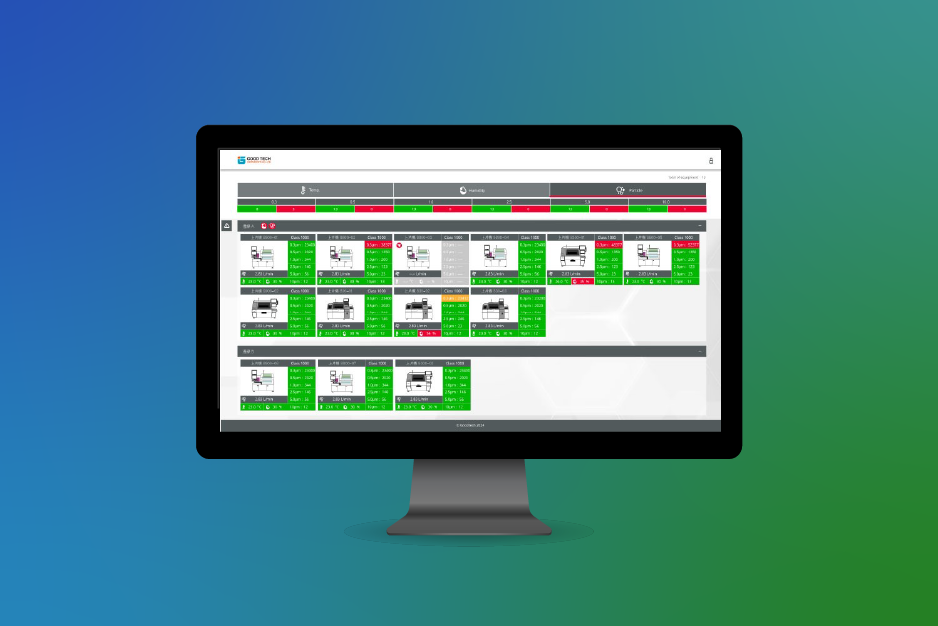
Utilizing the IIoT wireless micrometer particle monitoring system, the monitorable range is 0.1 micrometers (µm) to 5 micrometers (µm). It transmits and receives wireless signals on its own using a sub-1GHz frequency band, which does not interfere with the in-plant wireless signals. It features excellent low-frequency penetration capability and eliminates the need for extensive signal wiring, significantly saving wiring and monitoring costs. The main system can be expanded with multiple monitoring points, which is cost-effective and saves personnel inspection labor. It monitors particle concentration in real-time, instantly warning as soon as a threshold is exceeded.
Measurement Status

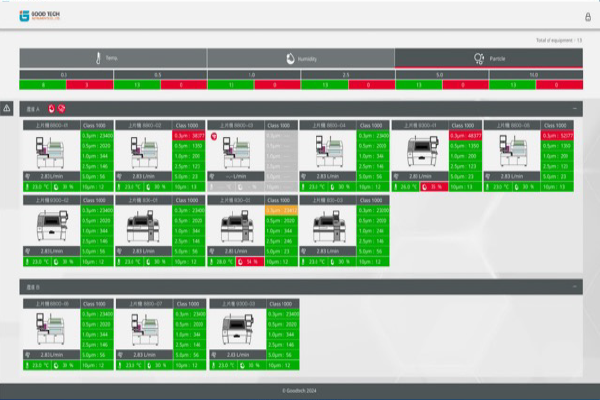
Main Monitoring Interface
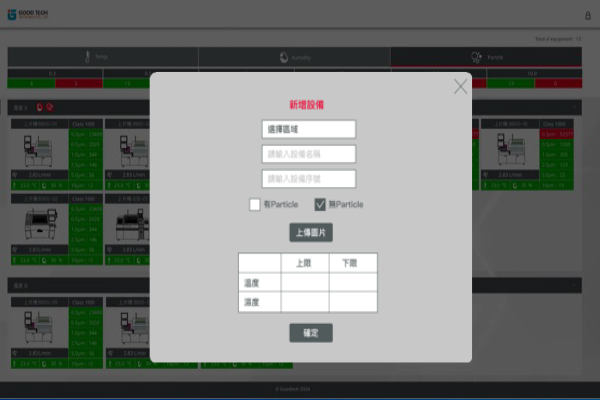
Set Threshold for Excessive Particle Concentration
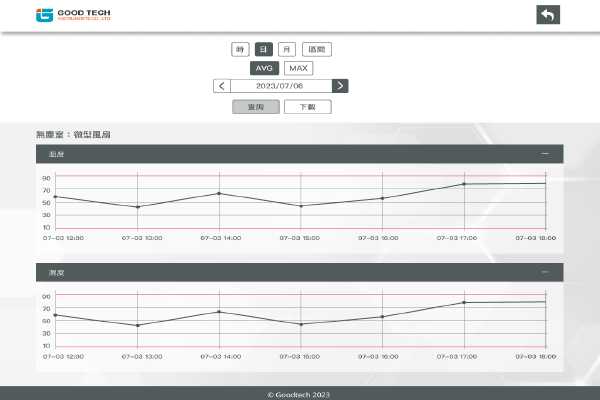
Long-Term Particle Monitoring Trend
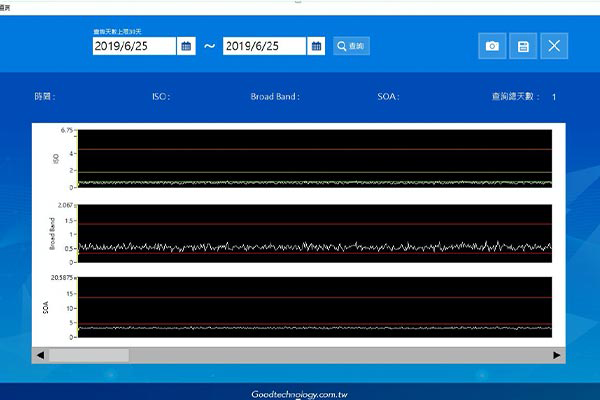
Query Periodic Changes in Single Sensor Particle Concentration
Measurement Conclusion
The Particles-IoT system for industrial particle monitoring can simultaneously track particles of different sizes.
Each sensor can be customized with alert thresholds based on area-specific requirements.
When the threshold is exceeded, alerts are issued to notify users for corrective actions.
Users can analyze trend changes to design preventive measures and trace pollution sources through the distribution of particle sensors.
Tracking periodic changes helps identify whether product anomalies are caused by particle contamination and pinpoint the exact time of abnormal particle concentrations,
thereby establishing a robust defense mechanism.
FAQ
Will an excessive concentration of particles affect wafer quality?
Yes. If the particle concentration in the semiconductor process is too high, it may cause uneven material removal and deposition during etching, deposition, photomask, or other processes, leading to wafer defects, poor component quality, and increased defect rates in the production line.
What are the sources of particles in the semiconductor process?
Particle sources may include internal machine part wear, transport systems, bearings, seals, chemical reaction by-products, airborne dust, dew point changes, personnel clothing and shoes, tools brought in, machine friction, and impurities or uncleanness in the process materials themselves.
Why do cleanrooms require long-term monitoring of particle concentration?
Particle concentration in a cleanroom changes with equipment operation, personnel activities, environmental changes, and process conditions. Long-term monitoring helps detect the exact time when particle concentration increases early on and traces whether product anomalies are related to particle contamination.
What particle size ranges can Particles-IoT monitor?
The Particles-IoT industrial internet of things for particles can monitor micron particles in the range of 0.3 to 10 micrometers, and can simultaneously monitor the concentration of particles of different sizes, assisting users in managing them according to the needs of different areas.
How does Particles-IoT assist in tracing pollution sources?
Particles-IoT can trace the time and area where abnormal particle concentration occurs through multi-point particle sensor distribution, long-term trend monitoring, and cycle variation querying. When particle concentration exceeds the threshold, the system can issue an alarm, helping users quickly identify the pollution source and take corrective measures.
What are the benefits of implementing the particle industrial IoT?
After implementing the particle industrial IoT, particle concentration changes in cleanrooms and process environments can be grasped in real time, reducing manual inspection costs, establishing regional alarm thresholds and defense mechanisms, and assisting in clarifying whether product anomalies are related to particle contamination, thereby improving process stability and wafer quality.
Further Reading
The impact of environmental micro-vibration on Laser Grooving machines?
Operating status of the Bond Head arm on the die bonder?
How to perform measurements on a wafer grinding spindle?
How to ensure the stability of the photoresist coating machine's arm?
Particles-IoT Particle Industrial IoT
AIoT Smart Industrial IoT
Maintenance speed increased by 7 times, saving annual maintenance budget