
Case

Application

FAQ
Phenomenon of Turbo Pump Imbalance?
Monitoring Results | Phenomenon of Turbo Pump Imbalance?For turbo pumps with magnetic bearings, the most critical issue is dynamic balance. If the rotational frequency is relatively high, it indicates poor balance. How should this be measured?
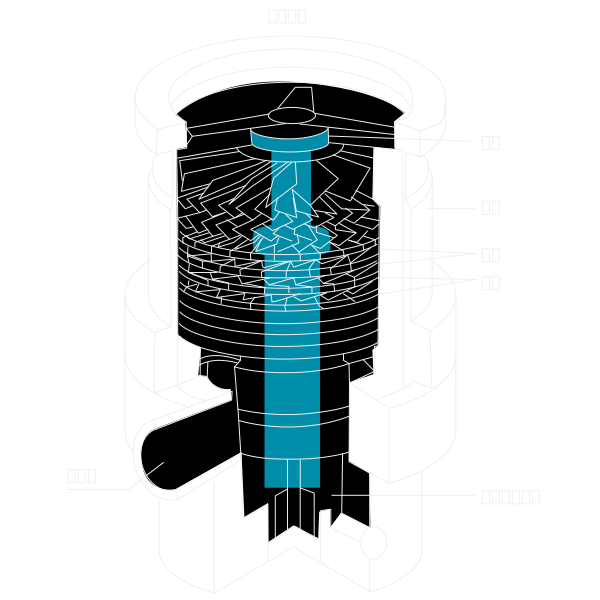
Operating Principle of Turbo Pump
A turbo pump uses high-speed rotating blades to transfer kinetic energy to gas molecules, generating a directional flow to evacuate gas. The moving and stationary blades are alternately arranged, with opposite inclination directions, and are composed of more than ten pairs of blades.
Turbo pumps can be divided into two main types by appearance: Vertical type and Horizontal type.
The vertical type is smaller in size compared to the horizontal type, but if foreign objects fall into the pump, the turbine blades are easily damaged and difficult to repair. Its stability is relatively weaker, making it more prone to vibration problems. However, its advantages include directly replacing diffusion pumps and vacuum gauges, being cheaper than the horizontal type, and offering more flexibility when connecting with vacuum systems. Moreover, magnetic bearing turbo pumps are less threatened by oil contamination.
Solution and Monitoring Description
IMS-TP Turbo Pump Inspection & Analysis Instrument
For turbo pumps with magnetic bearings, vibration levels are relatively small, so spectrum analysis is required for comparison. In addition, the most critical issue of magnetic bearing systems is dynamic balance. For example, when the rotational frequency is relatively high, it indicates poor balance. By using a portable inspection and analysis device, we ensure the pump’s quality and perform predictive maintenance to prevent unexpected shutdowns.
Measurement Condition
Measurement Method: Using rotor spectrum analysis function for measurement
Comparison of Equipment A / B at 223 Hz Operating Speed
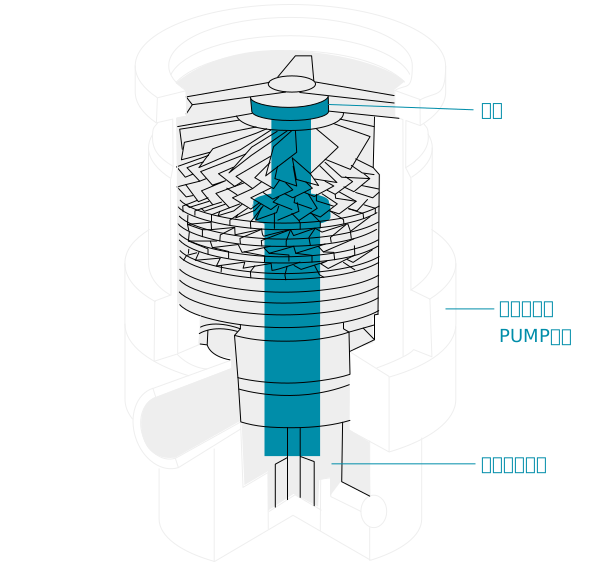
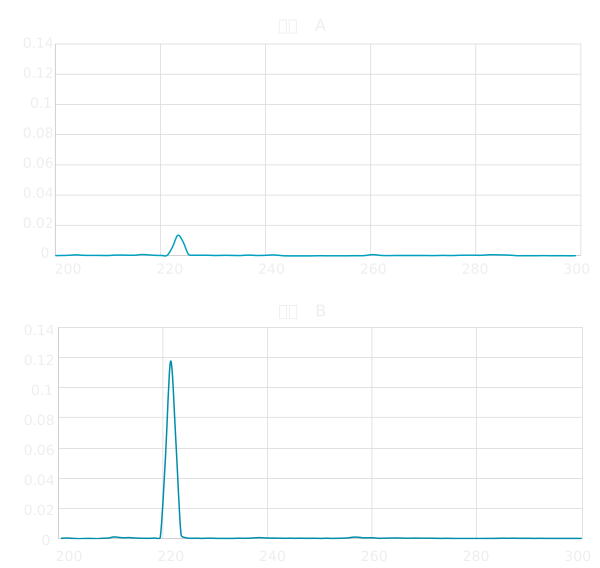
Equipment B shows a clear imbalance phenomenon!
Equipment A

Equipment B

Measurement Conclusion
・The vibration level of the TURBO PUMP is extremely small, and spectrum analysis must be used for comparison.
・The most critical issue for TURBO PUMP magnetic bearings is dynamic balance; when the rotational frequency is relatively high, it indicates poor balance.
・Equipment B at 223 RPM shows a clear imbalance phenomenon, with vibration approximately 8.6 times that of Equipment A.
・Both radial (adhesive, hand-pressed) and axial inspections revealed significant imbalance differences in Equipment B, suggesting further testing.
IMS-TP Turbo Pump Inspection & Analysis Instrument can classify and build dedicated maps according to different plant areas and equipment attributes. It can also establish multiple measurement points for each device. The system instantly displays the equipment status on the map, with indicator lights showing quality conditions, thereby providing users with a reliable basis for immediate maintenance and scheduling.
IMS-TP Turbo Pump
IMS-TP Turbo Pump
Suitable for quality inspection of various turbo pumps
FAQ
Why does a Turbo Pump need dynamic balance monitoring?
A Turbo Pump uses high-speed rotating blades to transfer kinetic energy to gas molecules to create a vacuum environment. Its rotational speed is usually much higher than that of general mechanical equipment. If dynamic unbalance occurs, it easily causes increased load on the magnetic bearing, elevated vibration, decreased pumping efficiency, and may even affect the stability of the vacuum process. Therefore, it is necessary to regularly monitor its operating status.
What is the most important monitoring item for magnetic bearing Turbo Pumps?
The most important monitoring item for magnetic bearing Turbo Pumps is the dynamic balance state. When the amplitude at the running speed frequency increases significantly, it usually indicates uneven rotor mass distribution or damaged blades, which in turn causes abnormal equipment vibration and degraded operational quality.
Why do Turbo Pumps require spectrum analysis?
Because the vibration amount of a Turbo Pump itself is quite small, it is difficult to identify anomalies by only observing the overall vibration value. Therefore, it is usually necessary to observe changes in various frequency components through FFT spectrum analysis to accurately detect dynamic unbalance, abnormal rotational speed, or specific frequency issues.
What risks can dynamic unbalance in a Turbo Pump create?
Dynamic unbalance can cause increased vibration, elevated bearing load, blade wear, decreased vacuum efficiency, and shortened equipment life. If the anomaly continues to worsen, it may lead to process instability, degraded vacuum quality, and even equipment downtime.
How does IMS-TP assist in Turbo Pump inspections?
The IMS-TP Turbo Pump Inspection Analyzer can establish inspection maps and management standards based on equipment models, rotational speeds, and measurement positions. Through measurement data and spectrum analysis results, the equipment's health status can be quickly determined, and subsequent maintenance work can be planned.
What are the benefits of implementing predictive maintenance for Turbo Pumps?
Through regular inspections and dynamic balance monitoring, rotor anomalies, blade damage, and magnetic bearing issues can be detected early. This reduces the risk of unexpected downtime, extends equipment lifespan, and improves the stability and production quality of semiconductor vacuum processes.
Further Reading
Abnormalities in water ring vacuum pumps and burner fans in chemical plants?
Abnormal rotation of exhaust fan motor affecting the process?
How to quickly troubleshoot causes of Vacuum Dry Pump abnormalities?
The motor is clearly making noise; which component is causing the problem?
IMS-TP Turbo Pump Inspection Analyzer
What standards are available for rotor equipment reference?
Maintenance speed increased by 7 times, saving annual maintenance budget