
Case

Application

FAQ
Complex Structure of Machining Centers – How to Identify Anomalies?
Case|Complex Structure of Machining Centers – How to Identify Anomalies?The structure of machining centers is complex. Even a minor component failure can affect product quality. How can we quickly diagnose issues and ensure machining quality?
Process Characteristics of Machining Centers
Machining centers utilize motor power and belt-driven systems to rotate workpieces and cutting tools, performing cutting actions. The manufacturing process is assisted by digital computer controls to achieve greater precision and efficiency. Their applications are extensive, and in some processes, robotic arms replace manual labor to ensure precision. As machining processes become more sophisticated, the complexity of machining center components increases, with each part interacting with and affecting the others. If an anomaly occurs, it can compromise product quality. How can we ensure the quality of machining centers and prevent spindle wear and process failures?
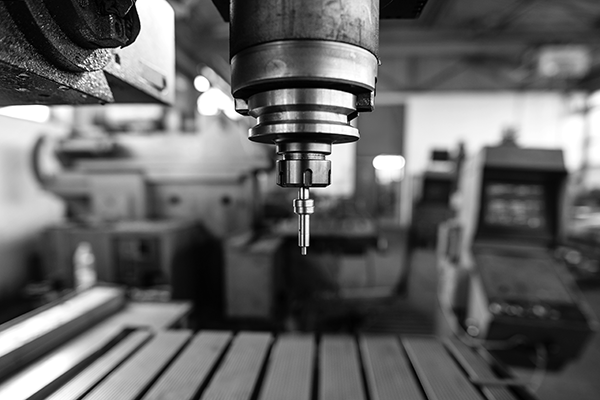
Impact of Spindle on Machining Quality
Machining centers mainly consist of spindles, composite drive mechanisms, and drive movement systems. The spindle has the most significant impact on machining quality, making it the most critical component. Ensuring spindle quality allows better control of the equipment's overall state.
Different spindle types include direct-drive, gear-driven, belt-driven, and built-in spindles.
X-Axis Work Path Monitoring
The complexity of the machining center structure means that resonance between the metal casing and the worktable can impact product vibration or cause abnormal wear.
It's essential to confirm whether vibration anomalies occur in the X-axis work path during spindle operation and check if the screw slide rail has any related abnormal vibrations.
Impact of Robotic Arm Vibrations
Product damage may not solely be due to machining issues. In some cases, robotic arms are used to replace manual transport to ensure product precision.
Any anomalies during transport may lead to product damage or misalignment, making it crucial to monitor the robotic arm's operation as well.
Solutions and Monitoring
VMS-PM Mechanical Dynamic Analyzer
The VMS-PM mechanical dynamic analyzer can be used to diagnose and detect anomalies.
The analyzer helps monitor various components of the machining center.
It provides insights into spindle quality using vibration quality and dynamic balance measurements.
The "vibration quality during speed changes" function assesses the vibration of the X-axis work path, while the "spectrum analysis" function compares the dynamic signals of robotic arms.
Measurement Conditions
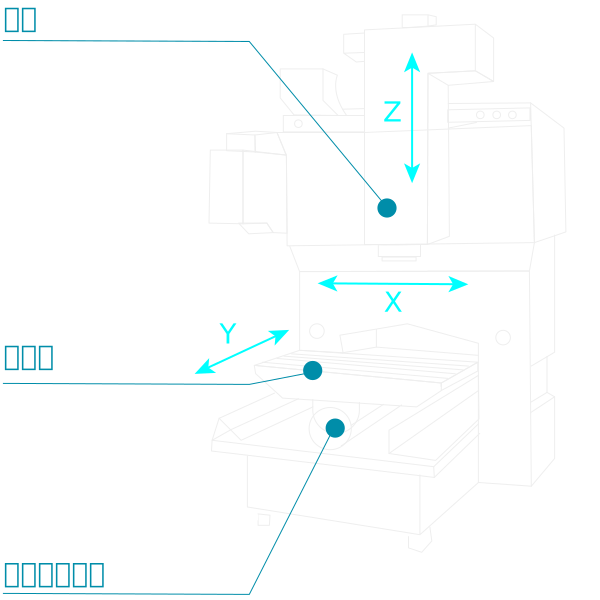
Measurement Description
# Spindle Quality: Vibration quality and dynamic balance measurement.
# X-Axis Work Path Vibration Record: X-axis movement, casing vs. worktable.
# Robotic Arm Dynamics Measurement: Ensuring consistent dynamic signals.
Measurement Conclusions
The VMS-PM Mechanical Dynamic Analyzer is specifically designed for machine tool equipment as a vibration measurement and analysis instrument. With various functions of the analyzer, it can quickly diagnose the condition of different machine tool components, helping to prevent premature spindle damage, extend component lifespan, and optimize processes by understanding the machine tool's condition, ultimately achieving machine intelligence.
VMS-PM Mechanical Dynamic Analyzer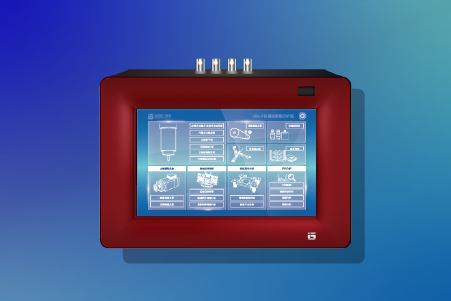
VMS-PM
Assisting machine tool intelligence
FAQ
Why do machining centers often experience abnormalities that are difficult to troubleshoot?
A machining center is composed of multiple components such as a spindle, complex transmission mechanism, drive movement mechanism, slide rails, screws, and robotic arms. These components interact with each other. When an abnormality occurs in one part, it often reflects on product quality, making the root cause difficult to determine directly.
What is the most important component affecting CNC machining quality?
The machine's spindle is the most important core component affecting process quality. If the spindle experiences wear, abnormal vibration, or poor dynamic balance, it easily leads to machining dimensional deviations, degraded surface quality, and shortened tool life.
What is spindle dynamic balance monitoring?
Dynamic balance monitoring assesses whether there is uneven mass distribution in rotating machinery during operation. If the spindle is dynamically unbalanced, it will cause increased vibration, accelerated bearing wear, degraded machining quality, and even equipment damage.
Do robotic arms also affect machining quality?
Yes. Some precision processes use robotic arms to handle workpieces. If the arm experiences jitter, abnormal acceleration/deceleration, or positioning deviations during transport, it may cause product damage, positional shifts, or subsequent machining errors. Therefore, it must also be included in the monitoring scope.
How does VMS-PM assist in CNC machine tool anomaly troubleshooting?
The VMS-PM mechanical dynamic analyzer uses functions such as spindle vibration quality analysis, dynamic balance measurement, speed-interval vibration quality analysis, and spectrum analysis to quickly grasp the operating status of the spindle, slide rails, workbench, and robotic arms, helping to identify the source of abnormalities.
What are the benefits of implementing CNC equipment monitoring?
Equipment monitoring enables the early detection of issues such as spindle wear, dynamic balance abnormalities, slide rail vibrations, and robotic arm anomalies. It reduces the risk of unexpected downtime, extends equipment life, improves machining quality and equipment utilization, and establishes a predictive maintenance mechanism.
Further Reading
Abnormal vibration in high-speed punching machines causing defective products?
Abnormal automotive sheet metal welding causing poor joints?
Chip jamming in Swiss-type lathes affecting process quality?
Stamping die abnormalities causing a large number of defective products?
VMS-PM Mechanical Dynamic Analyzer
Manufacturing Equipment Monitoring
Maintenance speed increased by 7 times, saving annual maintenance budget