Case

Application

FAQ
What is Environmental Micro-Vibration?
FAQ | What is Environmental Micro-Vibration?Once equipment is affected by environmental micro-vibrations, common issues include measurement errors, process instability, yield drops, and even impacts on the long-term reliability of high-precision equipment. Many companies think it's just a slight tremor, but in reality, it could be quietly eating away at capacity and quality.
Check your factory's vibration risks immediately to prevent equipment performance from being dragged down by "invisible vibrations."
What is environmental micro-vibration?
What kind of vibration is classified as environmental micro-vibration?
Poor equipment performance? Impact of environmental micro-vibration? In order to avoid product defects caused by poor equipment performance, vibration specification standards have been established for the environmental vibration of building structures. It is not only required that they do not tilt or collapse, but also that there must not be any minute vibrations that will affect the operation of the equipment. Whether it is the strength of the floor inside the plant, the operation of the equipment itself, the impact of other equipment in the plant, or the noise in the plant, etc., they can all become sources of vibration. External impacts include transportation vehicles, construction of nearby factories, earthquakes, etc., which are also sources of micro-vibration.
Vibration Sources
What Are the Main Sources of Vibrations in Factories?
Internal Vibration Sources: Vibrations occur during equipment operation,
including those generated by various machinery, workers, and transport vehicles inside the factory.
External Vibration Sources: Heavy vehicles passing by, construction pile-driving,
wind forces, and earthquakes can exert forces on buildings, causing micro-vibrations.
The continuous development of advanced manufacturing processes is a top priority for major semiconductor companies.
While extensive R&D efforts contribute to progress, investments in precision manufacturing equipment and measurement tools
are crucial. These high-precision instruments require an optimal environment to function effectively.
Vibration-related issues have become a significant challenge in integrating advanced processes,
making vibration management a key factor in planning new semiconductor plants.
Environmental Micro-Vibrations
Why Should Factories Pay Special Attention to Environmental Micro-Vibrations?
Equipment performance can be affected by environmental vibrations, and the required vibration tolerance
varies based on the precision demands of different machines. Generally, higher-precision equipment has stricter requirements.
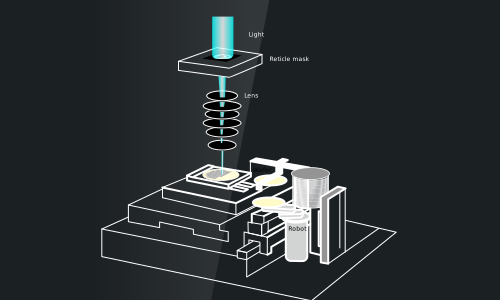
Examples include atomic force microscopes, electron microscopes, high-magnification optical microscopes,
semiconductor lithography machines, and optical module manufacturing.
External vibrations can significantly impact their performance and final product quality.
If factory vibration conditions fail to meet the specified requirements of precision equipment,
production yield rates may drop, and measurement instruments may struggle to achieve higher magnifications
needed for fine-linewidth detection, hindering advanced process development.
Installing precision vibration isolation equipment—both active and passive vibration isolation systems—
is now recognized as a critical factor in maintaining high wafer production yields.
What Type of Vibrations Are Considered Environmental Micro-Vibrations?
Micro-vibrations generally refer to vibrations within a frequency range of **2–100 Hz** and an amplitude
below **50 μm/s**. Vibration sources may stem from internal factory elements such as flooring strength,
machine operations, and noise, as well as external influences like traffic, nearby construction, and seismic activity.
What Vibration Standards Apply to Factory Environmental Micro-Vibrations?
To prevent product defects caused by environmental vibrations, international vibration standards have been
established for building structures. These guidelines not only ensure structural stability but also minimize
micro-vibrations that could affect equipment performance. The **ISO-10816** series outlines mechanical vibration
standards, while various **Vibration Criteria (VC)** classifications have been proposed based on different
equipment requirements, as illustrated below:
Precision Equipment Installation Environment Inspection
When the environmental vibration conditions of the factory cannot meet the vibration specifications required by the equipment itself, it will reduce the yield of process equipment. It will also prevent measuring instruments from amplifying to higher magnifications to detect increasingly fine line widths, thereby affecting the development of entire advanced processes. Therefore, environmental micro-vibration has been recognized as a fact that can directly affect production yield.
Environmental Micro-Vibration Analyzer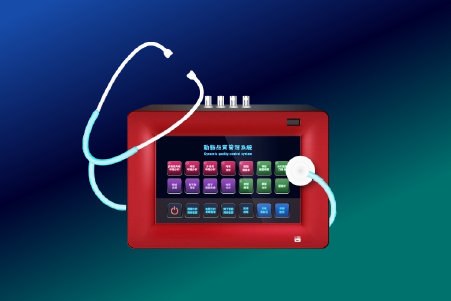
Environmental Micro-Vibration Analyzer
#EnvironmentalVibration #PHMFAQ
What is environmental micro-vibration?
Environmental micro-vibration is the minute vibration transmitted to floors, building structures, or equipment bases from vibration sources such as equipment, personnel, vehicles, construction, wind, and earthquakes. Although the human body may not necessarily feel it, it can affect the measurement and process results of precision equipment.
What are the sources of environmental micro-vibration?
They can be divided into internal and external sources. Internal sources include equipment operation, personnel walking, transport vehicles, and air conditioning equipment; external sources include road traffic, engineering construction, neighboring factories, wind, and earthquakes.
Which equipment is easily affected by environmental micro-vibrations?
SEM, TEM, AFM, lithography machines, E-Beam, precision optical equipment, high-magnification microscopes, and precision positioning equipment are all potentially sensitive to environmental vibrations.
What is the VC Curve?
The VC Curve (Vibration Criterion Curve) is one of the commonly used evaluation methods for the environmental vibration of precision equipment. It categorizes environments into different grades based on vibration velocity and can be used to assess the requirements of different precision equipment for vibration environments.
How to determine if the factory's environmental micro-vibration meets equipment requirements?
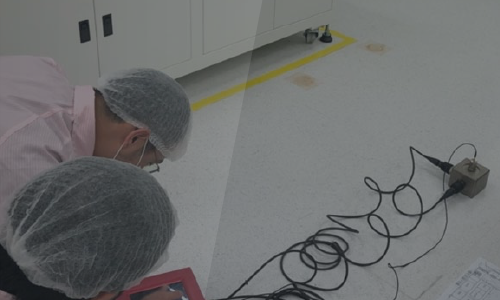
Vibration measurements should be taken at the planned installation location of the equipment to obtain vibration data at different frequencies. This data is then compared with the equipment manufacturer's allowable specifications or the applicable VC Curve to determine if the environment meets the equipment's requirements.
Regulation Overview
Applicable Vibration Standards for Factory Environmental Micro-Vibrations
To prevent product defects caused by equipment performance issues, vibration standards have been established for building structures. These standards not only ensure stability against tilting or collapse but also eliminate micro-vibrations that may affect equipment operation. The International Organization for Standardization (ISO) has developed a series of mechanical vibration standards, including **ISO-10816**. Additionally, researchers have proposed vibration standards known as **Vibration Criteria (VC)**, which define different vibration levels based on equipment requirements. The classification is as follows:
| Vibration Standard | Max Vibration Value μm/s (rms) |
Processing Size (μm) | Recommended Application Environment |
|---|---|---|---|
| Office | 400 (84dB) | None |
|
| General Industrial Zone | 800 (90dB) | None |
|
| Residential Area (Daytime) | 200 (78dB) | 75 |
|
| Operating Theatre (ISO) | 100 (72dB) | 25 |
|
| VC-A | 50 (66dB) | 8 |
|
| VC-B | 25 (60dB) | 3 |
|
| VC-C | 12.5 (54dB) | 1 |
|
| VC-D | 6.25 (48dB) | 0.3 |
|
| VC-E | 3.125 (42dB) | 0.1 |
|
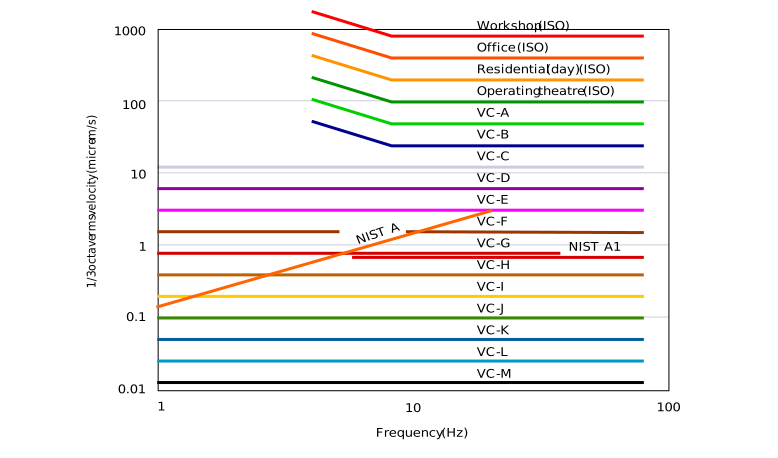
As the semiconductor industry advances into nanometer-scale processes, additional vibration standards such as **NIST-A** and **NIST-A1** have been introduced. These standards primarily address deficiencies in VC criteria in the **low-frequency range**.
Performance Cases
Environmental Micro-Vibration Case Studies