
Case

Application

FAQ
The Motor is Making Obvious Noise – Which Component is Faulty?
Diagnostic Performance|The Motor is Making Obvious Noise – Which Component is Faulty?A machining center has a complex structure, and even minor component failures can affect the product. When the motor produces significant noise, how can we quickly identify the faulty part?
Characteristics of Machining Processes
Machining equipment uses motor power and belt-driven structures to rotate the workpiece and cutting tools, enabling cutting operations. Through digital computer-aided production, the process becomes more precise and efficient.
Component Fault Measurement
When the motor or pump of precision machinery produces excessive noise, it clearly indicates an abnormal condition. How can we rely on experience to determine which component is problematic and locate the root cause?
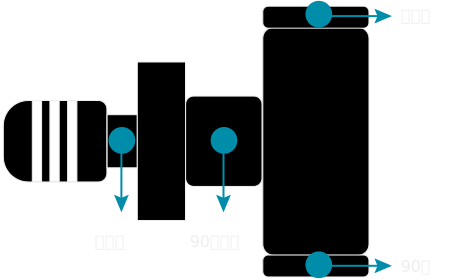
Solution and Monitoring Description
VMS-PM Dynamic Analyzer / SMS-RC Rotating Equipment Diagnostic Analyzer
By measuring rotor vibration quality, you can identify issues without the hassle of disassembling and reassembling the machine. Component-based sectional measurements help pinpoint abnormal areas for repair. This test includes: 90-degree measurement point, 90-degree upper section, transmission shaft, and tool end.
Measurement Status
Measurement Item 1
90° Measurement Point

Rotor Quality Assessment: Normal
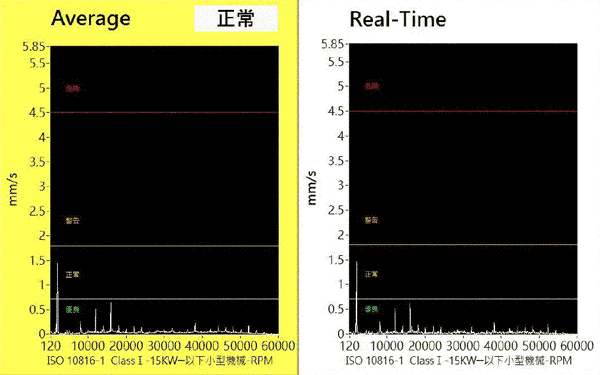
Measurement Item 2
90 度上部量测点

转子品质判定:正常
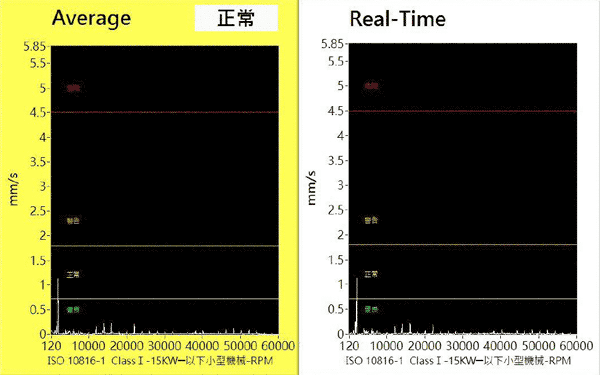
Measurement Item 3
Transmission Shaft Measurement Point

Rotor Quality Assessment: Normal
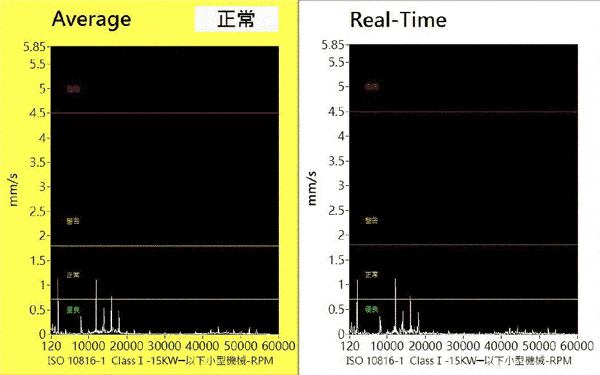
Measurement Item 4
Tool End Measurement Point

Rotor Quality Assessment: Abnormal
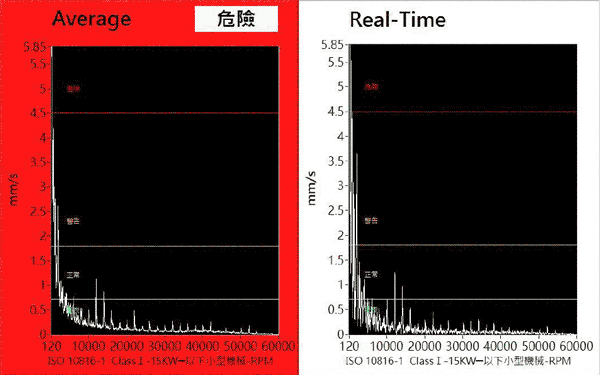
Measurement Conclusion
An abnormality was detected at the tool end. It is recommended to stop the machine immediately for troubleshooting. By using the VMS-PM Mechanical Dynamic Analyzer, errors can be diagnosed more efficiently, identifying abnormal parts and causes. With regular inspection measurements, maintenance can be carried out once warning signals are detected, preventing unexpected downtime.
VMS-PM Mechanical Dynamic Analyzer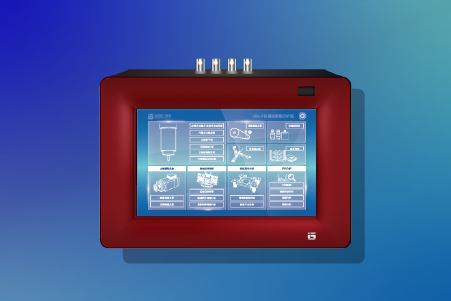
VMS-PM Mechanical Dynamic Analyzer
Assisting Machine Tool Intelligence
FAQ
Is abnormal motor noise definitely a motor failure?
Not necessarily. Abnormal noise in processing equipment may come from the motor, transmission shaft, tool end, bearings, belt structures, or other rotating mechanical components. Relying solely on sound can easily lead to misjudging the source of the fault. Therefore, it is recommended to conduct a zoned diagnosis through vibration measurement to quickly locate the true anomaly.
Why is it necessary to conduct zoned measurements for processing equipment?
Processing machines have complex structures with many interconnected components. When the equipment generates abnormal vibration or noise, performing zoned measurements at positions such as the 90-degree measurement point, the 90-degree upper part, the transmission shaft, and the tool end can effectively narrow down the scope of the problem, quickly locate the source of the anomaly, and avoid unnecessary disassembly and inspection.
What problems can tool end anomalies cause?
If abnormal vibration occurs at the tool end, it may cause a decrease in processing accuracy, workpiece dimensional deviations, increased surface roughness, accelerated tool wear, and even product scrapping. If operation continues, it may also cause associated damage to the spindle or other mechanisms.
How does the VMS-PM Mechanical Dynamic Analyzer assist in fault diagnosis?
VMS-PM can measure vibration signals from various parts of the equipment, and through spectrum analysis, dynamic analysis, and feature value comparison, quickly identify the abnormal parts and possible causes of failure, significantly reducing the time required for manual troubleshooting and equipment disassembly.
What equipment is the SMS-RC Rotating Equipment Analyzer suitable for?
The SMS-RC is suitable for various rotating equipment such as motors, pumps, fans, reducers, and processing machines. Through vibration measurement and ISO standard judgment, it can quickly grasp the health status of the equipment and help plan subsequent maintenance work.
What are the benefits of implementing vibration diagnosis and predictive maintenance?
Through regular inspections and vibration monitoring, maintenance can be scheduled in advance when equipment signals enter the warning zone, avoiding unexpected downtime. In addition to reducing maintenance costs, it can also shorten troubleshooting time, and improve equipment utilization and product quality stability.
Further Reading
Abnormalities in water ring vacuum pumps and burner fans in chemical plants?
Abnormal rotation of exhaust fan motor affecting the process?
How to quickly troubleshoot causes of Vacuum Dry Pump abnormalities?
Equipment operating under long-term high load, key equipment motor malfunction?
VMS-PM Mechanical Dynamic Analyzer
What standards are available for rotor equipment reference?
Maintenance speed increased by 7 times, saving annual maintenance budget